Atlas of Ancient History › People › The late Republic
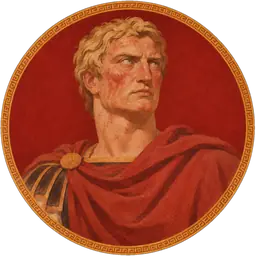
Sulla
Lucius Cornelius Sulla came of a patrician family sunk into obscurity; Sallust says he was learned in Greek and Latin literature, fond of pleasure but fonder of glory.1 As Marius' quaestor he received the captive Jugurtha from Bocchus and wore a seal-ring showing the scene, and the quarrel over that glory began his feud with Marius.2 When the command against Mithridates was given to Marius, Sulla's soldiers urged him to lead them to Rome, and he became the first to seize the city by force of arms.3 In less than three years he recovered Greece, Macedonia, Ionia and Asia from Mithridates and shut the king up in his ancestral kingdom, then came back to fight his enemies in Italy.4 Master of Rome, he proscribed eighty men at once and hundreds more in the days after, and proclaimed himself dictator, the first in a hundred and twenty years, with power of life and death.5 He took the surname Felix, 'Fortunate', laid down the dictatorship, and died of a fever at sixty in the consulship of Catulus and Lepidus.6
Events
Ties
- took prisoner Jugurtha Sallust, Jugurtha 113
- Gaius Marius feuded with Sulla Plutarch, Marius 10.5
- Cinna swore goodwill to, then turned on Sulla Plutarch, Sulla 10.4
- tried to make divorce Cornelia Julius Caesar Plutarch, Caesar 1.1
- honoured Pompey Appian, Civil Wars 1.9.80
- proscribed for Catiline Plutarch, Sulla 32.2
- made peace with Mithridates VI of Pontus Plutarch, Sulla 24.3
- honoured Marcus Licinius Crassus Plutarch, Crassus 6.2
- Pompey told of the rising sun Sulla Plutarch, Pompey 14.3
What the sources say
“Sylla, then, was of patrician descent, but of a family almost sunk in obscurity by the degeneracy of his forefathers. He was skilled, equally and profoundly, in Greek and Roman literature. He was a man of large mind, fond of pleasure, but fonder of glory”
Igitur Sulla gentis patriciae nobilis fuit, familia prope iam extincta maiorum ignavia, litteris Graecis atque Latinis iuxta atque doctissime eruditus, animo ingenti, cupidus voluptatum, sed gloriae cupidior
Sallust, Jugurtha 95 · tr. John Selby Watson
“His personal appearance, in general, is given by his statues; but the gleam of his gray eyes, which was terribly sharp and powerful, was rendered even more fearful by the complexion of his face. This was covered with coarse blotches of red, interspersed with white. For this reason, they say, his surname was given him because of his complexion, and it was in allusion to this that a scurrilous jester at Athens made the verse:—Sulla is a mulberry sprinkled o’er with meal.”
τοῦ δὲ σώματος αὐτοῦ τὸ μὲν ἄλλο εἶδος ἐπὶ τῶν ἀνδριάντων φαίνεται, τὴν δὲ τῶν ὀμμάτων γλαυκότητα δεινῶς πικρὰν καὶ ἄκρατον οὖσαν ἡ χρόα τοῦ προσώπου φοβερωτέραν ἐποίει προσιδεῖν. ἐξήνθει γὰρ τὸ ἐρύθημα τραχὺ καὶ σποράδην καταμεμιγμένον τῇ λευκότητι· πρὸς ὃ καὶ τοὔνομα λέγουσιν αὐτῷ γενέσθαι τῆς χρόας ἐπίθετον, καὶ τῶν Ἀθήνησι γεφυριστῶν ἐπέσκωψέ τις εἰς τοῦτο ποιήσας· συκάμινόν ἐσθʼ ὁ Σύλλας ἀλφίτῳ πεπασμένον.
Plutarch, Sulla 2.1 · tr. Bernadotte Perrin
“The property of the father of this Sextus Roscius, which is six millions of sesterces, which one of the most powerful young men of our city at this present time, Lucius Cornelius Chrysogonus, says he bought of that most gallant and most illustrious man Lucius Sulla, whom I only name to do him honour, for two thousand sesterces”
bona patris huiusce Sex. Rosci quae sunt sexagiens, quae de viro fortissimo et clarissimo L. Sulla, quem honoris causa nomino, duobus milibus nummum sese dicit emisse adulescens vel potentissimus hoc tempore nostrae civitatis, L. Cornelius Chrysogonus
Cicero, Pro Roscio Amerino 6 · tr. Charles Duke Yonge
“It is said that he made a speech in the forum when he laid down his power in which he offered to give the reasons for what he had done to anybody who should ask them. He dismissed the lictors with their axes and discontinued his body-guard, and for a long time walked to the forum with only a few friends, the multitude looking upon him with awe even then. Once only when he was going home he was reproached by a boy. As nobody restrained this boy he made bold to follow Sulla to his house, railing at him, and Sulla, who had opposed the greatest men and states with towering rage, endured his reproaches with calmness and as he went into the house said, divining the future either by his intelligence or by chance, This young man will prevent any other holder of such power from laying it down”
ὅν γέ φασιν ἐπειπεῖν ἐν ἀγορᾷ, τὴν ἀρχὴν ἀποτιθέμενον, ὅτι καὶ λόγον, εἴ τις αἰτοίη, τῶν γεγονότων ὑφέξει, καὶ τὰς ῥάβδους καθελόντα καὶ τοὺς πελέκεας τὴν φρουρὰν ἀπὸ τοῦ σώματος ἀπώσασθαι καὶ μόνον μετὰ τῶν φίλων ἐς πολὺ ἐν μέσῳ βαδίσαι θεωμένου τοῦ πλήθους καὶ καταπεπληγότος αὐτὸν καὶ τότε. ἀναχωροῦντα δʼ ἐπὶ τὴν οἰκίαν μόλις ποτὲ μειράκιον ἐπεμέμφετο καὶ οὐδενὸς αὐτὸ ἀπερύκοντος ἐθάρρησε καὶ λοιδορούμενον αὐτῷ μέχρι τῆς οἰκίας ἐλθεῖν. ὁ δὲ κατὰ τῶν μεγίστων ἀνδρῶν τε καὶ πόλεων ἄκρος ὀργὴν γενόμενος εὐσταθῶς τὸ μειράκιον ἤνεγκε καὶ τοσοῦτον ἐσιὼν ἐς τὴν οἰκίαν, εἴτε ἀπὸ ξυνέσεως εἴτε καὶ τύχῃ καταμαντευόμενος τῶν ἐσομένων, ἀπεκρίνατο, ὅτι κωλύσει τὸ μειράκιον τόδε ἕτερον ἄνδρα ἀρχὴν τοιάνδε ἔχοντα ἀποθέσθαι
Appian, Civil Wars 1.12.104 · tr. Horace White
First named
The earliest text in the library that names Sulla, written about 81 BC (a modern estimate of when it was written):
“You bought the goods of Sextus Alphenus when Lucius Sulla, the dictator, sold them”
emisti bona Sex. Alfeni L. Sulla dictatore vendente
Cicero, Pro Quinctio 76 · tr. Charles Duke Yonge
Found by searching every text in the library for these spellings and reading the earliest hits to rule out namesakes: Σύλλας, Λεύκιος Κορνήλιος Σύλλας, Sulla, L. Sulla, Sylla, Lucius Cornelius Sulla, Felix. Texts lost, or not in the library, may name Sulla earlier.
The passages behind each sentence
- Sallust, Jugurtha 95 (tr. John Selby Watson) ↩
- Plutarch, Sulla 3.4 (tr. Bernadotte Perrin); Plutarch, Marius 10.5 (tr. Bernadotte Perrin) ↩
- Appian, Civil Wars 1.7.57 (tr. Horace White); Appian, Civil Wars 1.7.63 (tr. Horace White) ↩
- Appian, Civil Wars 1.9.76 (tr. Horace White) ↩
- Plutarch, Sulla 31.3 (tr. Bernadotte Perrin); Plutarch, Sulla 33.1 (tr. Bernadotte Perrin) ↩
- Plutarch, Sulla 34.2 (tr. Bernadotte Perrin); Appian, Civil Wars 1.12.104 (tr. Horace White); Appian, Civil Wars 1.12.105 (tr. Horace White) ↩
Cite this page
MLA “Sulla.” Atlas of Ancient History, Skirnir Studios, 2026, history.skirnirstudios.com/people/sulla/.
APA Skirnir Studios. (2026). Sulla. Atlas of Ancient History. https://history.skirnirstudios.com/people/sulla/
Chicago “Sulla.” Atlas of Ancient History. Skirnir Studios, 2026. https://history.skirnirstudios.com/people/sulla/.
The atlas was written by AI from the ancient sources. Where you can, cite the ancient passage itself by its reference (Herodotus 7.228, Livy 22.7.3) and name the translation you read.