Atlas of Ancient History › People › The late Republic
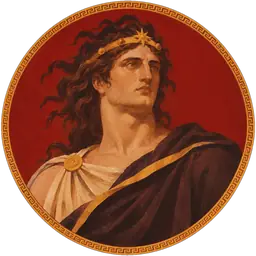
Mithridates VI of Pontus
Mithridates, king of Pontus, was counted the sixteenth in descent from Darius son of Hystaspes; the kingdom came to him as an orphan and he reigned fifty-seven years.1 When he had overrun the province of Asia he wrote secretly to his satraps and the cities to fall on all the Romans and Italians on the thirtieth day; Cicero, in 66 BC, says the king had ordered every Roman citizen in Asia killed on a single day and still reigned twenty-three years later.2 Sulla took back Greece, Macedonia, Ionia and Asia and shut him up in his ancestral kingdom; Mithridates handed over seventy ships and sailed home to Pontus.3 Driven out again, he was taken in by Tigranes of Armenia; Lucullus wore him down by delay, and later Pompey drove him in flight as far as Colchis.4 At Panticapaeum his son Pharnaces turned the army against him; he tried to die by poison and could not, and ended his life partly by poison and partly by the sword.5 Dio sets his death in the consulship of Cicero and Antonius, 63 BC; Appian says he lived sixty-eight or sixty-nine years and fought the Romans for forty.6
Open Mithridates VI of Pontus in the atlas
Events
Ties
- Sulla made peace with Mithridates VI of Pontus Plutarch, Sulla 24.3
- Tigranes the Great sheltered Mithridates VI of Pontus Appian, Mithridatic Wars 12.82
- Lucullus wore down Mithridates VI of Pontus Plutarch, Lucullus 28.8
What the sources say
“you have to wipe out that stain, received in the former Mithridates War, which has now fixed itself deeply and eaten its way into the Roman name, the stain arising from the fact that he, who in one day marked down by one order, and one single letter, all the Roman citizens in all Asia, scattered as they were over so many cities, for slaughter and butchery, has not only never yet suffered any chastisement worthy of his wickedness, but now, twenty-three years after that time, is still a king”
delenda vobis est illa macula Mithridatico bello superiore concepta quae penitus iam insedit ac nimis inveteravit in populi Romani nomine, quod is qui uno die tota in Asia tot in civitatibus uno nuntio atque una significatione omnis civis Romanos necandos trucidandosque curavit, non modo adhuc poenam nullam suo dignam scelere suscepit sed ab illo tempore annum iam tertium et vicesimum regnat
Cicero, On the Command of Pompey 7 · tr. Charles Duke Yonge
“So died Mithridates, who was the sixteenth in descent from Darius, the son of Hystaspes, king of the Persians, and the eighth from that Mithridates who left the Macedonians and acquired the kingdom of Pontus. He lived sixty-eight or sixty-nine years, and of these he reigned fifty-seven, for the kingdom came to him when he was an orphan”
καὶ ὁ Μιθριδάτης ἀπέθνησκεν, ἑκκαιδέκατος ὢν ἐκ Δαρείου τοῦ Ὑστάσπου Περσῶν βασιλέως, ὄγδοος δʼ ἀπὸ Μιθριδάτου τοῦ Μακεδόνων ἀποστάντος τε καὶ κτησαμένου τὴν Ποντικὴν ἀρχήν. ἐβίω δʼ ὀκτὼ ἢ ἐννέα ἐπὶ τοῖς ἑξήκοντα ἔτεσι, καὶ τούτων ἑπτὰ καὶ πεντήκοντα ἔτεσιν ἐβασίλευσεν· ἐς γὰρ ὀρφανὸν ὄντα περιῆλθεν ἡ ἀρχή
Appian, Mithridatic Wars 16.112 · tr. Horace White
“Mithridates, who had always met with the most varied and the greatest fortune, did not have a simple end to his life either: he longed to die though he did not wish to, and though he was eager to kill himself he could not, but partly by poison and partly by the sword”
Μιθριδάτης μὲν δὴ ποικιλωτάτῃ ἀεὶ καὶ μεγίστῃ τῇ τύχῃ χρησάμενος, οὐδὲ τὴν τελευτὴν τοῦ βίου ἁπλῆν ἔσχεν· ἐπεθύμησέ τε γὰρ ἀποθανεῖν μὴ βουλόμενος, καὶ αὐτὸς ἑαυτὸν ἀποκτεῖναι σπουδάσας οὐκ ἠδυνήθη, ἀλλὰ τοῦτο μὲν φαρμάκῳ τοῦτο δὲ καὶ ξίφει
Cassius Dio 37.13.4 · AI translation (Claude)
First named
The earliest text in the library that names Mithridates VI of Pontus, written about 70 BC (a modern estimate of when it was written):
“Mithridates in Asia, when he had occupied the whole of that province, did not abolish the festival of Mucius. An enemy, and he too an enemy in other respects, only too savage and barbarous, still would not violate the honour of a name which had been consecrated by holy ceremonies”
Mithridates in Asia, cum eam provinciam totam occupasset, Mucia non sustulit. Hostis, et hostis in ceteris rebus nimis ferus et immanis, tamen honorem hominis deorum religione consecratum violare noluit
Cicero, Against Verres 2.2.51 · tr. Charles Duke Yonge
Found by searching every text in the library for these spellings and reading the earliest hits to rule out namesakes: Μιθριδάτης, Μιθραδάτης, Mithridates, Mithradates, Eupator, Mithridatic. Texts lost, or not in the library, may name Mithridates VI of Pontus earlier.
The passages behind each sentence
- Appian, Mithridatic Wars 16.112 (tr. Horace White) ↩
- Appian, Mithridatic Wars 4.22 (tr. Horace White); Cicero, On the Command of Pompey 7 (tr. Charles Duke Yonge) ↩
- Appian, Civil Wars 1.9.76 (tr. Horace White); Plutarch, Sulla 24.3 (tr. Bernadotte Perrin) ↩
- Cicero, On the Command of Pompey 23 (tr. Charles Duke Yonge); Plutarch, Lucullus 28.8 (tr. Bernadotte Perrin); Appian, Mithridatic Wars 15.103 (tr. Horace White) ↩
- Appian, Mithridatic Wars 16.111 (tr. Horace White); Cassius Dio 37.13.4 (AI translation (Claude)) ↩
- Cassius Dio 37.10.4 (AI translation (Claude)); Appian, Mithridatic Wars 16.112 (tr. Horace White); Appian, Mithridatic Wars 16.112 (tr. Horace White) ↩
Cite this page
MLA “Mithridates VI of Pontus.” Atlas of Ancient History, Skirnir Studios, 2026, history.skirnirstudios.com/people/mithridates/.
APA Skirnir Studios. (2026). Mithridates VI of Pontus. Atlas of Ancient History. https://history.skirnirstudios.com/people/mithridates/
Chicago “Mithridates VI of Pontus.” Atlas of Ancient History. Skirnir Studios, 2026. https://history.skirnirstudios.com/people/mithridates/.
The atlas was written by AI from the ancient sources. Where you can, cite the ancient passage itself by its reference (Herodotus 7.228, Livy 22.7.3) and name the translation you read.