Atlas of Ancient History › People › The Hellenistic world
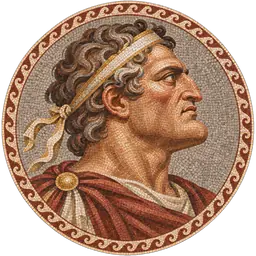
Ptolemy I
Ptolemy son of Lagus was one of Alexander's seven bodyguards, and the Macedonians, Pausanias says, held him to be really a son of Philip.1 After Alexander's death he received Egypt, and he took Alexander's body there and buried it, at Memphis according to Pausanias, in Alexandria according to Diodorus.2 When Perdiccas invaded Egypt, the disaster at the Nile turned Perdiccas' own Macedonians towards Ptolemy.3 With Seleucus he defeated Antigonus' son Demetrius at Gaza, and when Demetrius later beat him at sea he did not lose heart but took the diadem and called himself king, as Antigonus had done.4 He wrote a history of Alexander's campaigns, which Arrian chose to follow because Ptolemy had served with Alexander and, being a king, had more reason than anyone not to lie.5 He left the kingdom to Ptolemy, his son by Berenice, handing it over two years before his death, and Polybius puts his death in the 124th Olympiad.6
Events
Ties
- historian of Alexander the Great Arrian, Anabasis 1.pr.1
- Perdiccas marched against Ptolemy I Arrian, Anabasis 7.18.5
- father of Ptolemy II Lucian (attributed), Long Lives 12
- restored Pyrrhus Pausanias 1.6.8
- fought beside Seleucus I Diodorus 19.85.3
- buried Alexander the Great Diodorus 18.28.3
- Demetrius the Besieger defeated at sea Ptolemy I Plutarch, Demetrius 16
- Demetrius of Phalerum adviser of Ptolemy I Diogenes Laertius 5.5.78
- father of Ptolemy Ceraunus Appian, Syrian Wars 10.62
What the sources say
“As for his fathers, what a man was Ptolemy son of Lagus for accomplishing a great deed, when he laid up in his mind a plan such as no other man could conceive! Him the Father has made equal in honour to the blessed immortals, and a golden house has been built for him in the hall of Zeus; and beside him sits Alexander, his friend, a god heavy on the Persians, with his gleaming headband.”
Ἐκ πατέρων οἷος μὲν ἔην τελέσαι μέγα ἔργον Λαγείδας Πτολεμαῖος, ὅτε φρεσὶν ἐγκατάθοιτο βουλάν, ἃν οὐκ ἄλλος ἀνὴρ οἷός τε νοῆσαι. τῆνον καὶ μακάρεσσι πατὴρ ὁμότιμον ἔθηκεν ἀθανάτοις, καί οἱ χρύσεος δόμος ἐν Διὸς οἴκῳ δέδμηται· παρὰ δʼ αὐτὸν Ἀλέξανδρος φίλα εἰδὼς ἑδριάει, Πέρσαισι βαρὺς θεὸς αἰολομίτρας
Theocritus, Idylls 17 · AI translation (Claude)
“The Macedonians consider Ptolemy to be the son of Philip, the son of Amyntas, though putatively the son of Lagus, asserting that his mother was with child when she was married to Lagus by Philip”
Πτολεμαῖον Μακεδόνες Φιλίππου παῖδα εἶναι τοῦ Ἀμύντου, λόγῳ δὲ Λάγου νομίζουσι· τὴν γάρ οἱ μητέρα ἔχουσαν ἐν γαστρὶ δοθῆναι γυναῖκα ὑπὸ Φιλίππου Λάγῳ
Pausanias 1.6.2 · tr. W.H.S. Jones
“But Ptolemy and Aristobulus seemed to me the more trustworthy in their narrative, Aristobulus because he campaigned with King Alexander, and Ptolemy because, besides campaigning with him, he was himself a king, and for a king it would be more shameful than for anyone else to lie.”
ἀλλʼ ἐμοὶ Πτολεμαῖός τε καὶ Ἀριστόβουλος πιστότεροι ἔδοξαν ἐς τὴν ἀφήγησιν, ὁ μὲν ὅτι συνεστράτευσε βασιλεῖ Ἀλεξάνδρῳ, Ἀριστόβουλος, Πτολεμαῖος δὲ πρὸς τῷ ξυστρατεῦσαι ὅτι καὶ αὐτῷ βασιλεῖ ὄντι αἰσχρότερον ἢ τῳ ἄλλῳ ψεύσασθαι ἦν
Arrian, Anabasis 1.pr.2 · AI translation (Claude)
“Ptolemy, honouring Alexander, went out with an army as far as Syria to meet it, received the body and thought it worthy of the greatest care. He decided for the present not to take it to Ammon, but to lay it in the city founded by Alexander, which was almost the most famous of the cities of the inhabited world.”
Πτολεμαῖος δὲ τιμῶν τὸν Ἀλέξανδρον ἀπήντησε μετὰ δυνάμεως μέχρι τῆς Συρίας καὶ παραλαβὼν τὸ σῶμα τῆς μεγίστης φροντίδος ἠξίωσεν. ἔκρινε γὰρ ἐπὶ τοῦ παρόντος εἰς μὲν Ἄμμωνα μὴ παρακομίζειν, κατὰ δὲ τὴν ἐκτισμένην ὑπʼ αὐτοῦ πόλιν, ἐπιφανεστάτην οὖσαν σχεδόν τι τῶν κατὰ τὴν οἰκουμένην, ἀποθέσθαι
Diodorus 18.28.3 · AI translation (Claude)
First named
The earliest text in the library that names Ptolemy I, written about 273 BC (a modern estimate of when it was written):
“As for his fathers, what a man was Ptolemy son of Lagus for accomplishing a great deed, when he laid up in his mind a plan such as no other man could conceive! Him the Father has made equal in honour to the blessed immortals, and a golden house has been built for him in the hall of Zeus; and beside him sits Alexander, his friend, a god heavy on the Persians, with his gleaming headband.”
Ἐκ πατέρων οἷος μὲν ἔην τελέσαι μέγα ἔργον Λαγείδας Πτολεμαῖος, ὅτε φρεσὶν ἐγκατάθοιτο βουλάν, ἃν οὐκ ἄλλος ἀνὴρ οἷός τε νοῆσαι. τῆνον καὶ μακάρεσσι πατὴρ ὁμότιμον ἔθηκεν ἀθανάτοις, καί οἱ χρύσεος δόμος ἐν Διὸς οἴκῳ δέδμηται· παρὰ δʼ αὐτὸν Ἀλέξανδρος φίλα εἰδὼς ἑδριάει, Πέρσαισι βαρὺς θεὸς αἰολομίτρας
Theocritus, Idylls 17 · AI translation (Claude)
Found by searching every text in the library for these spellings and reading the earliest hits to rule out namesakes: Πτολεμαῖος, Ptolemaeus, Ptolemy. Texts lost, or not in the library, may name Ptolemy I earlier.
The passages behind each sentence
- Arrian, Anabasis 6.28.4 (AI translation (Claude)); Pausanias 1.6.2 (tr. W.H.S. Jones) ↩
- Diodorus 18.3.1 (AI translation (Claude)); Pausanias 1.6.3 (tr. W.H.S. Jones); Diodorus 18.28.3 (AI translation (Claude)) ↩
- Diodorus 18.36.2 (AI translation (Claude)) ↩
- Diodorus 19.85.3 (AI translation (Claude)); Diodorus 20.53.3 (AI translation (Claude)); Plutarch, Demetrius 18.1 (tr. Bernadotte Perrin) ↩
- Arrian, Anabasis 1.pr.2 (AI translation (Claude)) ↩
- Pausanias 1.6.8 (tr. W.H.S. Jones); Lucian (attributed), Long Lives 12 (tr. Austin Morris Harmon); Polybius 2.41 (tr. Evelyn S. Shuckburgh) ↩
Cite this page
MLA “Ptolemy I.” Atlas of Ancient History, Skirnir Studios, 2026, history.skirnirstudios.com/people/ptolemy-i/.
APA Skirnir Studios. (2026). Ptolemy I. Atlas of Ancient History. https://history.skirnirstudios.com/people/ptolemy-i/
Chicago “Ptolemy I.” Atlas of Ancient History. Skirnir Studios, 2026. https://history.skirnirstudios.com/people/ptolemy-i/.
The atlas was written by AI from the ancient sources. Where you can, cite the ancient passage itself by its reference (Herodotus 7.228, Livy 22.7.3) and name the translation you read.