Atlas of Ancient History › People › The Hellenistic world
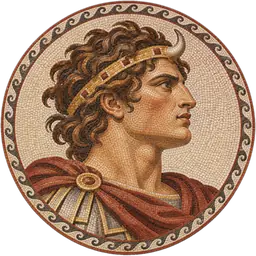
Demetrius the Besieger
Demetrius was the son of Antigonus and Stratonice, though some said Antigonus was his uncle, and Plutarch says no painter or sculptor ever caught his beauty.1 He sailed to Athens, which Demetrius of Phalerum governed for Cassander, drove out the garrison and gave back the old constitution, and the Athenians were the first to call him and his father kings, and named them Saviour-gods with a yearly priest.2 Off Salamis in Cyprus he defeated Ptolemy's fleet, and after it the army hailed Antigonus and Demetrius as kings.3 He besieged Rhodes with the greatest siege tower ever built and failed to take it, and the surname Besieger pleased him more than any title a god could have.4 His father died at Ipsus waiting for him to come back from the pursuit; later the Macedonians made Demetrius their king, until Seleucus, Ptolemy and Lysimachus combined against him and called in Pyrrhus.5 He ended a prisoner of Seleucus, and died in the third year of his captivity, aged fifty-four.6
Open Demetrius the Besieger in the atlas
Events
Ties
- Antigonus the One-Eyed father of Demetrius the Besieger Plutarch, Demetrius 2.1
- defeated at sea Ptolemy I Plutarch, Demetrius 16
- Seleucus I held captive Demetrius the Besieger Plutarch, Demetrius 52
- drove out Demetrius of Phalerum Plutarch, Demetrius 9.2
- Pyrrhus took Macedonia from Demetrius the Besieger Plutarch, Pyrrhus 11.6
- father of Antigonus Gonatas Lucian (attributed), Long Lives 11
What the sources say
“Demetrius, the surviving son, had not the height of his father, though he was a tall man, but he had features of rare and astonishing beauty, so that no painter or sculptor ever achieved a likeness of him”
Δημήτριος δὲ μεγέθει μὲν ἦν τοῦ πατρὸς ἐλάττων, καίπερ ὢν μέγας, ἰδέᾳ δὲ καὶ κάλλει προσώπου θαυμαστὸς καὶ περιττός, ὥστε τῶν πλαττόντων καὶ γραφόντων μηθένα τῆς ὁμοιότητος ἐφικέσθαι
Plutarch, Demetrius 2.2 · tr. Bernadotte Perrin
“For instance, they were the first people in the world to give Demetrius and Antigonus the title of King, although both had up to that time shrunk from using the word, and although this was the only royal prerogative still left to the descendants of Philip and Alexander which it was thought that others could not assume or share; moreover, the Athenians were the only people to give them the appellation of Saviour-gods, and they put a stop to the ancient custom of designating the year with the name of the annual archon, and elected every year a priest of the Saviour-gods”
πρῶτοι μὲν γὰρ ἀνθρώπων ἁπάντων τὸν Δημήτριον καὶ Ἀντίγονον βασιλεῖς ἀνηγόρευσαν, ἄλλως ἀφοσιουμένους τοὔνομα, καὶ τοῦτο δὴ μόνον τῶν βασιλικῶν ἔτι τοῖς ἀπὸ Φιλίππου καὶ Ἀλεξάνδρου περιεῖναι δοκοῦν ἄθικτον ἑτέροις καὶ ἀκοινώνητον· μόνοι δὲ σωτῆρας ἀνέγραψαν θεούς, καὶ τὸν ἐπώνυμον καὶ πάτριον ἄρχοντα καταπαύσαντες ἱερέα σωτήρων ἐχειροτόνουν καθʼ ἕκαστον ἐνιαυτόν
Plutarch, Demetrius 10.3 · tr. Bernadotte Perrin
“Demetrius, on the contrary, was delighted to receive a surname most unlike those given to the king of the gods; for Zeus is surnamed City-guardian, or City-protector; but Demetrius, City-besieger”
ἀλλὰ Δημήτριος ἔχαιρε τῷ βασιλεῖ τῶν θεῶν ἀνομοιοτάτην ἐπιγραφόμενος προσωνυμίαν· ὁ μὲν γὰρ Πολιεὺς καὶ Πολιοῦχος, ὁ δὲ Πολιορκητὴς ἐπίκλησιν ἔσχεν
Plutarch, Demetrius 42.6 · tr. Bernadotte Perrin
“Behold the greatest of the gods and dearest Are come to this city, For here Demeter and Demetrius are Present in season.She indeed comes to duly celebrate The sacred mysteries Of her most holy daughter—he is present Joyful and beautiful, As a god ought to be, with smiling face Showering his blessings round.How noble doth he look! his friends around, Himself the centre.His friends resemble the bright lesser stars, Himself is Phœbus.Hail, ever-mighty Neptune's mightier son; Hail, son of Venus.For other gods do at a distance keep, Or have no ears, Or no existence; and they heed not us—But you are present, Not made of wood or stone, a genuine god”
ὡς οἱ μέγιστοι τῶν θεῶν καὶ φίλτατοι τῇ πόλει πάρεισιν ἐνταῦθα γὰρ Δήμητρα καὶ Δημήτριον ἅμα παρῆγ’ ὁ καιρός, χἠ μὲν τὰ σεμνὰ τῆς Κόρης μυστήρια ἔρχεθ’ ἵνα ποιήσῃ, ὁ δ’ ἱλαρός, ὥσπερ τὸν θεὸν δεῖ, καὶ καλὸς καὶ γελῶν πάρεστι. σεμνόν τι φαίνεθ᾽, οἱ φίλοι πάντες κύκλῳ, ἐν μέσοισι δ’ αὐτός, ὅμοιον ὥσπερ οἱ φίλοι μὲν ἀστέρες, ἥλιος δ’ ἐκεῖνος, ὦ τοῦ κρατίστου παῖ Ποσειδῶνος θεοῦ, χαῖρε, κἀφροδίτης. ἄλλοι μὲν ἢ μακρὰν γὰρ ἀπέχουσιν θεοὶ ἢ οὐκ ἔχουσιν ὦτα ἢ οὐκ εἰσὶν ἢ οὐ προσέχουσιν ἡμῖν οὐδὲ ἕν, σὲ δὲ παρόνθ’ ὁρῶμεν, οὐ ξύλινον οὐδὲ λίθινον, ἀλλ’ ἀληθινόν
Athenaeus 6.63 · tr. Charles Duke Yonge
Part of the hymn the Athenians sang to Demetrius, about 291/290 BC by modern dating, quoted from Duris by Athenaeus, about AD 200. The old verse translation is free.
First named
The earliest text in the library that names Demetrius the Besieger, written about 300 BC (a modern estimate of when it was written):
“In Cyprus, at any rate, the kings did not cut the trees, both keeping them in reserve and husbanding them, and because they were hard to transport. The timbers cut for the eleven-banked ship of Demetrius were thirteen fathoms long, and the wood itself was marvellous for its length, free of knots and smooth.”
ἐν Κύπρῳ γοῦν οὐκ ἔτεμνον οἱ βασιλεῖς, ἄμα μὲν τηροῦντες καὶ ταμιευόμενοι, ἄμα δὲ καὶ διὰ τὸ δυσκόμιστον εἶναι. μῆκος μὲν ἦν τῶν εἰς τὴν ἑνδεκήρη τὴν Δημητρίου τμηθέντων τρισκαιδεκαόργυιον, αὐτὰ δὲ τὰ ξύλα τῷ μήκει θαυμαστὰ καὶ ἄοζα καὶ λεῖα
Theophrastus, Enquiry into Plants 5.8.1 · AI translation (Claude)
Found by searching every text in the library for these spellings and reading the earliest hits to rule out namesakes: Δημήτριος, Demetrius, Πολιορκητής, Poliorcetes. Texts lost, or not in the library, may name Demetrius the Besieger earlier.
The passages behind each sentence
- Plutarch, Demetrius 2.1 (tr. Bernadotte Perrin); Plutarch, Demetrius 2.2 (tr. Bernadotte Perrin) ↩
- Plutarch, Demetrius 8.3 (tr. Bernadotte Perrin); Plutarch, Demetrius 10.1 (tr. Bernadotte Perrin); Plutarch, Demetrius 10.3 (tr. Bernadotte Perrin) ↩
- Plutarch, Demetrius 16.1 (tr. Bernadotte Perrin); Plutarch, Demetrius 18.1 (tr. Bernadotte Perrin) ↩
- Plutarch, Demetrius 21.1 (tr. Bernadotte Perrin); Plutarch, Demetrius 22.1 (tr. Bernadotte Perrin); Plutarch, Demetrius 42.6 (tr. Bernadotte Perrin) ↩
- Plutarch, Demetrius 29.4 (tr. Bernadotte Perrin); Plutarch, Demetrius 37.2 (tr. Bernadotte Perrin); Plutarch, Demetrius 44.1 (tr. Bernadotte Perrin) ↩
- Plutarch, Demetrius 52.3 (tr. Bernadotte Perrin) ↩
Cite this page
MLA “Demetrius the Besieger.” Atlas of Ancient History, Skirnir Studios, 2026, history.skirnirstudios.com/people/demetrius-poliorcetes/.
APA Skirnir Studios. (2026). Demetrius the Besieger. Atlas of Ancient History. https://history.skirnirstudios.com/people/demetrius-poliorcetes/
Chicago “Demetrius the Besieger.” Atlas of Ancient History. Skirnir Studios, 2026. https://history.skirnirstudios.com/people/demetrius-poliorcetes/.
The atlas was written by AI from the ancient sources. Where you can, cite the ancient passage itself by its reference (Herodotus 7.228, Livy 22.7.3) and name the translation you read.