Atlas of Ancient History › People › The Hellenistic world
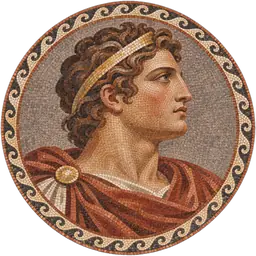
Ptolemy II
Ptolemy was the son of Ptolemy I and Berenice, born on Cos, and his father passed over his elder sons by Eurydice to leave the kingdom to him, handing it over two years before he died.1 He married his full sister Arsinoe, Pausanias says, against Macedonian custom but following that of the Egyptians, and he put to death two of his brothers.2 Theocritus praised him as lord of Phoenicia, Arabia, Syria, Libya and the Cyclades, whose ships were the best on the sea, and as a husband who loved his sister and wife.3 When his half-brother Magas of Cyrene drew Antiochus son of Seleucus into war against Egypt, he kept Antiochus busy at home, and he sent a fleet to help Athens against Antigonus, which did little to save the city.4
Events
Ties
- Ptolemy I father of Ptolemy II Lucian (attributed), Long Lives 12
- brother and husband of Arsinoe II Pausanias 1.7.1
What the sources say
“Over all of these lordly Ptolemy is king. And he cuts off for himself part of Phoenicia and Arabia, of Syria and Libya and of the dark Ethiopians; he gives commands to all the Pamphylians and the spearmen of Cilicia, to the Lycians and the warlike Carians, and to the isles of the Cyclades, since his ships are the best that sail the sea; all the sea and the land and the roaring rivers are ruled by Ptolemy.”
τῶν πάντων Πτολεμαῖος ἀλήνωρ ἐμβασιλεύει. καὶ μὴν Φοινίκας ἀποτέμνεται Ἀρραβίας τε καὶ Συρίας Λιβύας τε κελαινῶν τʼ Αἰθιοπήων. Παμφύλοισί τε πᾶσι καὶ αἰχμηταῖς Κιλίκεσσι σαμαίνει, Λυκίοις τε φιλοπτολέμοισί τε Καρσί, καὶ νάσοις Κυκλάδεσσιν, ἐπεί οἱ νᾶες ἄρισται πόντον ἐπιπλώοντι, θάλασσα δὲ πᾶσα καὶ αἶα καὶ ποταμοὶ κελάδοντες ἀνάσσονται Πτολεμαίῳ
Theocritus, Idylls 17 · AI translation (Claude)
“This Ptolemy fell in love with Arsinoe, his full sister, and married her, violating herein Macedonian custom, but following that of his Egyptian subjects”
οὗτος ὁ Πτολεμαῖος Ἀρσινόης ἀδελφῆς ἀμφοτέρωθεν ἐρασθεὶς ἔγημεν αὐτήν, Μακεδόσιν οὐδαμῶς ποιῶν νομιζόμενα, Αἰγυπτίοις μέντοι ὧν ἦρχε
Pausanias 1.7.1 · tr. W.H.S. Jones
“Let us go to the palace of rich King Ptolemy to see the Adonis; I hear the queen is getting up something fine.”
βᾶμες τῶ βασιλῆος ἐς ἀφνειῶ Πτολεμαίω θασόμεναι τὸν Ἄδωνιν· ἀκούω χρῆμα καλόν τι κοσμεῖν τὰν βασίλισσαν
Theocritus, Idylls 15 · AI translation (Claude)
First named
The earliest text in the library that names Ptolemy II, written about 273 BC (a modern estimate of when it was written):
“and you, spearman Ptolemy, glorious Berenice bore to spearman Ptolemy. And Cos nursed you, a newborn babe, receiving you from your mother when first you saw the dawn.”
σὲ δʼ αἰχμητὰ Πτολεμαῖε αἰχμητᾷ Πτολεμαίῳ ἀρίζηλος Βερενίκα. καί σε Κόως ἀτίταλλε βρέφος νεογιλλὸν ἐόντα, δεξαμένα παρὰ ματρός, ὅτε πρώταν ἴδες ἀῶ
Theocritus, Idylls 17 · AI translation (Claude)
Found by searching every text in the library for these spellings and reading the earliest hits to rule out namesakes: Πτολεμαῖος, Φιλάδελφος, Ptolemy Philadelphus, Philadelphus. Texts lost, or not in the library, may name Ptolemy II earlier.
The passages behind each sentence
- Theocritus, Idylls 17 (AI translation (Claude)); Pausanias 1.6.8 (tr. W.H.S. Jones); Lucian (attributed), Long Lives 12 (tr. Austin Morris Harmon) ↩
- Pausanias 1.7.1 (tr. W.H.S. Jones); Pausanias 1.7.1 (tr. W.H.S. Jones) ↩
- Theocritus, Idylls 17 (AI translation (Claude)); Theocritus, Idylls 17 (AI translation (Claude)) ↩
- Pausanias 1.7.3 (tr. W.H.S. Jones); Pausanias 1.7.3 (tr. W.H.S. Jones) ↩
Cite this page
MLA “Ptolemy II.” Atlas of Ancient History, Skirnir Studios, 2026, history.skirnirstudios.com/people/ptolemy-ii/.
APA Skirnir Studios. (2026). Ptolemy II. Atlas of Ancient History. https://history.skirnirstudios.com/people/ptolemy-ii/
Chicago “Ptolemy II.” Atlas of Ancient History. Skirnir Studios, 2026. https://history.skirnirstudios.com/people/ptolemy-ii/.
The atlas was written by AI from the ancient sources. Where you can, cite the ancient passage itself by its reference (Herodotus 7.228, Livy 22.7.3) and name the translation you read.