Atlas of Ancient History › People › The Hellenistic world
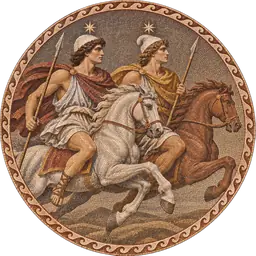
Scipio Aemilianus
Scipio was the younger son of Aemilius Paullus by his first wife, adopted by the son of Scipio Africanus and given the name Scipio.1 He made friends with Polybius over the loan of some books, and with his brother Fabius had Polybius kept at Rome; Polybius set out to explain his unusually early fame.2 When his father died he let his brother take the whole of their small inheritance, since he had been adopted into the richer house of Africanus.3 He destroyed Carthage, and Appian says that, watching it burn, he wept for the enemy and quoted Homer's lines on the fall of Troy, telling Polybius he feared for his own country.4 Plutarch calls him the Scipio who later destroyed Carthage and Numantia and became the most powerful Roman of his day.5
Open Scipio Aemilianus in the atlas
Events
Ties
- Hasdrubal (general at Carthage, 149-146) surrendered to Scipio Aemilianus Appian, Punic Wars 19.131
- Masinissa guest-friend of the family of Scipio Aemilianus Cicero, On Old Age 34
- Cornelia, mother of the Gracchi mother-in-law of Scipio Aemilianus Plutarch, Tiberius Gracchus Tiberius.1
- Aemilius Paullus father of Scipio Aemilianus Plutarch, Aemilius Paulus 5.5
- Polybius friend and teacher of Scipio Aemilianus Appian, Punic Wars 19.132
- brother-in-law of Tiberius Gracchus Plutarch, Tiberius Gracchus Tiberius.4.4
- approved the killing of Tiberius Gracchus Plutarch, Tiberius Gracchus Tiberius.21.4
- commended Jugurtha Sallust, Jugurtha 8
What the sources say
“Scipio, beholding this city, which had flourished 700 years from its foundation and had ruled over so many lands, islands, and seas, rich with arms and fleets, elephants and money, equal to the mightiest monarchies but far surpassing them in bravery and high spirit (since without ships or arms, and in the face of famine, it had sustained continuous war for three years), now come to its end in total destruction — Scipio, beholding this spectacle, is said to have shed tears and publicly lamented the fortune of the enemy. After meditating by himself a long time and reflecting on the rise and fall of cities, nations, and empires, as well as of individuals, upon the fate of Troy, that once proud city, upon that of the Assyrians, the Medes, and the Persians, greatest of all, and later the splendid Macedonian empire, either voluntarily or otherwise the words of the poet escaped his lips: — The day shall come in which our sacred Troy And Priam, and the people over whom Spear-bearing Priam rules, shall perish all. (Iliad, vi, 448, 449; Bryant’s translation.) Being asked by Polybius in familiar conversation (for Polybius had been his tutor) what he meant by using these words, he said that he did not hesitate frankly to name his own country, for whose fate he feared when he considered the mutability of human affairs”
ὁ δὲ Σκιπίων πόλιν ὁρῶν ἑπτακοσίοις ἔτεσιν ἀνθήσασαν ἀπὸ τοῦ συνοικισμοῦ, καὶ γῆς τοσῆσδε καὶ νήσων καὶ θαλάσσης ἐπάρξασαν, ὅπλων τε καὶ νεῶν καὶ ἐλεφάντων καὶ χρημάτων εὐπορήσασαν ἴσα ταῖς ἀρχαῖς ταῖς μεγίσταις, τόλμῃ δὲ καὶ προθυμίᾳ πολὺ διασχοῦσαν, ἥ γε καὶ ναῦς καὶ ὅπλα πάντα περιῃρημένη τρισὶν ὅμως ἔτεσιν ἀντέσχε πολέμῳ τοσῷδε καὶ λιμῷ, τότε ἄρδην τελευτῶσαν ἐς πανωλεθρίαν ἐσχάτην, λέγεται μὲν δακρῦσαι καὶ φανερὸς γενέσθαι κλαίων ὑπὲρ πολεμίων, ἐπὶ πολὺ δʼ ἔννους ἐφʼ ἑαυτοῦ γενόμενός τε, καὶ συνιδὼν ὅτι καὶ πόλεις καὶ ἔθνη καὶ ἀρχὰς ἁπάσας δεῖ μεταβαλεῖν ὥσπερ ἀνθρώπους δαίμονα, καὶ τοῦτʼ ἔπαθε μὲν Ἴλιον, εὐτυχής ποτε πόλις, ἔπαθε δὲ ἡ Ἀσσυρίων καὶ Μήδων καὶ Περσῶν ἐπʼ ἐκείνοις ἀρχὴ μεγίστη γενομένη, καὶ ἡ μάλιστα ἔναγχος ἐκλάμψασα ἡ Μακεδόνων, εἴτε ἑκὼν εἴτε προφυγόντος αὐτὸν τοῦδε τοῦ ἔπους, ἔσσεται ἦμαρ ὅταν ποτʼ ὀλώλῃ Ἴλιος ἱρὴ καὶ Πρίαμος καὶ λαὸς ἐϋμμελίω Πριάμοιο. Πολυβίου δʼ αὐτοῦ ἐρομένου σὺν παρρησίᾳ (καὶ γὰρ ἦν αὐτοῦ καὶ διδάσκαλος) ὅ τι βούλοιτο ὁ λόγος, φασὶν οὐ φυλαξάμενον ὀνομάσαι τὴν πατρίδα σαφῶς, ὑπὲρ ἧς ἄρα, ἐς τἀνθρώπεια ἀφορῶν, ἐδεδίει
Appian, Punic Wars 19.132 · translator not recorded
“This was that Scipio who, in after times, destroyed Carthage and Numantia, and became by far the most noble and influential Roman of his day”
οὗτός ἐστι Σκηπίων ὁ τοῖς ἱκνουμένοις χρόνοις Καρχηδόνα καὶ Νομαντίαν κατασκάψας καὶ πολὺ πρῶτος ἀρετῇ τῶν τότε Ῥωμαίων γενόμενος καὶ δυνηθεὶς μέγιστον
Plutarch, Aemilius Paulus 22.8 · tr. Bernadotte Perrin
“I promised then that I would relate the origin and manner of the rise and unusually early glory of Scipio’s reputation in Rome”
προϋπεσχόμην γὰρ διηγήσασθαι διὰ τί καὶ πῶς ἐπὶ τοσοῦτο προέκοψε καὶ θᾶττον ἢ καθῆκεν ἐξέλαμψεν ἡ τοῦ Σκιπίωνος ἐν τῇ Ῥώμῃ δόξα
Polybius 31.23 · tr. Evelyn S. Shuckburgh
First named
The earliest text in the library that names Scipio Aemilianus, written about 150 BC (a modern estimate of when it was written):
“Fabius and Scipio, the sons of Lucius Aemilius Paulus, exerted all their influence with the praetor that Polybius might be allowed to remain in Rome”
διέσπευσαν ὅ τε Φάβιος καὶ ὁ Σκιπίων οἱ τοῦ Λευκίου νεανίσκοι πρὸς τὸν στρατηγὸν μεῖναι τὸν Πολύβιον ἐν τῇ Ῥώμῃ
Polybius 31.23 · tr. Evelyn S. Shuckburgh
Found by searching every text in the library for these spellings and reading the earliest hits to rule out namesakes: Σκιπίων, Σκηπίων, Scipio, Scipio Aemilianus, Africanus. Texts lost, or not in the library, may name Scipio Aemilianus earlier.
The passages behind each sentence
- Plutarch, Aemilius Paulus 5.5 (tr. Bernadotte Perrin) ↩
- Polybius 31.23 (tr. Evelyn S. Shuckburgh); Polybius 31.23 (tr. Evelyn S. Shuckburgh) ↩
- Plutarch, Aemilius Paulus 39.10 (tr. Bernadotte Perrin) ↩
- Plutarch, Aemilius Paulus 22.8 (tr. Bernadotte Perrin); Appian, Punic Wars 19.132 (translator not recorded) ↩
- Plutarch, Aemilius Paulus 22.8 (tr. Bernadotte Perrin) ↩
Cite this page
MLA “Scipio Aemilianus.” Atlas of Ancient History, Skirnir Studios, 2026, history.skirnirstudios.com/people/scipio-aemilianus/.
APA Skirnir Studios. (2026). Scipio Aemilianus. Atlas of Ancient History. https://history.skirnirstudios.com/people/scipio-aemilianus/
Chicago “Scipio Aemilianus.” Atlas of Ancient History. Skirnir Studios, 2026. https://history.skirnirstudios.com/people/scipio-aemilianus/.
The atlas was written by AI from the ancient sources. Where you can, cite the ancient passage itself by its reference (Herodotus 7.228, Livy 22.7.3) and name the translation you read.