Atlas of Ancient History › People › The Hellenistic world
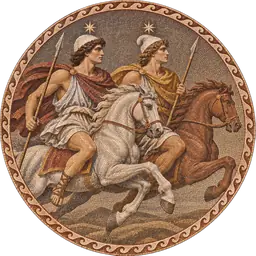
Aemilius Paullus
He was the son of the Lucius Paulus who fell at Cannae, and he gave the sons of his first marriage for adoption into the houses of Fabius Maximus and of Scipio Africanus' son; the younger became Scipio.1 At about sixty, in full vigour, he was called by the people to a second consulship to end the war with Perseus.2 After his victory at Pydna Perseus fell at his feet, and Aemilius led him in his triumph; Perseus' plea to be spared that shame was met with mockery.3 Of his two younger sons, one died five days before the triumph, at fourteen, and the other three days after it, at twelve.4 For all the treasure he won in Spain and Macedonia he left so little that his estate came to barely 370,000 drachmas, and Polybius held it the clearest proof of his honesty.5
Open Aemilius Paullus in the atlas
Events
Ties
- Lucius Aemilius Paullus (consul at Cannae) father of Aemilius Paullus Plutarch, Aemilius Paulus 2
- defeated and led in triumph Perseus Plutarch, Aemilius Paulus 34.3
- father of Scipio Aemilianus Plutarch, Aemilius Paulus 5.5
What the sources say
“This man was Paulus Aemilius, now advanced in life and about sixty years of age, but in the prime of bodily vigour, and hedged about with youthful sons and sons-in-law, and with a host of friends and kinsmen of great influence, all of whom urged him to give ear to the people when it summoned him to the consulship”
οὗτος ἦν Παῦλος Αἰμίλιος, ἡλικίας μὲν ἤδη πρόσω καὶ περὶ ἑξήκοντα γεγονὼς ἔτη, ῥώμῃ δὲ σώματος ἀκμάζων, πεφραγμένος δὲ κηδεσταῖς καὶ παισὶ νεανίαις καὶ φίλων πλήθει καὶ συγγενῶν μέγα δυναμένων, οἳ πάντες αὐτὸν ὑπακοῦσαι καλοῦντι τῷ δήμῳ πρὸς τὴν ὑπατείαν ἔπειθον
Plutarch, Aemilius Paulus 10.2 · tr. Bernadotte Perrin
“One of these, fourteen years of age, died five days before Aemilius celebrated his triumph, and the death of the other, who was twelve years of age, followed three days after the triumph”
ὧν ὁ μὲν ἡμέραις πέντε πρὸ τοῦ θριαμβεύειν τὸν Αἰμίλιον ἐτελεύτησε τεσσαρεσκαιδεκέτης, ὁ δὲ δωδεκέτης μετὰ τρεῖς ἡμέρας θριαμβεύσαντος ἐπαπέθανεν
Plutarch, Aemilius Paulus 35.2 · tr. Bernadotte Perrin
“His estate, we are told, hardly amounted to three hundred and seventy thousand drachmas, to which he left both his sons heirs; but the younger, Scipio, who had been adopted into the wealthier family of Africanus, allowed his brother to have it all. Such, as we are told, was the life and character of Paulus Aemilius”
τὴν δʼ οὐσίαν αὐτοῦ μόλις ἑπτὰ καὶ τριάκοντα μυριάδων γενέσθαι λέγουσιν, ἧς αὐτὸς μὲν ἀμφοτέρους τοὺς υἱοὺς ἀπέλιπε κληρονόμους, ὁ δὲ νεώτερος Σκηπίων τῷ ἀδελφῷ πᾶσαν ἔχειν συνεχώρησεν αὐτὸς εἰς οἶκον εὐπορώτερον τόν Ἀφρικανοῦ δεδομένος, οὗτος μὲν ὁ Παύλου Αἰμιλίου τρόπος καὶ βίος λέγεται γενέσθαι
Plutarch, Aemilius Paulus 39.10 · tr. Bernadotte Perrin
First named
The earliest text in the library that names Aemilius Paullus, written about 150 BC (a modern estimate of when it was written):
“I mean first, Lucius Aemilius who conquered Perseus, and won the kingdom of Macedonia”
Λεύκιος μὲν γὰρ Αἰμίλιος ὁ Περσέα νικήσας, κύριος γενόμενος τῆς Μακεδόνων βασιλείας
Polybius 18.35 · tr. Evelyn S. Shuckburgh
Found by searching every text in the library for these spellings and reading the earliest hits to rule out namesakes: Αἰμίλιος, Παῦλος Αἰμίλιος, Aemilius Paulus, Paulus, Paullus. Texts lost, or not in the library, may name Aemilius Paullus earlier.
The passages behind each sentence
- Plutarch, Aemilius Paulus 2.3 (tr. Bernadotte Perrin); Plutarch, Aemilius Paulus 5.5 (tr. Bernadotte Perrin) ↩
- Plutarch, Aemilius Paulus 10.2 (tr. Bernadotte Perrin) ↩
- Plutarch, Aemilius Paulus 26.9 (tr. Bernadotte Perrin); Plutarch, Aemilius Paulus 34.3 (tr. Bernadotte Perrin) ↩
- Plutarch, Aemilius Paulus 35.2 (tr. Bernadotte Perrin) ↩
- Plutarch, Aemilius Paulus 39.10 (tr. Bernadotte Perrin); Polybius 31.22 (tr. Evelyn S. Shuckburgh) ↩
Cite this page
MLA “Aemilius Paullus.” Atlas of Ancient History, Skirnir Studios, 2026, history.skirnirstudios.com/people/aemilius-paullus/.
APA Skirnir Studios. (2026). Aemilius Paullus. Atlas of Ancient History. https://history.skirnirstudios.com/people/aemilius-paullus/
Chicago “Aemilius Paullus.” Atlas of Ancient History. Skirnir Studios, 2026. https://history.skirnirstudios.com/people/aemilius-paullus/.
The atlas was written by AI from the ancient sources. Where you can, cite the ancient passage itself by its reference (Herodotus 7.228, Livy 22.7.3) and name the translation you read.