Atlas of Ancient History › People › The fourth century
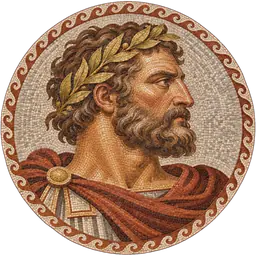
Philip II
Philip son of Amyntas was sent as a boy hostage to Thebes, where Plutarch says he came to admire Epaminondas.1 He became king in the archonship of Callidemides, Diogenes Laertius says, and Diodorus gives him a reign of twenty-four years, in which he made Macedon, once subject to the Illyrians, the greatest power in Europe.2 He took Olynthus, plundered it and sold its people as slaves, and at Chaeronea he beat the Athenians and Thebans, after which, Plutarch says, he went drunk among the dead reciting Demosthenes' decree.3 He married Olympias, Alexander's mother, and later the young Cleopatra, niece of Attalus; at that wedding Philip drew his sword on his son, and Alexander took Olympias away to Epirus.4 At Aegae, during the wedding of his daughter Cleopatra to Alexander of Epirus, he was stabbed to death by Pausanias, one of his bodyguards, as he entered the theatre.5
Events
Ties
- admirer of Epaminondas Plutarch, Pelopidas 26.5
- Pelopidas took as a hostage Philip II Diodorus 15.67
- father of Alexander the Great Plutarch, Alexander 9.4
- husband of Olympias Plutarch, Alexander 2.1
- Pausanias of Orestis killed Philip II Diodorus 16.94.3
- Demosthenes opposed Philip II Plutarch, Demosthenes 20.3
- Aeschines envoy to Philip II Plutarch (attributed), Lives of the Ten Orators 6
- defeated Onomarchus Diodorus 16.35.6
- Onomarchus defeated twice Philip II Diodorus 16.35.2
What the sources say
“Do not be surprised, Philip, that I am going to begin, not with the discourse which is to be addressed to you and which is presently to be brought to your attention, but with that which I have written about Amphipolis. For I desire to say a few words, by way of preface, about this question, in order that I may make it clear to you as well as to the rest of the world that it was not in a moment of folly that I undertook to write my address to you, nor because I am under any misapprehension as to the infirmity which now besets me, but that I was led advisedly and deliberately to this resolution.”
μὴ θαυμάσῃς, ὦ Φίλιππε, διότι τοῦ λόγου ποιήσομαι τὴν ἀρχὴν οὐ τοῦ πρὸς σὲ ῥηθησομένου καὶ νῦν δειχθήσεσθαι μέλλοντος, ἀλλὰ τοῦ περὶ Ἀμφιπόλεως γραφέντος. περὶ οὗ μικρὰ βούλομαι προειπεῖν, ἵνα δηλώσω καὶ σοὶ καὶ τοῖς ἄλλοις ὡς οὐ διʼ ἄνοιαν οὐδὲ διαψευσθεὶς τῆς ἀρρωστίας τῆς νῦν μοι παρούσης ἐπεθέμην γράφειν τὸν πρὸς σὲ λόγον, ἀλλʼ εἰκότως καὶ κατὰ μικρὸν ὑπαχθείς.
Isocrates, To Philip 1 · tr. George Norlin
“Immediately after his victory, then, Philip waxed insolent for joy, and going forth in revel rout to see the bodies of the slain, and being in his cups, recited the beginning of the decree introduced by Demosthenes, dividing it into feet and marking off the time:— Demosthenes, son of Demosthenes, of Paeania, thus moves; but when he got sober and realized the magnitude of the struggle in which he had been involved, he shuddered at the power and the ability of the orator who had forced him to hazard his empire and his life in the brief span of a single day.”
παραυτίκα μὲν οὖν ὁ Φίλιππος ἐπὶ τῇ νίκῃ διὰ τὴν χαρὰν ἐξυβρίσας, καὶ κωμάσας ἐπὶ τοὺς νεκροὺς μεθύων, ᾖδε τὴν ἀρχὴν τοῦ Δημοσθένους ψηφίσματος πρὸς πόδα διαιρῶν καὶ ὑποκρούων· Δημοσθένης Δημοσθένους Παιανιεὺς τάδʼ εἶπεν· ἐκνήψας δὲ καὶ τὸ μέγεθος τοῦ περιστάντος αὐτὸν ἀγῶνος ἐν νῷ λαβών ἔφριττε τὴν δεινότητα καὶ τὴν δύναμιν τοῦ ῥήτορος, ἐν μέρει μικρῷ μιᾶς ἡμέρας τὸν ὑπὲρ τῆς ἡγεμονίας καὶ τοῦ σώματος ἀναρρῖψαι κίνδυνον ἀναγκασθεὶς ὑπʼ αὐτοῦ.
Plutarch, Demosthenes 20.3 · tr. Bernadotte Perrin
“Then Philip rose up against him with drawn sword, but, fortunately for both, his anger and his wine made him trip and fall. Then Alexander, mocking over him, said: Look now, men! here is one who was preparing to cross from Europe into Asia; and he is upset in trying to cross from couch to couch. After this drunken broil Alexander took Olympias and established her in Epirus, while he himself tarried in Illyria.”
ὁ δὲ Φίλιππος ἐπʼ ἐκεῖνον ἐξανέστη σπασάμενος τὸ ξίφος, εὐτυχίᾳ δὲ ἑκατέρου διὰ τὸν θυμὸν καὶ τὸν οἶνον ἔπεσε σφαλείς, ὁ δὲ Ἀλέξανδρος ἐφυβρίζων, οὗτος μέντοι, εἶπεν, ἄνδρες, εἰς Ἀσίαν ἐξ Εὐρώπης παρεσκευάζετο διαβαίνειν, ὃς ἐπὶ κλίνην ἀπὸ κλίνης διαβαίνων ἀνατέτραπται. μετὰ ταύτην τὴν παροινίαν ἀναλαβὼν τὴν Ὀλυμπιάδα καὶ καταστήσας εἰς Ἤπειρον αὐτὸς ἐν Ἰλλυριοῖς διέτριβεν.
Plutarch, Alexander 9.5 · tr. Bernadotte Perrin
“So Philip, the greatest of the kings of his time in Europe, who because of the greatness of his rule had counted himself as enthroned beside the twelve gods, met such an end to his life, having reigned twenty-four years.”
Φίλιππος μὲν οὖν μέγιστος γενόμενος τῶν καθʼ ἑαυτὸν ἐπὶ τῆς Εὐρώπης βασιλέων καὶ διὰ τὸ μέγεθος τῆς ἀρχῆς ἑαυτὸν τοῖς δώδεκα θεοῖς σύνθρονον καταριθμήσας τοιαύτης ἔτυχε τῆς τοῦ βίου καταστροφῆς, ἄρξας ἔτη τέσσαρα πρὸς τοῖς εἴκοσι.
Diodorus 16.95.1 · AI translation (Claude)
First named
The earliest text in the library that names Philip II, written about 355 BC (a modern estimate of when it was written):
“Cersobleptes will wage war with us over the Chersonese, or Philip over Amphipolis”
μήτε Κερσοβλέπτην ὑπὲρ Χερρονήσου μήτε Φίλιππον ὑπὲρ Ἀμφιπόλεως πολεμήσειν
Isocrates, On the Peace 22 · tr. George Norlin
Found by searching every text in the library for these spellings and reading the earliest hits to rule out namesakes: Φίλιππος, Philip, Philippus. Texts lost, or not in the library, may name Philip II earlier.
The passages behind each sentence
- Diodorus 15.67 (AI translation (Claude)); Plutarch, Pelopidas 26.5 (tr. Bernadotte Perrin) ↩
- Diogenes Laertius 2.6.56 (translator not recorded); Diodorus 16.1.3 (AI translation (Claude)) ↩
- Diodorus 16.53.3 (AI translation (Claude)); Plutarch, Demosthenes 20.3 (tr. Bernadotte Perrin) ↩
- Plutarch, Alexander 2.1 (tr. Bernadotte Perrin); Plutarch, Alexander 9.4 (tr. Bernadotte Perrin); Plutarch, Alexander 9.5 (tr. Bernadotte Perrin) ↩
- Diodorus 16.91.4 (AI translation (Claude)); Diodorus 16.93.3 (AI translation (Claude)); Diodorus 16.94.3 (AI translation (Claude)) ↩
Cite this page
MLA “Philip II.” Atlas of Ancient History, Skirnir Studios, 2026, history.skirnirstudios.com/people/philip-ii/.
APA Skirnir Studios. (2026). Philip II. Atlas of Ancient History. https://history.skirnirstudios.com/people/philip-ii/
Chicago “Philip II.” Atlas of Ancient History. Skirnir Studios, 2026. https://history.skirnirstudios.com/people/philip-ii/.
The atlas was written by AI from the ancient sources. Where you can, cite the ancient passage itself by its reference (Herodotus 7.228, Livy 22.7.3) and name the translation you read.