Atlas of Ancient History › People › The Athenian age
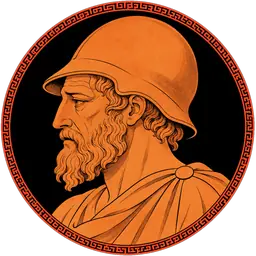
Nicias
Nicias son of Niceratus was a rich Athenian who led expeditions against the island of Minoa off Megara and against Melos.1 When Cleon said that taking the Spartans at Pylos would be easy, Nicias offered him the command and resigned it, calling the Athenians to witness.2 After the defeat at Amphipolis and the deaths of Cleon and Brasidas, Nicias and the Spartan king Pleistoanax pressed hardest for peace, and Plutarch says that the peace was still called the Peace of Nicias.3 He was chosen against his will as one of three generals for Sicily, with Alcibiades and Lamachus, and spoke against the expedition.4 At Syracuse, when the moon was eclipsed just as the Athenians were ready to sail away, Nicias, whom Thucydides calls too much given to divination, refused to move until they had waited thrice nine days, as the soothsayers advised.5 In the retreat he surrendered to Gylippus, and the Syracusans put him and Demosthenes to death against Gylippus' wish, though Timaeus, as Plutarch reports, said the two took their own lives; Thucydides judged that of all the Greeks of his time Nicias least deserved such an end.6
Events
Ties
- Cleon rival of Nicias Thucydides 4.28.1
- Hyperbolus rival of Nicias Plutarch, Nicias 11.4
- Alcibiades rival of Nicias Thucydides 6.15.2
- Lamachus commanded with Nicias Thucydides 6.8.2
- Demosthenes the general commanded with Nicias Thucydides 7.43.1
- Eurymedon son of Thucles commanded with Nicias Thucydides 7.16.2
- surrendered to Gylippus Thucydides 7.85.1
- made peace with Pleistoanax Thucydides 5.16.1
- Hermocrates deceived Nicias Thucydides 7.73.3
What the sources say
“All was at last ready, and they were on the point of sailing away, when an eclipse of the moon, which was then at the full, took place. Most of the Athenians, deeply impressed by this occurrence, now urged the generals to wait; and Nicias, who was somewhat over-addicted to divination and practices of that kind, refused from that moment even to take the question of departure into consideration, until they had waited the thrice nine days prescribed by the soothsayers.The besiegers were thus condemned to stay in the country;”
καὶ μελλόντων αὐτῶν, ἐπειδὴ ἑτοῖμα ἦν, ἀποπλεῖν ἡ σελήνη ἐκλείπει· ἐτύγχανε γὰρ πασσέληνος οὖσα. καὶ οἱ Ἀθηναῖοι οἵ τε πλείους ἐπισχεῖν ἐκέλευον τοὺς στρατηγοὺς ἐνθύμιον ποιούμενοι, καὶ ὁ Νικίας (ἦν γάρ τι καὶ ἄγαν θειασμῷ τε καὶ τῷ τοιούτῳ προσκείμενος) οὐδ’ ἂν διαβουλεύσασθαι ἔτι ἔφη πρίν, ὡς οἱ μάντεις ἐξηγοῦντο, τρὶς ἐννέα ἡμέρας μεῖναι, ὅπως ἂν πρότερον κινηθείη. καὶ τοῖς μὲν Ἀθηναίοις μελλήσασι διὰ τοῦτο ἡ μονὴ ἐγεγένητο.
Thucydides 7.50.4 · tr. Richard Crawley
“Nicias, while still happy and honored, wished to secure his good fortune, to obtain a present release from trouble for himself and his countrymen, and hand down to posterity a name as an ever-successful statesman, and thought the way to do this was to keep out of danger and commit himself as little as possible to fortune, and that peace alone made this keeping out of danger possible”
Νικίας μὲν βουλόμενος, ἐν ᾧ ἀπαθὴς ἦν καὶ ἠξιοῦτο, διασώσασθαι τὴν εὐτυχίαν, καὶ ἔς τε τὸ αὐτίκα πόνων πεπαῦσθαι καὶ αὐτὸς καὶ τοὺς πολίτας παῦσαι καὶ τῷ μέλλοντι χρόνῳ καταλιπεῖν ὄνομα ὡς οὐδὲν σφήλας τὴν πόλιν διεγένετο, νομίζων ἐκ τοῦ ἀκινδύνου τοῦτο ξυμβαίνειν καὶ ὅστις ἐλάχιστα τύχῃ αὑτὸν παραδίδωσι, τὸ δὲ ἀκίνδυνον τὴν εἰρήνην παρέχειν
Thucydides 5.16.1 · tr. Richard Crawley
“it was in this that Nicias himself mainly confided when he surrendered to Gylippus … This or the like was the cause of the death of a man who, of all the Hellenes in my time, least deserved such a fate, seeing that the whole course of his life had been regulated with strict attention to virtue”
κἀκεῖνος οὐχ ἥκιστα διὰ τοῦτο πιστεύσας ἑαυτὸν τῷ Γυλίππῳ παρέδωκεν … καὶ ὁ μὲν τοιαύτῃ ἢ ὅτι ἐγγύτατα τούτων αἰτίᾳ ἐτεθνήκει, ἥκιστα δὴ ἄξιος ὢν τῶν γε ἐπ’ ἐμοῦ Ἑλλήνων ἐς τοῦτο δυστυχίας ἀφικέσθαι διὰ τὴν πᾶσαν ἐς ἀρετὴν νενομισμένην ἐπιτήδευσιν
Thucydides 7.86 · tr. Richard Crawley
“They really thought that the peace was the work of Nicias, as the war had been that of Pericles. The one, on slight occasion, was thought to have plunged the Hellenes into great calamities; the other had persuaded them to forget the greatest injuries and become friends. Therefore, to this day, men call that peace The Peace of Nicias”
τῷ γὰρ ὄντι Νικίου τὴν εἰρήνην ἐνόμιζον ἔργον, ὡς Περικλέους τὸν πόλεμον. ὁ μὲν γὰρ ἐπʼ αἰτίαις μικραῖς εἰς συμφορὰς μεγάλας ἐμβαλεῖν ἐδόκει τοὺς Ἕλληνας, ὁ δὲ τῶν μεγίστων κακῶν ἔπεισεν ἐκλαθέσθαι φίλους γενομένους. διὸ καὶ τὴν εἰρήνην ἐκείνην ἄχρι νῦν Νικίειον καλοῦσι
Plutarch, Nicias 9.7 · tr. Bernadotte Perrin
First named
The earliest text in the library that names Nicias, written about 424 BC (a modern estimate of when it was written):
“I'll out-bawl the orators and throw Nicias into confusion.”
λαρυγγιῶ τοὺς ῥήτορας καὶ Νικίαν ταράξω.
Aristophanes, Knights 358 · AI translation (Claude)
Found by searching every text in the library for these spellings and reading the earliest hits to rule out namesakes: Νικίας, Nicias. Texts lost, or not in the library, may name Nicias earlier.
The passages behind each sentence
- Thucydides 3.51.1 (tr. Richard Crawley); Thucydides 3.91.1 (tr. Richard Crawley); Plutarch, Nicias 3.1 (tr. Bernadotte Perrin) ↩
- Thucydides 4.28.1 (tr. Richard Crawley); Thucydides 4.28.3 (tr. Richard Crawley) ↩
- Thucydides 5.16.1 (tr. Richard Crawley); Plutarch, Nicias 9.7 (tr. Bernadotte Perrin) ↩
- Thucydides 6.8.2 (tr. Richard Crawley); Thucydides 6.8.4 (tr. Richard Crawley) ↩
- Thucydides 7.50.4 (tr. Richard Crawley) ↩
- Thucydides 7.85.1 (tr. Richard Crawley); Thucydides 7.86.2 (tr. Richard Crawley); Thucydides 7.86.5 (tr. Richard Crawley); Plutarch, Nicias 28.4 (tr. Bernadotte Perrin) ↩
Cite this page
MLA “Nicias.” Atlas of Ancient History, Skirnir Studios, 2026, history.skirnirstudios.com/people/nicias/.
APA Skirnir Studios. (2026). Nicias. Atlas of Ancient History. https://history.skirnirstudios.com/people/nicias/
Chicago “Nicias.” Atlas of Ancient History. Skirnir Studios, 2026. https://history.skirnirstudios.com/people/nicias/.
The atlas was written by AI from the ancient sources. Where you can, cite the ancient passage itself by its reference (Herodotus 7.228, Livy 22.7.3) and name the translation you read.