Atlas of Ancient History › People › The Athenian age
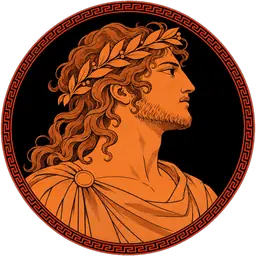
Alcibiades
Alcibiades son of Clinias, young but of a famous family, pressed Athens to ally with Argos rather than Sparta, and later was the warmest advocate of the Sicilian expedition and one of its three generals.1 Summoned home from Sicily to stand trial, he slipped away and crossed to the Peloponnese, was condemned to death in his absence, and at Sparta urged the Spartans to send a Spartan to command at Syracuse and to fortify Decelea.2 Later, distrusted by the Spartans and the personal enemy of Agis, he went over to Tissaphernes, until Thrasybulus persuaded the Athenian fleet at Samos to recall him.3 Near Cyzicus he caught the ships under Mindarus, who fell fighting on the shore, and when he later sailed home to Piraeus, crowds gathered to see the famous Alcibiades.4 After the defeat at Notium the Athenians turned against him, thinking he had lost the ships through neglect, and he sailed off to his own castle in the Chersonese.5 Plutarch says that under the Thirty, Critias urged Lysander to be rid of him, and men sent by Pharnabazus at Lysander's bidding surrounded the house where he was living in a village in Phrygia and shot him down.6
Events
Ties
- rival of Nicias Thucydides 6.15.2
- Pericles guardian of Alcibiades Plutarch, Alcibiades 1.1
- Socrates saved the life of Alcibiades Plutarch, Alcibiades 7.3
- advised Tissaphernes Thucydides 8.47.1
- Thrasybulus recalled Alcibiades Thucydides 8.81.1
- Critias proposed the recall of Alcibiades Plutarch, Alcibiades 33.1
- turned the ostracism against Hyperbolus Plutarch, Alcibiades 13.4
- Lysander ordered the death of Alcibiades Plutarch, Alcibiades 39.1
- Pharnabazus had killed Alcibiades Plutarch, Alcibiades 39.1
- Lamachus backed the plan of Alcibiades Thucydides 6.50.1
- enemy of Agis II Thucydides 8.45.1
- defeated Mindarus Xenophon, Hellenica 1.1.18
What the sources say
“By far the warmest advocate of the expedition was, however, Alcibiades, son of Clinias, who wished to thwart Nicias both as his political opponent and also because of the attack he had made upon him in his speech, and who was, besides, exceedingly ambitious of a command by which he hoped to reduce Sicily and Carthage, and personally to gain in wealth and reputation by means of his successes … Alarmed at the greatness of his license in his own life and habits, and of the ambition which he showed in all things soever that he undertook, the mass of the people set him down as a pretender to the tyranny, and became his enemies; and although publicly his conduct of the war was as good as could be desired individually, his habits gave offence to every one, and caused them to commit affairs to other hands, and thus before long to ruin the city”
ἐνῆγε δὲ προθυμότατα τὴν στρατείαν Ἀλκιβιάδης ὁ Κλεινίου, βουλόμενος τῷ τε Νικίᾳ ἐναντιοῦσθαι, ὢν καὶ ἐς τἆλλα διάφορος τὰ πολιτικὰ καὶ ὅτι αὐτοῦ διαβόλως ἐμνήσθη, καὶ μάλιστα στρατηγῆσαί τε ἐπιθυμῶν καὶ ἐλπίζων Σικελίαν τε δι’ αὐτοῦ καὶ Καρχηδόνα λήψεσθαι καὶ τὰ ἴδια ἅμα εὐτυχήσας χρήμασί τε καὶ δόξῃ ὠφελήσειν … φοβηθέντες γὰρ αὐτοῦ οἱ πολλοὶ τὸ μέγεθος τῆς τε κατὰ τὸ ἑαυτοῦ σῶμα παρανομίας ἐς τὴν δίαιταν καὶ τῆς διανοίας ὧν καθ’ ἓν ἕκαστον ἐν ὅτῳ γίγνοιτο ἔπρασσεν, ὡς τυραννίδος ἐπιθυμοῦντι πολέμιοι καθέστασαν, καὶ δημοσίᾳ κράτιστα διαθέντι τὰ τοῦ πολέμου ἰδίᾳ ἕκαστοι τοῖς ἐπιτηδεύμασιν αὐτοῦ ἀχθεσθέντες, καὶ ἄλλοις ἐπιτρέψαντες, οὐ διὰ μακροῦ ἔσφηλαν τὴν πόλιν
Thucydides 6.15 · tr. Richard Crawley
“Alcibiades gave this advice to Tissaphernes and the king, with whom he then was, not merely because he thought it really the best, but because he was studying means to effect his restoration to his country, well knowing that if he did not destroy it he might one day hope to persuade the Athenians to recall him, and thinking that his best chance of persuading them lay in letting them see that he possessed the favour of Tissaphernes.”
ὁ δὲ Ἀλκιβιάδης ταῦτα ἅμα μὲν τῷ Τισσαφέρνει καὶ [τῷ] βασιλεῖ, ὢν παρ’ ἐκείνοις, ἄριστα εἶναι νομίζων παρῄνει, ἅμα δὲ τὴν ἑαυτοῦ κάθοδον ἐς τὴν πατρίδα ἐπιθεραπεύων, εἰδώς, εἰ μὴ διαφθερεῖ αὐτήν, ὅτι ἔσται ποτὲ αὐτῷ πείσαντι κατελθεῖν· πεῖσαι δ’ ἂν ἐνόμιζε μάλιστα ἐκ τοῦ τοιούτου, εἰ Τισσαφέρνης φαίνοιτο αὐτῷ ἐπιτήδειος ὤν· ὅπερ καὶ ἐγένετο.
Thucydides 8.47.1 · tr. Richard Crawley
“When he sailed in, the common crowd of Piraeus and of the city gathered to his ships, filled with wonder and desiring to see the famous Alcibiades. Some of them said that he was the best of the citizens; that he alone was banished without just cause, but rather because he was plotted against by those who had less power than he and spoke less well and ordered their political doings with a view to their own private gain, whereas he was always advancing the common weal, both by his own means and by the power of the state.”
καταπλέοντος δʼ αὐτοῦ ὅ τε ἐκ τοῦ Πειραιῶς καὶ ὁ ἐκ τοῦ ἄστεως ὄχλος ἡθροίσθη πρὸς τὰς ναῦς, θαυμάζοντες καὶ ἰδεῖν βουλόμενοι τὸν Ἀλκιβιάδην, λέγοντες ὅτι οἱ μὲν ὡς κράτιστος εἴη τῶν πολιτῶν καὶ μόνος ἀπελογήθη ὡς οὐ δικαίως φύγοι, ἐπιβουλευθεὶς δὲ ὑπὸ τῶν ἔλαττον ἐκείνου δυναμένων μοχθηρότερά τε λεγόντων καὶ πρὸς τὸ αὑτῶν ἴδιον κέρδος πολιτευόντων, ἐκείνου ἀεὶ τὸ κοινὸν αὔξοντος καὶ ἀπὸ τῶν αὑτοῦ καὶ ἀπὸ τοῦ τῆς πόλεως δυνατοῦ·
Xenophon, Hellenica 1.4.13 · tr. Carleton L. Brownson
“Accordingly, Lysander sent to Pharnabazus and bade him do this thing, and Pharnabazus commissioned Magaeus, his brother, and Sousamithras, his uncle, to perform the deed. At that time Alcibiades was living in a certain village of Phrygia, where he had Timandra the courtesan with him”
ὡς οὖν ὁ Λύσανδρος ἔπεμψε πρὸς τὸν Φαρνάβαζον ταῦτα πράττειν κελεύων, ὁ δὲ Μαγαίῳ τε τῷ ἀδελφῷ καὶ Σουσαμίθρῃ τῷ θείῳ προσέταξε τὸ ἔργον, ἔτυχε μὲν ἐν κώμῃ τινὶ τῆς Φρυγίας ὁ Ἀλκιβιάδης τότε διαιτώμενος, ἔχων Τιμάνδραν μεθʼ αὑτοῦ τὴν ἑταίραν
Plutarch, Alcibiades 39.1 · tr. Bernadotte Perrin
First named
The earliest text in the library that names Alcibiades, written about 422 BC (a modern estimate of when it was written):
“Then Alcibiades said to me with a lisp,”
εἶτʼ Ἀλκιβιάδης εἶπε πρός με τραυλίσας,
Aristophanes, Wasps 44 · AI translation (Claude)
Found by searching every text in the library for these spellings and reading the earliest hits to rule out namesakes: Ἀλκιβιάδης, Alcibiades. Texts lost, or not in the library, may name Alcibiades earlier.
The passages behind each sentence
- Thucydides 5.43.2 (tr. Richard Crawley); Thucydides 6.15.2 (tr. Richard Crawley); Thucydides 6.8.2 (tr. Richard Crawley) ↩
- Thucydides 6.61.7 (tr. Richard Crawley); Thucydides 6.91.4 (tr. Richard Crawley); Thucydides 6.91.6 (tr. Richard Crawley) ↩
- Thucydides 8.45.1 (tr. Richard Crawley); Thucydides 8.81.1 (tr. Richard Crawley) ↩
- Xenophon, Hellenica 1.1.16 (tr. Carleton L. Brownson); Xenophon, Hellenica 1.1.18 (tr. Carleton L. Brownson); Xenophon, Hellenica 1.4.13 (tr. Carleton L. Brownson) ↩
- Xenophon, Hellenica 1.5 (tr. Carleton L. Brownson) ↩
- Plutarch, Alcibiades 38.3 (tr. Bernadotte Perrin); Plutarch, Alcibiades 39.1 (tr. Bernadotte Perrin); Plutarch, Alcibiades 39.3 (tr. Bernadotte Perrin) ↩
Cite this page
MLA “Alcibiades.” Atlas of Ancient History, Skirnir Studios, 2026, history.skirnirstudios.com/people/alcibiades/.
APA Skirnir Studios. (2026). Alcibiades. Atlas of Ancient History. https://history.skirnirstudios.com/people/alcibiades/
Chicago “Alcibiades.” Atlas of Ancient History. Skirnir Studios, 2026. https://history.skirnirstudios.com/people/alcibiades/.
The atlas was written by AI from the ancient sources. Where you can, cite the ancient passage itself by its reference (Herodotus 7.228, Livy 22.7.3) and name the translation you read.