Atlas of Ancient History › People › The Athenian age
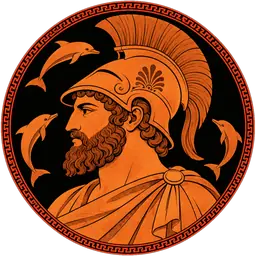
Hermocrates
Hermocrates son of Hermon was the Syracusan who did most to persuade the Sicilian cities, meeting at Gela, to end their war with one another.1 When reports of the Athenian armada were doubted at Syracuse, he came forward, sure that he knew the truth, to warn the assembly.2 After their first defeat he put heart into the Syracusans, who voted as he advised and chose him one of three generals.3 When the beaten Athenians were about to retreat, he sent men to tell Nicias, as if from friends, that the roads were guarded, and the Athenians put off their march.4 Later the people at home banished him and the other Syracusan generals, and new generals came out to Miletus to take over the ships; he had long been at odds with Tissaphernes, and Pharnabazus gave him money to win his way home.5 Diodorus says that when he tried to force his way back into Syracuse with a few men, the Syracusans came armed into the agora and killed him and most of his followers.6
Events
Ties
- deceived Nicias Thucydides 7.73.3
- enemy of Tissaphernes Thucydides 8.85.3
- Pharnabazus gave money to Hermocrates Xenophon, Hellenica 1.1.31
What the sources say
“Hermocrates, son of Hermon, a Syracusan, the most influential man among them, addressed the following words to the assembly”
καὶ Ἑρμοκράτης ὁ Ἕρμωνος Συρακόσιος, ὅσπερ καὶ ἔπεισε μάλιστα αὐτούς, ἐς τὸ κοινὸν τοιούτους δὴ λόγους εἶπεν
Thucydides 4.58.1 · tr. Richard Crawley
“in which Hermocrates, son of Hermon, a man who with a general ability of the first order had given proofs of military capacity and brilliant courage in the war, came forward and encouraged them, and told them not to let what had occurred make them give way”
καὶ παρελθὼν αὐτοῖς Ἑρμοκράτης ὁ Ἕρμωνος, ἀνὴρ καὶ ἐς τἆλλα ξύνεσιν οὐδενὸς λειπόμενος καὶ κατὰ τὸν πόλεμον ἐμπειρίᾳ τε ἱκανὸς γενόμενος καὶ ἀνδρείᾳ ἐπιφανής, ἐθάρσυνέ τε καὶ οὐκ εἴα τῷ γεγενημένῳ ἐνδιδόναι
Thucydides 6.72.2 · tr. Richard Crawley
“Hermocrates, finding himself unable to do anything further with them, had now recourse to the following stratagem of his own. What he feared was that the Athenians might quietly get the start of them by passing the most difficult places during the night; and he therefore sent, as soon as it was dusk, some friends of his own to the camp with some horsemen who rode up within earshot and called out to some of the men, as though they were well-wishers of the Athenians, and told them to tell Nicias (who had in fact some correspondence who informed him of what went on inside the town), not to lead off the army by night as the Syracusans were guarding the roads, but to make his preparations at his leisure and to retreat by day”
οὐκέτι ἔπειθεν αὐτοὺς ὁ Ἑρμοκράτης, αὐτὸς ἐπὶ τούτοις τάδε μηχανᾶται, δεδιὼς μὴ οἱ Ἀθηναῖοι καθ’ ἡσυχίαν προφθάσωσιν ἐν τῇ νυκτὶ διελθόντες τὰ χαλεπώτατα τῶν χωρίων. πέμπει τῶν ἑταίρων τινὰς τῶν ἑαυτοῦ μετὰ ἱππέων πρὸς τὸ τῶν Ἀθηναίων στρατόπεδον, ἡνίκα ξυνεσκόταζεν· οἳ προσελάσαντες ἐξ ὅσου τις ἔμελλεν ἀκούσεσθαι καὶ ἀνακαλεσάμενοί τινας ὡς ὄντες τῶν Ἀθηναίων ἐπιτήδειοι (ἦσαν γάρ τινες τῷ Νικίᾳ διάγγελοι τῶν ἔνδοθεν) ἐκέλευον φράζειν Νικίᾳ μὴ ἀπάγειν τῆς νυκτὸς τὸ στράτευμα ὡς Συρακοσίων τὰς ὁδοὺς φυλασσόντων, ἀλλὰ καθ’ ἡσυχίαν τῆς ἡμέρας παρασκευασάμενον ἀποχωρεῖν
Thucydides 7.73.3 · tr. Richard Crawley
“As a result of this Hermocrates enjoyed the greatest reputation in the general council, and was thought superior to all others as speaker and adviser”
ἐκ τούτων Ἑρμοκράτης τὰ πολλὰ ἐν τῷ συνεδρίῳ ηὐδόξει, λέγειν τε δοκῶν καὶ βουλεύειν τὰ κράτιστα
Xenophon, Hellenica 1.1.31 · tr. Carleton L. Brownson
First named
The earliest text in the library that names Hermocrates, written about 400 BC (a modern estimate of when it was written):
“Hermocrates, son of Hermon, a Syracusan, the most influential man among them, addressed the following words to the assembly”
καὶ Ἑρμοκράτης ὁ Ἕρμωνος Συρακόσιος, ὅσπερ καὶ ἔπεισε μάλιστα αὐτούς, ἐς τὸ κοινὸν τοιούτους δὴ λόγους εἶπεν
Thucydides 4.58.1 · tr. Richard Crawley
Found by searching every text in the library for these spellings and reading the earliest hits to rule out namesakes: Ἑρμοκράτης, Hermocrates. Texts lost, or not in the library, may name Hermocrates earlier.
The passages behind each sentence
- Thucydides 4.58.1 (tr. Richard Crawley); Thucydides 4.65.1 (tr. Richard Crawley) ↩
- Thucydides 6.32.3 (tr. Richard Crawley); Thucydides 6.33.1 (tr. Richard Crawley) ↩
- Thucydides 6.72.2 (tr. Richard Crawley); Thucydides 6.73.1 (tr. Richard Crawley) ↩
- Thucydides 7.73.3 (tr. Richard Crawley); Thucydides 7.74.1 (tr. Richard Crawley) ↩
- Xenophon, Hellenica 1.1.27 (tr. Carleton L. Brownson); Thucydides 8.85.3 (tr. Richard Crawley); Xenophon, Hellenica 1.1.31 (tr. Carleton L. Brownson) ↩
- Diodorus 13.75.7 (AI translation (Claude)); Diodorus 13.75.8 (AI translation (Claude)) ↩
Cite this page
MLA “Hermocrates.” Atlas of Ancient History, Skirnir Studios, 2026, history.skirnirstudios.com/people/hermocrates/.
APA Skirnir Studios. (2026). Hermocrates. Atlas of Ancient History. https://history.skirnirstudios.com/people/hermocrates/
Chicago “Hermocrates.” Atlas of Ancient History. Skirnir Studios, 2026. https://history.skirnirstudios.com/people/hermocrates/.
The atlas was written by AI from the ancient sources. Where you can, cite the ancient passage itself by its reference (Herodotus 7.228, Livy 22.7.3) and name the translation you read.