Atlas of Ancient History › People › Archaic Greece and Persia
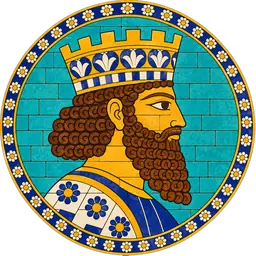
Cyrus the Great
Herodotus makes Cyrus the son of the Persian Cambyses and of Mandane, daughter of the Median king Astyages, who ordered him killed at birth; a cowherd and his wife, told to leave him to die, raised him instead.1 Urged on by Harpagus, he led the Persians in revolt and took Astyages prisoner, and from then on, Herodotus says, the Persians ruled Asia.2 He defeated Croesus and took Sardis, and his general Harpagus then conquered the Greek cities of Ionia.3 He took Babylon by drawing off the Euphrates so that his men could enter along the riverbed; the Babylonian priest Berossus, quoted by Josephus, says the defeated king Nabonnedus surrendered and was sent to live in Carmania.4 A deed from Uruk is dated in the second year of 'Cyrus, king of Babylon, king of the lands'; a Hebrew prophet calls him the Lord's anointed, and the book of Ezra opens with his decree to build the Lord a house in Jerusalem.5 Herodotus says he died fighting Tomyris, queen of the Massagetae, after a reign of twenty-nine years, though he knew many stories of his death; Xenophon instead has him die an old man in his palace in Persia.6
Open Cyrus the Great in the atlas
Events
Ties
- Astyages grandfather of Cyrus the Great Herodotus 1.75.1
- defeated Astyages Herodotus 1.46.1
- Harpagus general of Cyrus the Great Herodotus 1.162.1
- defeated Croesus Herodotus 1.86.1
- Croesus advised Cyrus the Great Herodotus 1.208
- marched against Labynetus of Babylon Herodotus 1.188.1
- Tomyris defeated Cyrus the Great Herodotus 1.214
- father of Cambyses Herodotus 1.208
- father of Smerdis Herodotus 3.61.2
- father of Atossa Herodotus 3.88.2
What the sources say
“Third, after him, Cyrus, blessed in good fortune, came to the throne and established peace for all his people. The Lydians and Phrygians he won to his rule, and the whole of Ionia he subdued by force; for he won the favor of the gods through his right-mindedness”
τρίτος δʼ ἀπʼ αὐτοῦ Κῦρος, εὐδαίμων ἀνήρ, / ἄρξας ἔθηκε πᾶσιν εἰρήνην φίλοις· / Λυδῶν δὲ λαὸν καὶ Φρυγῶν ἐκτήσατο, / Ἰωνίαν τε πᾶσαν ἤλασεν βίᾳ. / θεὸς γὰρ οὐκ ἤχθηρεν, ὡς εὔφρων ἔφυ.
Aeschylus, Persians 768–772 · tr. Herbert Weir Smyth
“As soon as the Lydians had been subjugated by the Persians, the Ionians and Aeolians sent messengers to Cyrus, offering to be his subjects on the same terms as those which they had under Croesus. After hearing what they proposed, Cyrus told them a story. Once, he said, there was a flute-player who saw fish in the sea and played upon his flute, thinking that they would come out on to the land.”
Ἴωνες δὲ καὶ Αἰολέες, ὡς οἱ Λυδοὶ τάχιστα κατεστράφατο ὑπὸ Περσέων, ἔπεμπον ἀγγέλους ἐς Σάρδις παρὰ Κῦρον, ἐθέλοντες ἐπὶ τοῖσι αὐτοῖσι εἶναι τοῖσι καὶ Κροίσῳ ἦσαν κατήκοοι. ὁ δὲ ἀκούσας αὐτῶν τὰ προΐσχοντο ἔλεξέ σφι λόγον, ἄνδρα φὰς αὐλητὴν ἰδόντα ἰχθῦς ἐν τῇ θαλάσσῃ αὐλέειν, δοκέοντα σφέας ἐξελεύσεσθαι ἐς γῆν·
Herodotus 1.141.1 · tr. A. D. Godley
“Thus saith the LORD to His anointed, to Cyrus, whose right hand I have holden, to subdue nations before him, and to loose the loins of kings; to open the doors before him, and that the gates may not be shut:”
כֹּה־אָמַ֣ר יְהוָה֮ לִמְשִׁיחוֹ֮ לְכ֣וֹרֶשׁ אֲשֶׁר־הֶחֱזַ֣קְתִּי בִֽימִינ֗וֹ לְרַד־לְפָנָיו֙ גּוֹיִ֔ם וּמָתְנֵ֥י מְלָכִ֖ים אֲפַתֵּ֑חַ לִפְתֹּ֤חַ לְפָנָיו֙ דְּלָתַ֔יִם וּשְׁעָרִ֖ים לֹ֥א יִסָּגֵֽרוּ׃
Hebrew Bible, Isaiah 45.1 · tr. Jewish Publication Society (1917)
“Though I am alive and have defeated you in battle, you have destroyed me, taking my son by guile; but just as I threatened, I give you your fill of blood.” Many stories are told of Cyrus' death; this, that I have told, is the most credible.”
σὺ μὲν ἐμὲ ζῶσάν τε καὶ νικῶσάν σε μάχῃ ἀπώλεσας, παῖδα τὸν ἐμὸν ἑλὼν δόλῳ· σὲ δʼ ἐγώ, κατά περ ἠπείλησα, αἵματος κορέσω. τὰ μὲν δὴ κατὰ τὴν Κύρου τελευτὴν τοῦ βίου, πολλῶν λόγων λεγομένων, ὅδε μοι ὁ πιθανώτατος εἴρηται.
Herodotus 1.214.5 · tr. A. D. Godley
First named
The earliest text in the library that names Cyrus the Great, written about 536 BC (a modern estimate of when it was written):
“At Uruk, month Addaru, 20th day, 2th year of Cyrus, king of Babylon, king of the all the lands”
{m}ku-raš LUGAL TIN.TIR{ki} LUGAL KUR.KUR
Deed from Uruk (SpTU 5, 286) r 15 · tr. the GKAB Project (Philippe Clancier, Eleanor Robson and others) - CC BY-SA 3.0
The date runs over two lines of the tablet; the original shown is the line naming Cyrus. Year 2 of Cyrus as king of Babylon is 537/536 BC by modern reckoning.
Found by searching every text in the library for these spellings and reading the earliest hits to rule out namesakes: Κῦρος, Cyrus, כּוֹרֶשׁ, Kuraš. Texts lost, or not in the library, may name Cyrus the Great earlier.
The passages behind each sentence
- Herodotus 1.107.2 (tr. A. D. Godley); Herodotus 1.108.4 (tr. A. D. Godley); Herodotus 1.113.3 (tr. A. D. Godley) ↩
- Herodotus 1.124.2 (tr. A. D. Godley); Herodotus 1.128.3 (tr. A. D. Godley); Herodotus 1.130.2 (tr. A. D. Godley) ↩
- Herodotus 1.86.1 (tr. A. D. Godley); Herodotus 1.162.2 (tr. A. D. Godley); Herodotus 1.169.2 (tr. A. D. Godley) ↩
- Herodotus 1.191.4 (tr. A. D. Godley); Josephus, Against Apion 1.153 (tr. William Whiston) ↩
- Deed from Uruk (SpTU 5, 286) r 15 (tr. the GKAB Project (Philippe Clancier, Eleanor Robson and others) - CC BY-SA 3.0); Hebrew Bible, Isaiah 45.1 (tr. Jewish Publication Society (1917)); Hebrew Bible, Ezra 1.2 (tr. Jewish Publication Society (1917)) ↩
- Herodotus 1.214.3 (tr. A. D. Godley); Herodotus 1.214.5 (tr. A. D. Godley); Xenophon, Cyropaedia 8.7.1 (tr. Walter Miller) ↩
Cite this page
MLA “Cyrus the Great.” Atlas of Ancient History, Skirnir Studios, 2026, history.skirnirstudios.com/people/cyrus/.
APA Skirnir Studios. (2026). Cyrus the Great. Atlas of Ancient History. https://history.skirnirstudios.com/people/cyrus/
Chicago “Cyrus the Great.” Atlas of Ancient History. Skirnir Studios, 2026. https://history.skirnirstudios.com/people/cyrus/.
The atlas was written by AI from the ancient sources. Where you can, cite the ancient passage itself by its reference (Herodotus 7.228, Livy 22.7.3) and name the translation you read.