Atlas of Ancient History › People › Archaic Greece and Persia
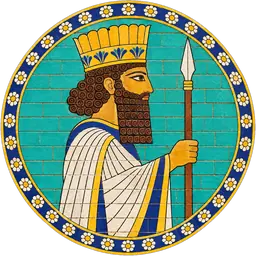
Cambyses
Cambyses was the eldest son of Cyrus and Cassandane, and Cyrus named him heir when he marched against the Massagetae.1 He invaded Egypt with an army that included Ionian and Aeolian Greeks.2 He defeated king Psammenitus son of Amasis by the Pelusian mouth of the Nile and took him prisoner after the fall of Memphis.3 An army he sent against the oasis of Ammon vanished in a sandstorm, and his own march on the Ethiopians turned back for lack of food.4 Herodotus, following Egyptian informants, says he stabbed the sacred calf Apis and went mad, and then had his brother Smerdis killed and killed the sister he had married.5 When a herald proclaimed that a Magus had taken the throne in Smerdis' name, he leapt on his horse, wounded his thigh on his own sword at Ecbatana in Syria, and died, having reigned seven years and five months and leaving no children.6
Events
Ties
- Cyrus the Great father of Cambyses Herodotus 1.208
- brother of Smerdis Herodotus 3.30.1
- had killed Smerdis Herodotus 3.30
- Atossa wife of Cambyses Herodotus 3.88.2
- Otanes father-in-law of Cambyses Herodotus 3.68.3
- defeated Psammenitus Herodotus 3.14.1
- mutilated the body of Amasis Herodotus 3.16.1
- Polycrates sent ships to Cambyses Herodotus 3.44.2
What the sources say
“When the priests led Apis in, Cambyses—for he was all but mad—drew his dagger and, meaning to stab the calf in the belly, stuck the thigh; then laughing he said to the priests: “Simpletons, are these your gods, creatures of flesh and blood that can feel weapons of iron? That is a god worthy of the Egyptians. But for you, you shall suffer for making me your laughing-stock.” So saying he bade those, whose business it was, to scourge the priests well, and to kill any other Egyptian whom they found holiday-making”
ὡς δὲ ἤγαγον τὸν Ἆπιν οἱ ἱρέες, ὁ Καμβύσης, οἷα ἐὼν ὑπομαργότερος, σπασάμενος τὸ ἐγχειρίδιον, θέλων τύψαι τὴν γαστέρα τοῦ Ἄπιος παίει τὸν μηρόν· γελάσας δὲ εἶπε πρὸς τοὺς ἱρέας ὦ κακαὶ κεφαλαί, τοιοῦτοι θεοὶ γίνονται, ἔναιμοί τε καὶ σαρκώδεες καὶ ἐπαΐοντες σιδηρίων; ἄξιος μέν γε Αἰγυπτίων οὗτός γε ὁ θεός, ἀτάρ τοι ὑμεῖς γε οὐ χαίροντες γέλωτα ἐμὲ θήσεσθε. ταῦτα εἴπας ἐνετείλατο τοῖσι ταῦτα πρήσσουσι τοὺς μὲν ἱρέας ἀπομαστιγῶσαι, Αἰγυπτίων δὲ τῶν ἄλλων τὸν ἂν λάβωσι ὁρτάζοντα κτείνειν
Herodotus 3.29 · tr. A. D. Godley
“I hold it then in every way proved that Cambyses was quite insane; or he would never have set himself to deride religion and custom. For if it were proposed to all nations to choose which seemed best of all customs, each, after examination, would place its own first; so well is each convinced that its own are by far the best.”
πανταχῇ ὦν μοι δῆλα ἐστὶ ὅτι ἐμάνη μεγάλως ὁ Καμβύσης· οὐ γὰρ ἂν ἱροῖσί τε καὶ νομαίοισι ἐπεχείρησε καταγελᾶν. εἰ γάρ τις προθείη πᾶσι ἀνθρώποισι ἐκλέξασθαι κελεύων νόμους τοὺς καλλίστους ἐκ τῶν πάντων νόμων, διασκεψάμενοι ἂν ἑλοίατο ἕκαστοι τοὺς ἑωυτῶν· οὕτω νομίζουσι πολλόν τι καλλίστους τοὺς ἑωυτῶν νόμους ἕκαστοι εἶναι.
Herodotus 3.38.1 · tr. A. D. Godley
“So when he now inquired and learned the name of the town, the shock of his wound, and of the misfortune that came to him from the Magus, brought him to his senses; he understood the prophecy and said: “Here Cambyses son of Cyrus is to die.”
καὶ δὴ ὡς τότε ἐπειρόμενος ἐπύθετο τῆς πόλιος τὸ οὔνομα, ὑπὸ τῆς συμφορῆς τῆς τε ἐκ τοῦ Μάγου ἐκπεπληγμένος καὶ τοῦ τρώματος ἐσωφρόνησε, συλλαβὼν δὲ τὸ θεοπρόπιον εἶπε ἐνθαῦτα Καμβύσεα τὸν Κύρου ἐστὶ πεπρωμένον τελευτᾶν.
Herodotus 3.64.5 · tr. A. D. Godley
First named
The earliest text in the library that names Cambyses, written about 430 BC (a modern estimate of when it was written):
“So these opinions clashed; and Cyrus set aside his former plan and chose that of Croesus; consequently, he told Tomyris to draw her army off, for he would cross (he said) and attack her; so she withdrew as she had promised before. Then he entrusted Croesus to the care of his own son Cambyses, to whom he would leave his sovereignty, telling Cambyses to honor Croesus and treat him well if the crossing of the river against the Massagetae should not go well. With these instructions, he sent the two back to Persia, and he and his army crossed the river.”
γνῶμαι μὲν αὗται συνέστασαν· Κῦρος δὲ μετεὶς τὴν προτέρην γνώμην, τὴν Κροίσου δὲ ἑλόμενος, προηγόρευε Τομύρι ἐξαναχωρέειν ὡς αὐτοῦ διαβησομένου ἐπʼ ἐκείνην. ἣ μὲν δὴ ἐξανεχώρεε κατὰ ὑπέσχετο πρῶτα· Κῦρος δὲ Κροῖσον ἐς τὰς χεῖρας ἐσθεὶς τῷ ἑωυτοῦ παιδὶ Καμβύσῃ, τῷ περ τὴν βασιληίην ἐδίδου, καὶ πολλὰ ἐντειλάμενὸς οἱ τιμᾶν τε αὐτὸν καὶ εὖ ποιέειν, ἢν ἡ διάβασις ἡ ἐπὶ Μασσαγέτας μὴ ὀρθωθῇ, ταῦτα ἐντειλάμενος καὶ ἀποστείλας τούτους ἐς Πέρσας, αὐτὸς διέβαινε τὸν ποταμὸν καὶ ὁ στρατὸς αὐτοῦ.
Herodotus 1.208 · tr. A. D. Godley
Found by searching every text in the library for these spellings and reading the earliest hits to rule out namesakes: Καμβύσης, Cambyses. Texts lost, or not in the library, may name Cambyses earlier.
The passages behind each sentence
- Herodotus 3.2.2 (tr. A. D. Godley); Herodotus 3.3.3 (tr. A. D. Godley); Herodotus 1.208 (tr. A. D. Godley) ↩
- Herodotus 3.1.1 (tr. A. D. Godley) ↩
- Herodotus 3.10.1 (tr. A. D. Godley); Herodotus 3.11.3 (tr. A. D. Godley); Herodotus 3.14.1 (tr. A. D. Godley) ↩
- Herodotus 3.26.3 (tr. A. D. Godley); Herodotus 3.25.7 (tr. A. D. Godley) ↩
- Herodotus 3.29.1 (tr. A. D. Godley); Herodotus 3.30.1 (tr. A. D. Godley); Herodotus 3.31.1 (tr. A. D. Godley) ↩
- Herodotus 3.62.1 (tr. A. D. Godley); Herodotus 3.64.3 (tr. A. D. Godley); Herodotus 3.66.2 (tr. A. D. Godley) ↩
Cite this page
MLA “Cambyses.” Atlas of Ancient History, Skirnir Studios, 2026, history.skirnirstudios.com/people/cambyses/.
APA Skirnir Studios. (2026). Cambyses. Atlas of Ancient History. https://history.skirnirstudios.com/people/cambyses/
Chicago “Cambyses.” Atlas of Ancient History. Skirnir Studios, 2026. https://history.skirnirstudios.com/people/cambyses/.
The atlas was written by AI from the ancient sources. Where you can, cite the ancient passage itself by its reference (Herodotus 7.228, Livy 22.7.3) and name the translation you read.