Atlas of Ancient History › People › Archaic Greece and Persia
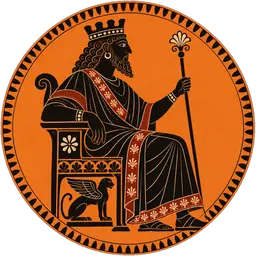
Croesus
Croesus son of Alyattes came to the throne of Lydia at thirty-five and was, Herodotus says, the first foreigner to make Greeks pay him tribute.1 Herodotus has Solon the Athenian visit him at Sardis and refuse to call him fortunate until he had seen how his life ended.2 Delphi told him that if he marched against the Persians he would destroy a great empire, and he made alliances with Sparta, with Amasis of Egypt and with Labynetus of Babylon.3 After a drawn battle with Cyrus in Cappadocia he went back to Sardis, where Cyrus followed him and took the city after a siege of fourteen days; Croesus had reigned fourteen years.4 Herodotus says Cyrus set him on a pyre, relented, and could not put out the fire until Apollo sent rain; Bacchylides, writing about 468 BC, says instead that Croesus climbed the pyre himself with his wife and daughters and that Apollo carried him off to the Hyperboreans.5 In Herodotus he lived on as an adviser to Cyrus and then to Cambyses, and Pindar names him as the pattern of a kindly, generous king.6
Events
Ties
- Gyges ancestor of Croesus Herodotus 1.91.1
- Alyattes father of Croesus Herodotus 1.26.1
- brother-in-law of Astyages Herodotus 1.73.2
- Cyrus the Great defeated Croesus Herodotus 1.86.1
- advised Cyrus the Great Herodotus 1.208
- Solon advised Croesus Herodotus 1.32
- ally of Amasis Herodotus 1.77
- ally of Labynetus of Babylon Herodotus 1.77
- Pittacus said to have advised Croesus Herodotus 1.27.2
- Thales said to have helped Croesus Herodotus 1.75.3
What the sources say
“Such was their inquiry; and the judgment given to Croesus by each of the two oracles was the same: namely, that if he should send an army against the Persians he would destroy a great empire. And they advised him to discover the mightiest of the Greeks and make them his friends.”
οἳ μὲν ταῦτα ἐπειρώτων, τῶν δὲ μαντηίων ἀμφοτέρων ἐς τὠυτὸ αἱ γνῶμαι συνέδραμον, προλέγουσαι Κροίσῳ, ἢν στρατεύηται ἐπὶ Πέρσας, μεγάλην ἀρχὴν μιν καταλύσειν· τοὺς δὲ Ἑλλήνων δυνατωτάτους συνεβούλευόν οἱ ἐξευρόντα φίλους προσθέσθαι.
Herodotus 1.53.3 · tr. A. D. Godley
“So Cyrus did this. As Croesus stood on the pyre, even though he was in such a wretched position it occurred to him that Solon had spoken with god's help when he had said that no one among the living is fortunate. When this occurred to him, he heaved a deep sigh and groaned aloud after long silence, calling out three times the name “Solon.”
τὸν μὲν δὴ ποιέειν ταῦτα· τῷ δὲ Κροίσῳ ἑστεῶτι ἐπὶ τῆς πυρῆς ἐσελθεῖν, καίπερ ἐν κακῷ ἐόντι τοσούτῳ, τὸ τοῦ Σόλωνος ὥς οἱ εἴη σὺν θεῷ εἰρημένον, τὸ μηδένα εἶναι τῶν ζωόντων ὄλβιον. ὡς δὲ ἄρα μιν προσστῆναι τοῦτο, ἀνενεικάμενόν τε καὶ ἀναστενάξαντα ἐκ πολλῆς ἡσυχίης ἐς τρὶς ὀνομάσαι Σόλων.
Herodotus 1.86.3 · tr. A. D. Godley
“Croesus, what man persuaded you to wage war against my land and become my enemy instead of my friend?” He replied, “O King, I acted thus for your good fortune, but for my own ill fortune. The god of the Hellenes is responsible for these things, inciting me to wage war. No one is so foolish as to choose war over peace. In peace sons bury their fathers, in war fathers bury their sons. But I suppose it was dear to the divinity that this be so”
Κροῖσε, τίς σε ἀνθρώπων ἀνέγνωσε ἐπὶ γῆν τὴν ἐμὴν στρατευσάμενον πολέμιον ἀντὶ φίλου ἐμοὶ καταστῆναι; ὁ δὲ εἶπε ὦ βασιλεῦ, ἐγὼ ταῦτα ἔπρηξα τῇ σῇ μὲν εὐδαιμονίῃ, τῇ ἐμεωυτοῦ δὲ κακοδαιμονίῃ, αἴτιος δὲ τούτων ἐγένετο ὁ Ἑλλήνων θεὸς ἐπαείρας ἐμὲ στρατεύεσθαι. οὐδεὶς γὰρ οὕτω ἀνόητος ἐστὶ ὅστις πόλεμον πρὸ εἰρήνης αἱρέεται· ἐν μὲν γὰρ τῇ οἱ παῖδες τοὺς πατέρας θάπτουσι, ἐν δὲ τῷ οἱ πατέρες τοὺς παῖδας. ἀλλὰ ταῦτα δαίμοσί κου φίλον ἦν οὕτω γενέσθαι
Herodotus 1.87 · tr. A. D. Godley
“For indeed, once the ruler of horse-taming Lydia, Croesus—when Zeus was bringing about the decreed fate, and Sardis was being sacked by the Persian army—Croesus was protected by the god of the golden lyre, Apollo … He had a pyre built before his bronze-walled courtyard, and he mounted the pyre with his dear wife and his daughters with beautiful hair; they were weeping inconsolably … Then Apollo, born on Delos, brought the old man to live among the Hyperboreans, along with his slender-ankled daughters, because of his piety, since of all mortals he sent the greatest gifts to holy Pytho”
ἐπεί ποτε καὶ δαμασίππου Λυδίας ἀρχαγέταν, εὖτε τὰν πεπ[ρωμέναν Ζηνὸς τελε[ιοῦσαι κρίσιν Σάρδιες Περσᾶ[ν ἐπορθεῦντο στρ]ατῷ, Κροῖσον ὁ χρυσά[ορος φύλαξʼ Ἀπόλλων … πυρὰν δὲ χαλκοτειχέος π[ροπάροι]θεν αὐ[λᾶς ναήσατʼ, ἔνθα σὺ[ν ἀλόχῳ] τε κεδνᾷ σὺν εὐπλοκάμοις τʼ ἐπέβαινʼ ἄλα[στον θυγατράσι δυρομέναις … τότε Δαλογενὴς Ἀπόλλων φέρων ἐς Ὑπερβορέους γέροντα σὺν τανισφύροις κατένασσε κούραις δι’ εὐσέβειαν, ὅτι μέγιστα θνατῶν. ἐς ἀγαθέαν ἀνέπεμψε Πυθώ
Bacchylides, Odes 3 · tr. Diane Arnson Svarlien
First named
The earliest text in the library that names Croesus, written about 470 BC (a modern estimate of when it was written):
“The kindly excellence of Croesus does not perish”
καὶ λογίοις καὶ ἀοιδοῖς· οὐ φθίνει Κροίσου φιλόφρων ἀρετά·
Pindar, Pythian 1.94 · tr. Diane Arnson Svarlien
Found by searching every text in the library for these spellings and reading the earliest hits to rule out namesakes: Κροῖσος, Croesus. Texts lost, or not in the library, may name Croesus earlier.
The passages behind each sentence
- Herodotus 1.26.1 (tr. A. D. Godley); Herodotus 1.6.2 (tr. A. D. Godley) ↩
- Herodotus 1.30.3 (tr. A. D. Godley); Herodotus 1.32.7 (tr. A. D. Godley) ↩
- Herodotus 1.53.3 (tr. A. D. Godley); Herodotus 1.69.3 (tr. A. D. Godley); Herodotus 1.77.2 (tr. A. D. Godley) ↩
- Herodotus 1.77.1 (tr. A. D. Godley); Herodotus 1.79.2 (tr. A. D. Godley); Herodotus 1.86.1 (tr. A. D. Godley) ↩
- Herodotus 1.86.2 (tr. A. D. Godley); Herodotus 1.87.2 (tr. A. D. Godley); Bacchylides, Odes 3 (tr. Diane Arnson Svarlien) ↩
- Herodotus 1.207.1 (tr. A. D. Godley); Herodotus 3.36.1 (tr. A. D. Godley); Pindar, Pythian 1.94 (tr. Diane Arnson Svarlien) ↩
Cite this page
MLA “Croesus.” Atlas of Ancient History, Skirnir Studios, 2026, history.skirnirstudios.com/people/croesus/.
APA Skirnir Studios. (2026). Croesus. Atlas of Ancient History. https://history.skirnirstudios.com/people/croesus/
Chicago “Croesus.” Atlas of Ancient History. Skirnir Studios, 2026. https://history.skirnirstudios.com/people/croesus/.
The atlas was written by AI from the ancient sources. Where you can, cite the ancient passage itself by its reference (Herodotus 7.228, Livy 22.7.3) and name the translation you read.