Atlas of Ancient History › People › Archaic Greece and Persia
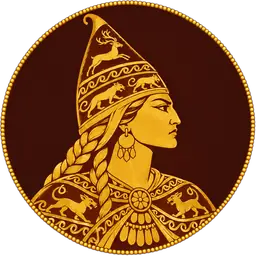
Tomyris
Tomyris was the widowed queen of the Massagetae, a people beyond the Araxes, when Cyrus came against them.1 She refused his offer of marriage, seeing that he wanted her kingdom, and told him to rule his own people and let her rule hers.2 On Croesus' advice Cyrus left a feast and wine for her advance guard; her son Spargapises was taken prisoner while drunk and killed himself once he was unbound.3 She then beat the Persians in what Herodotus judged the fiercest battle ever fought between peoples who were not Greek, and Cyrus fell.4 Herodotus says she pushed the dead king's head into a skin full of blood, giving him, as she had threatened, his fill of blood; he adds that this was the most credible of the many stories of Cyrus' death.5
Events
Ties
- defeated Cyrus the Great Herodotus 1.214
What the sources say
“But while he was busy at this, Tomyris sent a herald to him with this message: “O king of the Medes, stop hurrying on what you are hurrying on, for you cannot know whether the completion of this work will be for your advantage. Stop, and be king of your own country; and endure seeing us ruling those whom we rule.”
ἔχοντι δέ οἱ τοῦτον τὸν πόνον πέμψασα ἡ Τόμυρις κήρυκα ἔλεγε τάδε. ὦ βασιλεῦ Μήδων, παῦσαι σπεύδων τὰ σπεύδεις· οὐ γὰρ ἂν εἰδείης εἴ τοι ἐς καιρὸν ἔσται ταῦτα τελεόμενα· παυσάμενος δὲ βασίλευε τῶν σεωυτοῦ, καὶ ἡμέας ἀνέχευ ὁρέων ἄρχοντας τῶν περ ἄρχομεν.
Herodotus 1.206.1 · tr. A. D. Godley
“Cyrus who can never get enough blood, do not be elated by what you have done; it is nothing to be proud of if, by the fruit of the vine—with which you Persians fill yourselves and rage so violently that evil words rise in a flood to your lips when the wine enters your bodies—if, by tricking him with this drug, you got the better of my son, and not by force of arms in battle.”
ἄπληστε αἵματος Κῦρε, μηδὲν ἐπαερθῇς τῷ γεγονότι τῷδε πρήγματι, εἰ ἀμπελίνῳ καρπῷ, τῷ περ αὐτοὶ ἐμπιπλάμενοι μαίνεσθε οὕτω ὥστε κατιόντος τοῦ οἴνου ἐς τὸ σῶμα ἐπαναπλέειν ὑμῖν ἔπεα κακά, τοιούτῳ φαρμάκῳ δολώσας ἐκράτησας παιδὸς τοῦ ἐμοῦ, ἀλλʼ οὐ μάχῃ κατὰ τὸ καρτερόν.
Herodotus 1.212.2 · tr. A. D. Godley
“Tomyris filled a skin with human blood, and searched among the Persian dead for Cyrus' body; and when she found it, she pushed his head into the skin, and insulted the dead man in these words: “Though I am alive and have defeated you in battle, you have destroyed me, taking my son by guile; but just as I threatened, I give you your fill of blood.” Many stories are told of Cyrus' death; this, that I have told, is the most credible”
ἀσκὸν δὲ πλήσασα αἵματος ἀνθρωπηίου Τόμυρις ἐδίζητο ἐν τοῖσι τεθνεῶσι τῶν Περσέων τὸν Κύρου νέκυν, ὡς δὲ εὗρε, ἐναπῆκε αὐτοῦ τὴν κεφαλὴν ἐς τὸν ἀσκόν, λυμαινομένη δὲ τῷ νεκρῷ ἐπέλεγε τάδε· σὺ μὲν ἐμὲ ζῶσάν τε καὶ νικῶσάν σε μάχῃ ἀπώλεσας, παῖδα τὸν ἐμὸν ἑλὼν δόλῳ· σὲ δʼ ἐγώ, κατά περ ἠπείλησα, αἵματος κορέσω. τὰ μὲν δὴ κατὰ τὴν Κύρου τελευτὴν τοῦ βίου, πολλῶν λόγων λεγομένων, ὅδε μοι ὁ πιθανώτατος εἴρηται
Herodotus 1.214 · tr. A. D. Godley
First named
The earliest text in the library that names Tomyris, written about 430 BC (a modern estimate of when it was written):
“Now at this time the Massagetae were ruled by a queen called Tomyris, whose husband was dead. Cyrus sent a message with a pretence of wanting her for his wife, but Tomyris would have none of his advances, well understanding that he wanted not her but the kingdom of the Massagetae.”
ἦν δὲ τοῦ ἀνδρὸς ἀποθανόντος γυνὴ τῶν Μασσαγετέων βασίλεια. Τόμυρίς οἱ ἦν οὔνομα. ταύτην πέμπων ὁ Κῦρος ἐμνᾶτο τῷ λόγῳ θέλων γυναῖκα ἣν ἔχειν. ἡ δὲ Τόμυρις συνιεῖσα οὐκ αὐτήν μιν μνώμενον ἀλλὰ τὴν Μασαγετέων βασιληίην, ἀπείπατο τὴν πρόσοδον.
Herodotus 1.205.1 · tr. A. D. Godley
Found by searching every text in the library for these spellings and reading the earliest hits to rule out namesakes: Τόμυρις, Tomyris. Texts lost, or not in the library, may name Tomyris earlier.
The passages behind each sentence
- Herodotus 1.201 (tr. A. D. Godley); Herodotus 1.205.1 (tr. A. D. Godley) ↩
- Herodotus 1.205.1 (tr. A. D. Godley); Herodotus 1.206.1 (tr. A. D. Godley) ↩
- Herodotus 1.211.2 (tr. A. D. Godley); Herodotus 1.211.3 (tr. A. D. Godley); Herodotus 1.213 (tr. A. D. Godley) ↩
- Herodotus 1.214.1 (tr. A. D. Godley); Herodotus 1.214.3 (tr. A. D. Godley) ↩
- Herodotus 1.214.4 (tr. A. D. Godley); Herodotus 1.214.5 (tr. A. D. Godley) ↩
Cite this page
MLA “Tomyris.” Atlas of Ancient History, Skirnir Studios, 2026, history.skirnirstudios.com/people/tomyris/.
APA Skirnir Studios. (2026). Tomyris. Atlas of Ancient History. https://history.skirnirstudios.com/people/tomyris/
Chicago “Tomyris.” Atlas of Ancient History. Skirnir Studios, 2026. https://history.skirnirstudios.com/people/tomyris/.
The atlas was written by AI from the ancient sources. Where you can, cite the ancient passage itself by its reference (Herodotus 7.228, Livy 22.7.3) and name the translation you read.