Atlas of Ancient History › People › The Athenian age
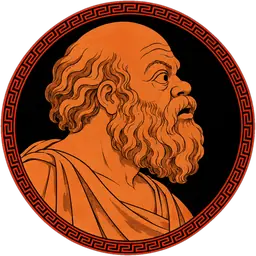
Socrates
Socrates son of Sophroniscus was an Athenian who, by his own account in Plato, served in the ranks at Potidaea, Amphipolis and Delium.1 In the Clouds Aristophanes made him the master of a 'thinking-shop', and at his trial Plato's Socrates blamed that comedy for the old charge that he studied the heavens and made the weaker argument the stronger.2 When the Athenians wanted to try the generals of the sea battle at Arginusae all together, he was one of the presiding prytanes and the only one who refused to put the question.3 Under the Thirty he was ordered with four others to fetch Leon of Salamis to be put to death, and instead he went home.4 Meletus, Anytus and Lycon charged him with not believing in the city's gods, bringing in new divinities and corrupting the young.5 He was seventy at his trial, Plato makes him say, and he was condemned and died by drinking hemlock; Diodorus puts this in the year when Laches was archon at Athens.6
Events
Ties
- advised Pericles the younger Xenophon, Memorabilia 3.5.1
- Aristophanes mocked Socrates Plato, Apology 19
- Critias companion of Socrates Xenophon, Memorabilia 1.2.12
- Critias turned against Socrates Xenophon, Memorabilia 1.2.31
- tried to save Theramenes Diodorus 14.5.2
- Euripides friend of Socrates Life of Euripides 1.1
- saved the life of Alcibiades Plutarch, Alcibiades 7.3
- advised Xenophon Xenophon, Anabasis 3.1.5
- teacher of Xenophon Diogenes Laertius 2.6.48
- Lysias wrote a defence for Socrates Diogenes Laertius 2.5.40
What the sources say
“They are rogues; I know them. You mean the quacks, the pale-faced wretches, the bare-footed fellows, of whose numbers are the miserable Socrates and Chaerephon”
αἰβοῖ πονηροί γʼ, οἶδα. τοὺς ἀλαζόνας / τοὺς ὠχριῶντας τοὺς ἀνυποδήτους λέγεις, / ὧν ὁ κακοδαίμων Σωκράτης καὶ Χαιρεφῶν.
Aristophanes, Clouds 103–105 · tr. William James Hickie
“Then the Prytanes, stricken with fear, agreed to put the question,—all of them except Socrates, the son of Sophroniscus; and he said that in no case would he act except in accordance with the law.”
οἱ δὲ ἐβόων καλεῖν τοὺς οὐ φάσκοντας. οἱ δὲ πρυτάνεις φοβηθέντες ὡμολόγουν πάντες προθήσειν πλὴν Σωκράτους τοῦ Σωφρονίσκου· οὗτος δʼ οὐκ ἔφη ἀλλʼ ἢ κατὰ νόμον πάντα ποιήσειν.
Xenophon, Hellenica 1.7.15 · tr. Carleton L. Brownson
“Socrates is a criminal and a busybody, investigating the things beneath the earth and in the heavens and making the weaker argument stronger and teaching others these same things. Something of that sort it is. For you yourselves saw these things in Aristophanes’ comedy, a Socrates being carried about there, proclaiming that he was treading on air and uttering a vast deal of other nonsense”
Σωκράτης ἀδικεῖ καὶ περιεργάζεται ζητῶν τά τε ὑπὸ γῆς καὶ οὐράνια καὶ τὸν ἥττω λόγον κρείττω ποιῶν καὶ ἄλλους ταὐτὰ ταῦτα διδάσκων. τοιαύτη τίς ἐστιν· ταῦτα γὰρ ἑωρᾶτε καὶ αὐτοὶ ἐν τῇ Ἀριστοφάνους κωμῳδίᾳ, Σωκράτη τινὰ ἐκεῖ περιφερόμενον, φάσκοντά τε ἀεροβατεῖν καὶ ἄλλην πολλὴν φλυαρίαν φλυαροῦντα
Plato, Apology 19 · tr. Harold North Fowler
“I have often wondered by what arguments those who drew up the indictment against Socrates could persuade the Athenians that his life was forfeit to the state. The indictment against him was to this effect: Socrates is guilty of rejecting the gods acknowledged by the state and of bringing in strange deities: he is also guilty of corrupting the youth.”
πολλάκις ἐθαύμασα τίσι ποτὲ λόγοις Ἀθηναίους ἔπεισαν οἱ γραψάμενοι Σωκράτην ὡς ἄξιος εἴη θανάτου τῇ πόλει. ἡ μὲν γὰρ γραφὴ κατʼ αὐτοῦ τοιάδε τις ἦν· ἀδικεῖ Σωκράτης οὓς μὲν ἡ πόλις νομίζει θεοὺς οὐ νομίζων, ἕτερα δὲ καινὰ δαιμόνια εἰσφέρων· ἀδικεῖ δὲ καὶ τοὺς νέους διαφθείρων.
Xenophon, Memorabilia 1.1.1 · tr. Edgar Carew Marchant
First named
The earliest text in the library that names Socrates, written about 423 BC (a modern estimate of when it was written):
“They are rogues; I know them. You mean the quacks, the pale-faced wretches, the bare-footed fellows, of whose numbers are the miserable Socrates and Chaerephon”
αἰβοῖ πονηροί γʼ, οἶδα. τοὺς ἀλαζόνας / τοὺς ὠχριῶντας τοὺς ἀνυποδήτους λέγεις, / ὧν ὁ κακοδαίμων Σωκράτης καὶ Χαιρεφῶν.
Aristophanes, Clouds 103–105 · tr. William James Hickie
Found by searching every text in the library for these spellings and reading the earliest hits to rule out namesakes: Σωκράτης, Σωκράτους, Σωκράτη, Socrates. Texts lost, or not in the library, may name Socrates earlier.
The passages behind each sentence
- Xenophon, Hellenica 1.7.15 (tr. Carleton L. Brownson); Plato, Apology 28 (tr. Harold North Fowler) ↩
- Aristophanes, Clouds 94–95 (tr. William James Hickie); Aristophanes, Clouds 103–105 (tr. William James Hickie); Plato, Apology 19 (tr. Harold North Fowler) ↩
- Plato, Apology 32 (tr. Harold North Fowler); Xenophon, Hellenica 1.7.15 (tr. Carleton L. Brownson); Aristotle, Constitution of the Athenians 34.1 (AI translation (Claude)) ↩
- Plato, Apology 32 (tr. Harold North Fowler) ↩
- Plato, Apology 24 (tr. Harold North Fowler); Xenophon, Memorabilia 1.1.1 (tr. Edgar Carew Marchant) ↩
- Plato, Apology 17 (tr. Harold North Fowler); Diodorus 14.37.7 (AI translation (Claude)); Diodorus 14.35.1 (AI translation (Claude)) ↩
Cite this page
MLA “Socrates.” Atlas of Ancient History, Skirnir Studios, 2026, history.skirnirstudios.com/people/socrates/.
APA Skirnir Studios. (2026). Socrates. Atlas of Ancient History. https://history.skirnirstudios.com/people/socrates/
Chicago “Socrates.” Atlas of Ancient History. Skirnir Studios, 2026. https://history.skirnirstudios.com/people/socrates/.
The atlas was written by AI from the ancient sources. Where you can, cite the ancient passage itself by its reference (Herodotus 7.228, Livy 22.7.3) and name the translation you read.