Atlas of Ancient History › People › The Athenian age
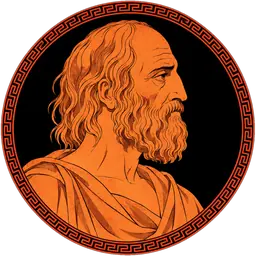
Euripides
Euripides son of Mnesarchus was an Athenian tragic poet; a Life of Euripides says he was born on Salamis in the year of the sea battle against the Persians, and first competed in the archonship of Callias, coming third.1 In Aristophanes' Acharnians the hero begs Euripides for a rag from one of his old plays.2 In the Thesmophoriazusae a day has come that will decide whether Euripides lives or dies.3 In the Frogs the god Dionysus longs for Euripides though he is dead, but after the contest he chooses Aeschylus instead.4 Diodorus reports that Apollodorus put his death in the same year as Sophocles', and that some said he was torn apart by dogs at the court of Archelaus, king of Macedon.5 Plutarch says that some Athenians captured in Sicily won their freedom, or food and water, by reciting his verses.6
Ties
- Aristophanes mocked Euripides Life of Euripides 2.1
- friend of Socrates Life of Euripides 1.1
- Sophocles rival of Euripides Aristotle, Poetics 25.11
What the sources say
“In the present case, at any rate, they say that many Athenians who reached home in safety greeted Euripides with affectionate hearts, and recounted to him, some that they had been set free from slavery for rehearsing what they remembered of his works; and some that when they were roaming about after the final battle they had received food and drink for singing some of his choral hymns”
τότε γοῦν φασι τῶν σωθέντων οἴκαδε συχνοὺς ἀσπάσασθαι τὸν Εὐριπίδην φιλοφρόνως, καὶ διηγεῖσθαι τοὺς μέν, ὅτι δουλεύοντες ἀφείθησαν ἐκδιδάξαντες ὅσα τῶν ἐκείνου ποιημάτων ἐμέμνηντο, τοὺς δʼ, ὅτι πλανώμενοι μετὰ τὴν μάχην τροφῆς καὶ ὕδατος μετέλαβον τῶν μελῶν ᾄσαντες
Plutarch, Nicias 29.3 · tr. Bernadotte Perrin
“Apollodorus, who composed the chronicle, says that Euripides too died in the same year; but some say that while he was staying with Archelaus, king of the Macedonians, he went out into the countryside, fell among dogs and was torn to pieces, a little before this time.”
Ἀπολλόδωρος δʼ ὁ τὴν χρονικὴν σύνταξιν πραγματευσάμενός φησι καὶ τὸν Εὐριπίδην κατὰ τὸν αὐτὸν ἐνιαυτὸν τελευτῆσαι· τινὲς δὲ λέγουσι παρʼ Ἀρχελάῳ τῷ βασιλεῖ Μακεδόνων κατὰ τὴν χώραν ἐξελθόντα κυσὶ περιπεσεῖν καὶ διασπασθῆναι μικρῷ πρόσθεν τούτων τῶν χρόνων
Diodorus 13.103.5 · AI translation (Claude)
“and I must go to Euripides.”
καί μοι βαδιστέʼ ἐστὶν ὡς Εὐριπίδην.
Aristophanes, Acharnians 394 · AI translation (Claude)
“Euripides the poet was the son of Mnesarchus, a shopkeeper, and of Cleito, a seller of vegetables; he was an Athenian, but was born on Salamis when Calliades was archon, in the seventy-fifth Olympiad, when the Greeks fought the Persians at sea.”
ΕΥΡΠΠΔΗΣ ὁ ποιητὴς υίὸς ἐγένετο Μνησάρχου καπήλου καὶ Κλειτοῦς λαχανοπώλιδος, Ἀθηναῖος μὲν, ἐγεννήθη δὲ ἐν Σαλαμῖνι ἐπὶ Καλλιάδου ἄρχοντος κατὰ τὴν οε΄ ὀλυμπιάδα, ὅτε ἐναυμάχησαν τοῖς Πέρσαις οἱ Ἕλληνες
Life of Euripides 1.1 · AI translation (Claude)
First named
The earliest text in the library that names Euripides, written about 425 BC (a modern estimate of when it was written):
“and I must go to Euripides.”
καί μοι βαδιστέʼ ἐστὶν ὡς Εὐριπίδην.
Aristophanes, Acharnians 394 · AI translation (Claude)
Found by searching every text in the library for these spellings and reading the earliest hits to rule out namesakes: Εὐριπίδης, Εὐριπίδου, Εὐριπίδῃ, Euripides. Texts lost, or not in the library, may name Euripides earlier.
The passages behind each sentence
- Life of Euripides 1.1 (AI translation (Claude)); Life of Euripides 1.1 (AI translation (Claude)) ↩
- Aristophanes, Acharnians 414–415 (AI translation (Claude)) ↩
- Aristophanes, Thesmophoriazusae 76b (AI translation (Claude)); Aristophanes, Thesmophoriazusae 77 (AI translation (Claude)) ↩
- Aristophanes, Frogs 67 (AI translation (Claude)); Aristophanes, Frogs 67b (AI translation (Claude)); Aristophanes, Frogs 1471 (AI translation (Claude)) ↩
- Diodorus 13.103.5 (AI translation (Claude)) ↩
- Plutarch, Nicias 29.2 (tr. Bernadotte Perrin); Plutarch, Nicias 29.3 (tr. Bernadotte Perrin) ↩
Cite this page
MLA “Euripides.” Atlas of Ancient History, Skirnir Studios, 2026, history.skirnirstudios.com/people/euripides/.
APA Skirnir Studios. (2026). Euripides. Atlas of Ancient History. https://history.skirnirstudios.com/people/euripides/
Chicago “Euripides.” Atlas of Ancient History. Skirnir Studios, 2026. https://history.skirnirstudios.com/people/euripides/.
The atlas was written by AI from the ancient sources. Where you can, cite the ancient passage itself by its reference (Herodotus 7.228, Livy 22.7.3) and name the translation you read.