Atlas of Ancient History › People › The Hellenistic world
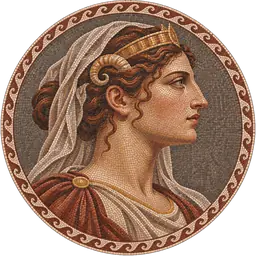
Arsinoe II
Arsinoe was a daughter of Ptolemy I and Berenice, and Theocritus calls her Berenice's daughter, like Helen in beauty.1 She was married to the aging Lysimachus, whose son Agathocles already had children by her sister Lysandra.2 Fearing for her own children, she is said to have plotted Agathocles' death, and some wrote that she had fallen in love with him and been rejected; his killing split Lysimachus' house and led to his fall.3 Later her full brother Ptolemy II married her, against Macedonian custom, and Theocritus praised the queen who loved her brother and husband.4 In Theocritus' Adonis poem she gives the festival of Adonis in the palace at Alexandria; she bore Ptolemy no children, and a district of Egypt, the Arsinoite, was named after her.5
Events
Ties
- Lysimachus husband of Arsinoe II Pausanias 1.10.3
- Ptolemy II brother and husband of Arsinoe II Pausanias 1.7.1
What the sources say
“Cyprian, daughter of Dione, you made Berenice immortal from mortal, as men say, dropping ambrosia into a woman's breast; and to please you, goddess of many names and many temples, Berenice's daughter Arsinoe, like Helen, tends Adonis with every fine thing.”
Κύπρι Διωναία, τὺ μὲν ἀθανάταν ἀπὸ θνατᾶς, ἀνθρώπων ὡς μῦθος, ἐποίησας Βερενίκαν, ἀμβροσίαν ἐς στῆθος ἀποστάξασα γυναικός· τὶν δὲ χαριζομένα, πολυώνυμε καὶ πολύναε, ἁ Βερενικεία θυγάτηρ Ἑλένᾳ εἰκυῖα Ἀρσινόα πάντεσσι καλοῖς ἀτιτάλλει Ἄδωνιν
Theocritus, Idylls 15 · AI translation (Claude)
“Lysimachus, although by this time of mature age and considered happy in respect of his children, and although Agathocles had children by Lysandra, nevertheless married Lysandra's sister Arsinoe. This Arsinoe, fearing for her children, lest on the death of Lysimachus they should fall into the hands of Agathocles, is said for this reason to have plotted against Agathocles”
Λυσίμαχος γὰρ ἡλικίᾳ τε ἤδη προήκων καὶ ἐς τοὺς παῖδας αὐτός τε νομιζόμενος εὐδαίμων καὶ Ἀγαθοκλεῖ παίδων ὄντων ἐκ Λυσάνδρας Ἀρσινόην ἔγημεν ἀδελφὴν Λυσάνδρας. ταύτην τὴν Ἀρσινόην φοβουμένην ἐπὶ τοῖς παισί, μὴ Λυσιμάχου τελευτήσαντος ἐπʼ Ἀγαθοκλεῖ γένωνται, τούτων ἕνεκα Ἀγαθοκλεῖ ἐπιβουλεῦσαι λέγεται
Pausanias 1.10.3 · tr. W.H.S. Jones
“His children were by Arsinoe, not his sister, but the daughter of Lysimachus. His sister who had wedded him happened to die before this, leaving no issue, and there is in Egypt a district called Arsinoites after her”
οἱ δέ οἱ παῖδες ἐγένοντο ἐξ Ἀρσινόης, οὐ τῆς ἀδελφῆς, Λυσιμάχου δὲ θυγατρός· τὴν δέ οἱ συνοικήσασαν ἀδελφὴν κατέλαβεν ἔτι πρότερον ἀποθανεῖν ἄπαιδα, καὶ νομός ἐστιν ἀπʼ αὐτῆς Ἀρσινοΐτης Αἰγυπτίοις
Pausanias 1.7.3 · tr. W.H.S. Jones
First named
The earliest text in the library that names Arsinoe II, written about 272 BC (a modern estimate of when it was written):
“Berenice's daughter, Arsinoe, like Helen, tends Adonis with every fine thing.”
ἁ Βερενικεία θυγάτηρ Ἑλένᾳ εἰκυῖα Ἀρσινόα πάντεσσι καλοῖς ἀτιτάλλει Ἄδωνιν
Theocritus, Idylls 15 · AI translation (Claude)
Found by searching every text in the library for these spellings and reading the earliest hits to rule out namesakes: Ἀρσινόη, Ἀρσινόα, Arsinoe. Texts lost, or not in the library, may name Arsinoe II earlier.
The passages behind each sentence
- Theocritus, Idylls 15 (AI translation (Claude)) ↩
- Pausanias 1.10.3 (tr. W.H.S. Jones) ↩
- Pausanias 1.10.3 (tr. W.H.S. Jones); Pausanias 1.10.3 (tr. W.H.S. Jones); Pausanias 1.10.4 (tr. W.H.S. Jones) ↩
- Pausanias 1.7.1 (tr. W.H.S. Jones); Theocritus, Idylls 17 (AI translation (Claude)) ↩
- Theocritus, Idylls 15 (AI translation (Claude)); Theocritus, Idylls 15 (AI translation (Claude)); Pausanias 1.7.3 (tr. W.H.S. Jones) ↩
Cite this page
MLA “Arsinoe II.” Atlas of Ancient History, Skirnir Studios, 2026, history.skirnirstudios.com/people/arsinoe-ii/.
APA Skirnir Studios. (2026). Arsinoe II. Atlas of Ancient History. https://history.skirnirstudios.com/people/arsinoe-ii/
Chicago “Arsinoe II.” Atlas of Ancient History. Skirnir Studios, 2026. https://history.skirnirstudios.com/people/arsinoe-ii/.
The atlas was written by AI from the ancient sources. Where you can, cite the ancient passage itself by its reference (Herodotus 7.228, Livy 22.7.3) and name the translation you read.