Atlas of Ancient History › People › Archaic Greece and Persia
Polycrates
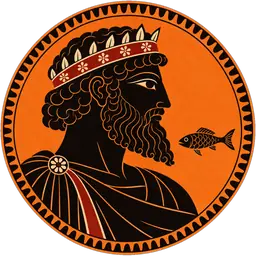
Polycrates son of Aeaces seized Samos in a rising, at first sharing it with his brothers Pantagnotus and Syloson, then killing one and banishing the other.1 He had a hundred fifty-oared ships and a thousand archers, plundered friend and foe alike, and was, Herodotus says, the first Greek after the legendary Minos to aim at mastery of the sea.2 His ally Amasis of Egypt warned that such constant luck would anger the gods, so Polycrates threw his emerald seal ring into the sea; days later it was found inside a fish brought to his table, and Amasis broke off the friendship.3 He beat off a forty-day siege by the Spartans, and Aristotle counts 'the works of Polycrates' at Samos among the great building schemes by which tyrants kept their subjects busy and poor.4 The poet Anacreon of Teos was at his court, and he hired the physician Democedes for two talents.5 Oroetes, the Persian governor of Sardis, lured him to the mainland with a promise of gold and had him killed and hung up at Magnesia.6
Events
Ties
- Amasis guest-friend of Polycrates Herodotus 2.182.2
- sent ships to Cambyses Herodotus 3.44.2
- Oroetes had killed Polycrates Herodotus 3.125
- Democedes physician of Polycrates Herodotus 3.131
- Pythagoras left Samos under the tyranny of Polycrates Strabo 14.1.16
What the sources say
“Now Amasis was somehow aware of Polycrates' great good fortune; and as this continued to increase greatly, he wrote this letter and sent it to Samos: “Amasis addresses Polycrates as follows. It is pleasant to learn that a friend and ally is doing well. But I do not like these great successes of yours; for I know the gods, how jealous they are, and I desire somehow that both I and those for whom I care succeed in some affairs, fail in others, and thus pass life faring differently by turns, rather than succeed at everything”
καί κως τὸν Ἄμασιν εὐτυχέων μεγάλως ὁ Πολυκράτης οὐκ ἐλάνθανε, ἀλλά οἱ τοῦτʼ ἦν ἐπιμελές. πολλῷ δὲ ἔτι πλεῦνός οἱ εὐτυχίης γινομένης γράψας ἐς βυβλίον τάδε ἐπέστειλε ἐς Σάμον. Ἄμασις Πολυκράτεϊ ὧδε λέγει. ἡδὺ μὲν πυνθάνεσθαι ἄνδρα φίλον καὶ ξεῖνον εὖ πρήσσοντα· ἐμοὶ δὲ αἱ σαὶ μεγάλαι εὐτυχίαι οὐκ ἀρέσκουσι, τὸ θεῖον ἐπισταμένῳ ὡς ἔστι φθονερόν· καί κως βούλομαι καὶ αὐτὸς καὶ τῶν ἂν κήδωμαι τὸ μέν τι εὐτυχέειν τῶν πρηγμάτων τὸ δὲ προσπταίειν, καὶ οὕτω διαφέρειν τὸν αἰῶνα ἐναλλὰξ πρήσσων ἢ εὐτυχέειν τὰ πάντα
Herodotus 3.40 · tr. A. D. Godley
“Proud of this honor, the fisherman went home; but the servants, cutting up the fish, found in its belly Polycrates' seal-ring.”
ὃ μὲν δὴ ἁλιεὺς μέγα ποιεύμενος ταῦτα ἤιε ἐς τὰ οἰκία, τὸν δὲ ἰχθὺν τάμνοντες οἱ θεράποντες εὑρίσκουσι ἐν τῇ νηδύι αὐτοῦ ἐνεοῦσαν τὴν Πολυκράτεος σφρηγῖδα.
Herodotus 3.42.3 · tr. A. D. Godley
“But no sooner had Polycrates come to Magnesia than he was horribly murdered in a way unworthy of him and of his aims; for, except for the sovereigns of Syracuse, no sovereign of Greek race is fit to be compared with Polycrates for magnificence.”
ἀπικόμενος δὲ ἐς τὴν Μαγνησίην ὁ Πολυκράτης διεφθάρη κακῶς, οὔτε ἑωυτοῦ ἀξίως οὔτε τῶν ἑωυτοῦ φρονημάτων· ὅτι γὰρ μὴ οἱ Συρηκοσίων γενόμενοι τύραννοι οὐδὲ εἷς τῶν ἄλλων Ἑλληνικῶν τυράννων ἄξιος ἐστὶ Πολυκράτεϊ μεγαλοπρεπείην συμβληθῆναι.
Herodotus 3.125.2 · tr. A. D. Godley
First named
The earliest text in the library that names Polycrates, written about 430 BC (a modern estimate of when it was written):
“The offerings in Samos were dedicated because of the friendship between Amasis and Polycrates, son of Aeaces; what he gave to Lindus was not out of friendship for anyone, but because the temple of Athena in Lindus is said to have been founded by the daughters of Danaus, when they landed there in their flight from the sons of Egyptus. Such were Amasis' offerings. Moreover, he was the first conqueror of Cyprus, which he made tributary to himself.”
ἐς μέν νυν Σάμον ἀνέθηκε κατὰ ξεινίην τὴν ἑωυτοῦ τε καὶ Πολυκράτεος τοῦ Αἰάκεος, ἐς δὲ Λίνδον ξεινίης μὲν οὐδεμιῆς εἵνεκεν, ὅτι δὲ τὸ ἱρὸν τὸ ἐν Λίνδῳ τὸ τῆς Ἀθηναίης λέγεται τὰς Δαναοῦ θυγατέρας ἱδρύσασθαι προσσχούσας, ὅτε ἀπεδίδρησκον τοὺς Αἰγύπτου παῖδας. ταῦτα μὲν ἀνέθηκε ὁ Ἄμασις, εἷλε δὲ Κύπρον πρῶτος ἀνθρώπων καὶ κατεστρέψατο ἐς φόρου ἀπαγωγήν.
Herodotus 2.182.2 · tr. A. D. Godley
Found by searching every text in the library for these spellings and reading the earliest hits to rule out namesakes: Πολυκράτης, Polycrates. Texts lost, or not in the library, may name Polycrates earlier.
The passages behind each sentence
- Herodotus 3.39.1 (tr. A. D. Godley); Herodotus 3.39.2 (tr. A. D. Godley) ↩
- Herodotus 3.39.3 (tr. A. D. Godley); Herodotus 3.39.4 (tr. A. D. Godley); Herodotus 3.122.2 (tr. A. D. Godley) ↩
- Herodotus 3.40.4 (tr. A. D. Godley); Herodotus 3.42.3 (tr. A. D. Godley); Herodotus 3.43.2 (tr. A. D. Godley) ↩
- Herodotus 3.54.1 (tr. A. D. Godley); Herodotus 3.56.1 (tr. A. D. Godley); Aristotle, Politics 5.1313b (tr. Harris Rackham) ↩
- Herodotus 3.121.1 (tr. A. D. Godley); Herodotus 3.131.2 (tr. A. D. Godley) ↩
- Herodotus 3.125.2 (tr. A. D. Godley); Herodotus 3.125.3 (tr. A. D. Godley) ↩
Cite this page
MLA “Polycrates.” Atlas of Ancient History, Skirnir Studios, 2026, history.skirnirstudios.com/people/polycrates/.
APA Skirnir Studios. (2026). Polycrates. Atlas of Ancient History. https://history.skirnirstudios.com/people/polycrates/
Chicago “Polycrates.” Atlas of Ancient History. Skirnir Studios, 2026. https://history.skirnirstudios.com/people/polycrates/.
The atlas was written by AI from the ancient sources. Where you can, cite the ancient passage itself by its reference (Herodotus 7.228, Livy 22.7.3) and name the translation you read.