Atlas of Ancient History › People › The fourth century
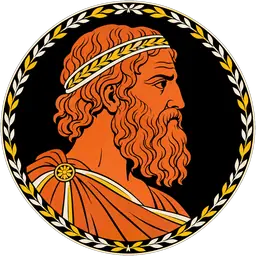
Plato
Plato, a brother of Adeimantus son of Ariston, was a pupil of Socrates from about the age of twenty, Diogenes Laertius says, and at Socrates' trial he, Crito and others offered to stand surety for a fine of thirty minas.1 In the Phaedo he says that he himself was ill on the day Socrates died.2 Diogenes Laertius says he sailed to Sicily three times: on the first visit he angered Dionysius the Elder by what he said about tyranny and was sold as a slave in Aegina, and later he twice visited Dionysius the Younger.3 In the Seventh Letter, written in his name, he says he was about forty when he first came to Syracuse, and that there the young Dion took up his teaching more keenly than any youth he had met.4 At Athens he taught in the Academy, a wooded gymnasium outside the walls named after the hero Hecademus.5 He died in the first year of the 108th Olympiad, in his eighty-first year, according to Hermippus (348/347 by modern reckoning), in the thirteenth year of Philip's reign according to Favorinus.6
Events
Ties
- teacher of Dion Plutarch, Dion 4.3
- quarrelled with Dionysius I Diogenes Laertius 3.1.18
- Dionysius II host of Plato Plutarch, Dion 11.1
- teacher of Aristotle Diogenes Laertius 5.1.2
- Diogenes the Cynic mocked Plato Diogenes Laertius 6.2.40
What the sources say
“but Plato here, men of Athens, and Crito and Critobulus, and Aristobulus tell me to propose a fine of thirty minas, saying that they are sureties for it”
Πλάτων δὲ ὅδε, ὦ ἄνδρες Ἀθηναῖοι, καὶ Κρίτων καὶ Κριτόβουλος καὶ Ἀπολλόδωρος κελεύουσί με τριάκοντα μνῶν τιμήσασθαι, αὐτοὶ δʼ ἐγγυᾶσθαι
Plato, Apology 38 · tr. Harold North Fowler
“Of native Athenians there was this Apollodorus, and Critobulus and his father, and Hermogenes and Epiganes and Aeschines and Antisthenes; and Ctesippus the Paeanian was there too, and Menexenus and some other Athenians. But Plato, I think, was ill.”
οὗτός τε δὴ ὁ Ἀπολλόδωρος τῶν ἐπιχωρίων παρῆν καὶ Κριτόβουλος καὶ ὁ πατὴρ αὐτοῦ καὶ ἔτι Ἑρμογένης καὶ Ἐπιγένης καὶ Αἰσχίνης καὶ Ἀντισθένης· ἦν δὲ καὶ Κτήσιππος ὁ Παιανιεὺς καὶ Μενέξενος καὶ ἄλλοι τινὲς τῶν ἐπιχωρίων. Πλάτων δὲ οἶμαι ἠσθένει.
Plato, Phaedo 59.5 · tr. Harold North Fowler
“Ariston’s son, Glaucon, was attempting to become an orator and striving for headship in the state, though he was less than twenty years old; and none of his friends or relations could check him, though he would get himself dragged from the platform and make himself a laughing-stock. Only Socrates, who took an interest in him for the sake of Plato and Glaucon’s son Charmides, managed to check him.”
Γλαύκωνα δὲ τὸν Ἀρίστωνος, ὅτʼ ἐπεχείρει δημηγορεῖν, ἐπιθυμῶν προστατεύειν τῆς πόλεως οὐδέπω εἴκοσιν ἔτη γεγονώς, τῶν ἄλλων οἰκείων τε καὶ φίλων οὐδεὶς ἐδύνατο παῦσαι ἑλκόμενόν τε ἀπὸ τοῦ βήματος καὶ καταγέλαστον ὄντα· Σωκράτης δέ, εὔνους ὢν αὐτῷ διά τε Χαρμίδην τὸν Γλαύκωνος καὶ διὰ Πλάτωνα, μόνος ἔπαυσεν.
Xenophon, Memorabilia 3.6.1 · tr. Edgar Carew Marchant
“on this occasion Dionysius, the son of Hermocrates, being on the throne, forced him to become intimate with him. But when Plato held forth on tyranny and maintained that the interest of the ruler alone was not the best end, unless he were also pre-eminent in virtue, he offended Dionysius, who in his anger exclaimed, You talk like an old dotard.And you like a tyrant, rejoined Plato”
ὅτε καὶ Διονύσιος ὁ Ἑρμοκράτους τύραννος ὢν ἠνάγκασεν ὥστε συμμῖξαι αὐτῷ. ὁ δὲ διαλεγόμενος περὶ τυραννίδος καὶ φάσκων ὡς οὐκ ἔστι τὸ τοῦ κρείττονος συμφέρον αὐτὸ † μόνον, εἰ μὴ καὶ ἀρετῇ διαφέροι, προσέκρουσεν αὐτῷ. ὀργισθεὶς γὰρ οἱ λόγοι σου, φησί, γεροντιῶσι, καὶ ὅς· σοῦ δέ γε τυραννιῶσιν
Diogenes Laertius 3.1.18 · translator not recorded
First named
The earliest text in the library that names Plato, written about 395 BC (a modern estimate of when it was written):
“Adimantus, son of Aristo, whose brother is Plato here”
Ἀδείμαντος, ὁ Ἀρίστωνος, οὗ ἀδελφὸς οὑτοσὶ Πλάτων
Plato, Apology 33 · tr. Harold North Fowler
Found by searching every text in the library for these spellings and reading the earliest hits to rule out namesakes: Πλάτων, Plato, Platon. Texts lost, or not in the library, may name Plato earlier.
The passages behind each sentence
- Plato, Apology 33 (tr. Harold North Fowler); Diogenes Laertius 3.1.6 (translator not recorded); Plato, Apology 38 (tr. Harold North Fowler) ↩
- Plato, Phaedo 59.5 (tr. Harold North Fowler) ↩
- Diogenes Laertius 3.1.18 (translator not recorded); Diogenes Laertius 3.1.19 (translator not recorded); Diogenes Laertius 3.1.21 (translator not recorded) ↩
- Plato, Letters 7.324 (tr. R. G. Bury); Plato, Letters 7.327 (tr. R. G. Bury) ↩
- Diogenes Laertius 3.1.7 (translator not recorded) ↩
- Diogenes Laertius 3.1.2 (translator not recorded); Diogenes Laertius 3.1.40 (translator not recorded) ↩
Cite this page
MLA “Plato.” Atlas of Ancient History, Skirnir Studios, 2026, history.skirnirstudios.com/people/plato/.
APA Skirnir Studios. (2026). Plato. Atlas of Ancient History. https://history.skirnirstudios.com/people/plato/
Chicago “Plato.” Atlas of Ancient History. Skirnir Studios, 2026. https://history.skirnirstudios.com/people/plato/.
The atlas was written by AI from the ancient sources. Where you can, cite the ancient passage itself by its reference (Herodotus 7.228, Livy 22.7.3) and name the translation you read.