Atlas of Ancient History › People › The Hellenistic world
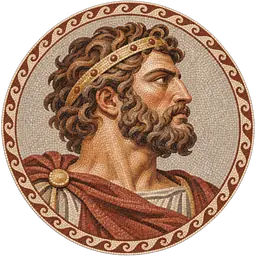
Philip V
Philip was only seventeen when the Aetolians began the Social War, counting on his youth, and Polybius thought no king had more natural gifts: quick wits, memory, charm, royal bearing and courage in war.1 Polybius says that for a time he was the common darling of the Greeks for his kindness, but that he then turned for the worse, beginning at Messene.2 He had his old adviser Aratus poisoned through Taurion, his agent in the Peloponnese.3 Defeated by Flamininus at Cynoscephalae, he fled through Tempe to Macedonia; Alcaeus of Messene mocked him in an epigram, and Philip answered with a verse threatening Alcaeus with a cross.4 At the Isthmian games the Roman herald proclaimed free the Greek peoples Philip had ruled.5 Plutarch says he died of grief before he could renew the war, having learned that he had wrongly put to death his son Demetrius on false charges brought by his other son, Perseus.6
Events
Ties
- had poisoned Aratus of Sicyon Polybius 8.12
- Flamininus defeated Philip V Plutarch, Titus Flamininus 9.2
- father of Perseus Plutarch, Aemilius Paulus 8
What the sources say
“Philip, then, was acquiring a great reputation, not only among those actually in his army, but among the other Peloponnesians also, for his behaviour to the allies serving with him, as well as for his ability and courage in the field. Indeed it would not be easy to find a king endowed with more natural qualities requisite for the acquisition of power. He had in an eminent degree a quick understanding, a retentive memory, and a winning grace of manner, joined to a look of royal dignity and authority; and most important of all, ability and courage as a general”
Φίλιππος μὲν οὖν κατὰ τὴν ὁμιλίαν τὴν πρὸς τοὺς ἐν τοῖς ὑπαίθροις συνδιατρίβοντας καὶ κατὰ τὴν ἐν τοῖς πολεμικοῖς πρᾶξιν καὶ τόλμαν οὐ μόνον παρὰ τοῖς στρατευομένοις, ἀλλὰ καὶ παρὰ τοῖς λοιποῖς πᾶσι Πελοποννησίοις εὐδοκίμει. βασιλέα γὰρ πλείοσιν ἀφορμαῖς ἐκ φύσεως κεχορηγημένον πρὸς πραγμάτων κατάκτησιν οὐκ εὐμαρὲς εὑρεῖν· καὶ γὰρ ἀγχίνοια καὶ μνήμη καὶ χάρις ἐπῆν αὐτῷ διαφέρουσα, πρὸς δὲ τούτοις ἐπίφασις βασιλικὴ καὶ δύναμις, τὸ δὲ μέγιστον, πρᾶξις καὶ τόλμα πολεμική
Polybius 4.77 · tr. Evelyn S. Shuckburgh
“if one may use a somewhat hyperbolical phrase, I think it has been said of Philip with very great propriety, that his beneficent policy had made him The darling of all Greece”
καθόλου γε μήν, εἰ δεῖ μικρὸν ὑπερβολικώτερον εἰπεῖν, οἰκειότατʼ ἂν οἶμαι περὶ Φιλίππου τοῦτο ῥηθῆναι, διότι κοινός τις οἷον ἐρώμενος ἐγένετο τῶν Ἑλλήνων διὰ τὸ τῆς αἱρέσεως εὐεργετικόν
Polybius 7.11.8 · tr. Evelyn S. Shuckburgh
“Unwept and without graves are we, O traveller, who on this ridge of Thessaly lie dead, in number thirty thousand, subdued by the sword of the Aetolians, and of the Latins whom Titus led from spacious Italy, Emathia’s great bane. And the bold spirit that Philip had displayed was gone; it showed itself more agile than swift deer”
Ἄκλαυστοι καὶ ἄθαπτοι, ὁδοιπόρε, τῷδʼ ἐπὶ νώτῳ Θεσσαλίης τρισσαὶ κείμεθα μυριάδες, Αἰτωλῶν δμηθέντες ὑπʼ Ἄρεος ἠδὲ Λατίνων, οὓς Τίτος εὐρείης ἤγαγʼ ἀπʼ Ἰταλίης, Ἠμαθίῃ μέγα πῆμα. τὸ δὲ θρασὺ κεῖνο Φιλίππου πνεῦμα θοῶν ἐλάφων ᾤχετʼ ἐλαφρότερον
Plutarch, Titus Flamininus 9.2 · tr. Bernadotte Perrin
An epigram by Alcaeus of Messene on the battle of Cynoscephalae, 197 BC, quoted by Plutarch, about AD 100.
First named
The earliest text in the library that names Philip V, written about 197 BC (a modern estimate of when it was written):
“Unwept and without graves are we, O traveller, who on this ridge of Thessaly lie dead, in number thirty thousand, subdued by the sword of the Aetolians, and of the Latins whom Titus led from spacious Italy, Emathia’s great bane. And the bold spirit that Philip had displayed was gone; it showed itself more agile than swift deer”
Ἄκλαυστοι καὶ ἄθαπτοι, ὁδοιπόρε, τῷδʼ ἐπὶ νώτῳ Θεσσαλίης τρισσαὶ κείμεθα μυριάδες, Αἰτωλῶν δμηθέντες ὑπʼ Ἄρεος ἠδὲ Λατίνων, οὓς Τίτος εὐρείης ἤγαγʼ ἀπʼ Ἰταλίης, Ἠμαθίῃ μέγα πῆμα. τὸ δὲ θρασὺ κεῖνο Φιλίππου πνεῦμα θοῶν ἐλάφων ᾤχετʼ ἐλαφρότερον
Plutarch, Titus Flamininus 9.2 · tr. Bernadotte Perrin
An epigram by Alcaeus of Messene on the battle of Cynoscephalae, 197 BC, quoted by Plutarch, about AD 100.
Found by searching every text in the library for these spellings and reading the earliest hits to rule out namesakes: Φίλιππος, Philippus, Philip. Texts lost, or not in the library, may name Philip V earlier.
The passages behind each sentence
- Polybius 4.5.3 (tr. Evelyn S. Shuckburgh); Polybius 4.77 (tr. Evelyn S. Shuckburgh) ↩
- Polybius 7.11.8 (tr. Evelyn S. Shuckburgh); Polybius 7.11.1 (tr. Evelyn S. Shuckburgh) ↩
- Polybius 8.12 (tr. Evelyn S. Shuckburgh) ↩
- Polybius 18.33.1 (tr. Evelyn S. Shuckburgh); Plutarch, Titus Flamininus 9.2 (tr. Bernadotte Perrin); Plutarch, Titus Flamininus 9.3 (tr. Bernadotte Perrin) ↩
- Plutarch, Titus Flamininus 10.4 (tr. Bernadotte Perrin) ↩
- Plutarch, Aemilius Paulus 8 (tr. Bernadotte Perrin); Plutarch, Aemilius Paulus 8.10 (tr. Bernadotte Perrin) ↩
Cite this page
MLA “Philip V.” Atlas of Ancient History, Skirnir Studios, 2026, history.skirnirstudios.com/people/philip-v/.
APA Skirnir Studios. (2026). Philip V. Atlas of Ancient History. https://history.skirnirstudios.com/people/philip-v/
Chicago “Philip V.” Atlas of Ancient History. Skirnir Studios, 2026. https://history.skirnirstudios.com/people/philip-v/.
The atlas was written by AI from the ancient sources. Where you can, cite the ancient passage itself by its reference (Herodotus 7.228, Livy 22.7.3) and name the translation you read.