Atlas of Ancient History › People › Archaic Greece and Persia
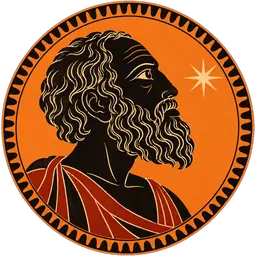
Thales
Thales of Miletus was, Herodotus says, of Phoenician descent, and Plato names him first among the Seven Sages.1 Herodotus says he foretold to the Ionians the year in which day would turn to night during the battle between Lydians and Medes; most Greeks believed he also got Croesus' army across the Halys by splitting the river with a channel, though Herodotus thought there were bridges.2 He advised the Ionians to set up a single council at Teos and treat their cities as districts of one state.3 Aristotle calls him the founder of natural philosophy, who held that water is the first principle and that the earth floats on water, and tells how he cornered the olive presses of Miletus and Chios to show that philosophers could be rich if they wished.4 Plato tells that he fell into a well while gazing at the stars, and a Thracian servant girl laughed that he wanted to know the heavens but could not see what lay at his feet; in Aristophanes his name is already a byword for cleverness.5 Diogenes Laertius says he died in the 58th Olympiad, aged 78 or, according to Sosicrates, 90, while watching an athletic contest.6
Events
Ties
- said to have helped Croesus Herodotus 1.75.3
What the sources say
“They were still warring with equal success, when it happened, at an encounter which occurred in the sixth year, that during the battle the day was suddenly turned to night. Thales of Miletus had foretold this loss of daylight to the Ionians, fixing it within the year in which the change did indeed happen.”
διαφέρουσι δέ σφι ἐπὶ ἴσης τὸν πόλεμον τῷ ἕκτῳ ἔτεϊ συμβολῆς γενομένης συνήνεικε ὥστε τῆς μάχης συνεστεώσης τὴν ἡμέρην ἐξαπίνης νύκτα γενέσθαι. τὴν δὲ μεταλλαγὴν ταύτην τῇ ἡμέρης Θαλῆς ὁ Μιλήσιος τοῖσι Ἴωσι προηγόρευσε ἔσεσθαι, οὖρον προθέμενος ἐνιαυτὸν τοῦτον ἐν τῷ δὴ καὶ ἐγένετο ἡ μεταβολή.
Herodotus 1.74.2 · tr. A. D. Godley
“take the case of Thales, Theodorus. While he was studying the stars and looking upwards, he fell into a pit, and a neat, witty Thracian servant girl jeered at him, they say, because he was so eager to know the things in the sky that he could not see what was there before him at his very feet”
ὥσπερ καὶ Θαλῆν ἀστρονομοῦντα, ὦ Θεόδωρε, καὶ ἄνω βλέποντα, πεσόντα εἰς φρέαρ, Θρᾷττά τις ἐμμελὴς καὶ χαρίεσσα θεραπαινὶς ἀποσκῶψαι λέγεται ὡς τὰ μὲν ἐν οὐρανῷ προθυμοῖτο εἰδέναι, τὰ δʼ ἔμπροσθεν αὐτοῦ καὶ παρὰ πόδας λανθάνοι αὐτόν
Plato, Theaetetus 174.2 · tr. Harold North Fowler
“Thales, so the story goes, because of his poverty was taunted with the uselessness of philosophy; but from his knowledge of astronomy he had observed while it was still winter that there was going to be a large crop of olives, so he raised a small sum of money and paid round deposits for the whole of the olive-presses in Miletus and Chios, which he hired at a low rent as nobody was running him up; and when the season arrived, there was a sudden demand for a number of presses at the same time, and by letting them out on what terms he liked he realized a large sum of money, so proving that it is easy for philosophers to be rich”
ὀνειδιζόντων γὰρ αὐτῷ διὰ τὴν πενίαν ὡς ἀνωφελοῦς τῆς φιλοσοφίας οὔσης, κατανοήσαντά φασιν αὐτὸν ἐλαιῶν φορὰν ἐσομένην ἐκ τῆς ἀστρολογίας, ἔτι χειμῶνος ὄντος εὐπορήσαντα χρημάτων ὀλίγων ἀρραβῶνας διαδοῦναι τῶν ἐλαιουργίων τῶν τʼ ἐν Μιλήτῳ καὶ Χίῳ πάντων, ὀλίγου μισθωσάμενον ἅτʼ οὐθενὸς ἐπιβάλλοντος· ἐπειδὴ δʼ ὁ καιρὸς ἧκε, πολλῶν ζητουμένων ἅμα καὶ ἐξαίφνης, ἐκμισθοῦντα ὃν τρόπον ἠβούλετο, πολλὰ χρήματα συλλέξαντα ἐπιδεῖξαι ὅτι ῥᾴδιόν ἐστι πλουτεῖν τοῖς φιλοσόφοις
Aristotle, Politics 1.1259a · tr. Harris Rackham
First named
The earliest text in the library that names Thales, written about 430 BC (a modern estimate of when it was written):
“They were still warring with equal success, when it happened, at an encounter which occurred in the sixth year, that during the battle the day was suddenly turned to night. Thales of Miletus had foretold this loss of daylight to the Ionians, fixing it within the year in which the change did indeed happen.”
διαφέρουσι δέ σφι ἐπὶ ἴσης τὸν πόλεμον τῷ ἕκτῳ ἔτεϊ συμβολῆς γενομένης συνήνεικε ὥστε τῆς μάχης συνεστεώσης τὴν ἡμέρην ἐξαπίνης νύκτα γενέσθαι. τὴν δὲ μεταλλαγὴν ταύτην τῇ ἡμέρης Θαλῆς ὁ Μιλήσιος τοῖσι Ἴωσι προηγόρευσε ἔσεσθαι, οὖρον προθέμενος ἐνιαυτὸν τοῦτον ἐν τῷ δὴ καὶ ἐγένετο ἡ μεταβολή.
Herodotus 1.74.2 · tr. A. D. Godley
Found by searching every text in the library for these spellings and reading the earliest hits to rule out namesakes: Θαλῆς, Θάλης, Thales. Texts lost, or not in the library, may name Thales earlier.
The passages behind each sentence
- Herodotus 1.170.3 (tr. A. D. Godley); Plato, Protagoras 343.1 (tr. Walter Rangeley Maitland Lamb) ↩
- Herodotus 1.74.2 (tr. A. D. Godley); Herodotus 1.75.3 (tr. A. D. Godley); Herodotus 1.75.4 (tr. A. D. Godley) ↩
- Herodotus 1.170.3 (tr. A. D. Godley) ↩
- Aristotle, Metaphysics 1.3 (tr. Hugh Tredennick); Aristotle, Politics 1.1259a (tr. Harris Rackham) ↩
- Plato, Theaetetus 174.2 (tr. Harold North Fowler); Aristophanes, Clouds 180–180 (tr. William James Hickie) ↩
- Diogenes Laertius 1.1.38.1 (translator not recorded); Diogenes Laertius 1.1.39.1 (translator not recorded) ↩
Cite this page
MLA “Thales.” Atlas of Ancient History, Skirnir Studios, 2026, history.skirnirstudios.com/people/thales/.
APA Skirnir Studios. (2026). Thales. Atlas of Ancient History. https://history.skirnirstudios.com/people/thales/
Chicago “Thales.” Atlas of Ancient History. Skirnir Studios, 2026. https://history.skirnirstudios.com/people/thales/.
The atlas was written by AI from the ancient sources. Where you can, cite the ancient passage itself by its reference (Herodotus 7.228, Livy 22.7.3) and name the translation you read.