Atlas of Ancient History › People › The Persian Wars
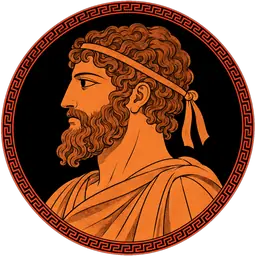
Aristagoras
Aristagoras son of Molpagoras governed Miletus as deputy for his cousin and father-in-law Histiaeus, whom Darius kept at Susa.1 When his attack on Naxos failed and he feared losing Miletus, he revolted openly against Darius and spread the revolt through Ionia.2 Cleomenes of Sparta turned him away, but the Athenians voted to send twenty ships to help the Ionians.3 While the cities were being taken he planned his escape; he sailed to Myrcinus in Thrace, where the Thracians killed him and his army as he besieged a town.4
Events
Ties
- Histiaeus father-in-law of Aristagoras Herodotus 5.30.2
- asked help of Cleomenes I Herodotus 5.49.1
- Hecataeus of Miletus advised Aristagoras Herodotus 5.125.1
What the sources say
“Now it chanced that the deputy ruling Miletus was Aristagoras son of Molpagoras, son-in-law and cousin of that Histiaeus son of Lysagoras whom Darius kept with him at Susa. Histiaeus was tyrant of Miletus but was at Susa when the Naxians, who had been his guests and friends, arrived.”
τῆς δὲ Μιλήτου ἐτύγχανε ἐπίτροπος ἐὼν Ἀρισταγόρης ὁ Μολπαγόρεω, γαμβρός τε ἐὼν καὶ ἀνεψιὸς Ἱστιαίου τοῦ Λυσαγόρεω, τὸν ὁ Δαρεῖος ἐν Σούσοισι κατεῖχε· ὁ γὰρ Ἱστιαῖος τύραννος ἦν Μιλήτου καὶ ἐτύγχανε τοῦτον τὸν χρόνον ἐὼν ἐν Σούσοισι, ὅτε οἱ Νάξιοι ἦλθον ξεῖνοι πρὶν ἐόντες τῷ Ἱστιαίῳ.
Herodotus 5.30.2 · tr. A. D. Godley
“Such was the advice of Hecataeus, but Aristagoras himself thought it best to depart for Myrcinus. He accordingly entrusted Miletus to Pythagoras, a citizen of repute, and himself sailed to Thrace with any that would follow him and then took possession of the place to which he had come. After this he was put to the sword by the Thracians, he and his army, as he was besieging a town, even though the Thracians were ready to depart from it under treaty.”
ταῦτα μὲν δὴ Ἑκαταῖος συνεβούλευε, αὐτῷ δὲ Ἀρισταγόρῃ ἡ πλείστη γνώμη ἦν ἐς τὴν Μύρκινον ἀπάγειν. τὴν μὲν δὴ Μίλητον ἐπιτράπει Πυθαγόρῃ ἀνδρὶ τῶν ἀστῶν δοκίμῳ, αὐτὸς δὲ παραλαβὼν πάντα τὸν βουλόμενον ἔπλεε ἐς τὴν Θρηίκην, καὶ ἔσχε τὴν χώρην ἐπʼ ἣν ἐστάλη· ἐκ δὲ ταύτης ὁρμώμενος ἀπόλλυται ὑπὸ Θρηίκων αὐτός τε ὁ Ἀρισταγόρης καὶ ὁ στρατὸς αὐτοῦ, πόλιν περικατήμενος καὶ βουλομένων τῶν Θρηίκων ὑποσπόνδων ἐξιέναι.
Herodotus 5.126 · tr. A. D. Godley
First named
The earliest text in the library that names Aristagoras, written about 430 BC (a modern estimate of when it was written):
“Now it chanced that the deputy ruling Miletus was Aristagoras son of Molpagoras, son-in-law and cousin of that Histiaeus son of Lysagoras whom Darius kept with him at Susa. Histiaeus was tyrant of Miletus but was at Susa when the Naxians, who had been his guests and friends, arrived.”
τῆς δὲ Μιλήτου ἐτύγχανε ἐπίτροπος ἐὼν Ἀρισταγόρης ὁ Μολπαγόρεω, γαμβρός τε ἐὼν καὶ ἀνεψιὸς Ἱστιαίου τοῦ Λυσαγόρεω, τὸν ὁ Δαρεῖος ἐν Σούσοισι κατεῖχε· ὁ γὰρ Ἱστιαῖος τύραννος ἦν Μιλήτου καὶ ἐτύγχανε τοῦτον τὸν χρόνον ἐὼν ἐν Σούσοισι, ὅτε οἱ Νάξιοι ἦλθον ξεῖνοι πρὶν ἐόντες τῷ Ἱστιαίῳ.
Herodotus 5.30.2 · tr. A. D. Godley
Found by searching every text in the library for these spellings and reading the earliest hits to rule out namesakes: Ἀρισταγόρης, Ἀρισταγόρας, Aristagoras. Texts lost, or not in the library, may name Aristagoras earlier.
The passages behind each sentence
- Herodotus 5.30.2 (tr. A. D. Godley) ↩
- Herodotus 5.35.1 (tr. A. D. Godley); Herodotus 5.37.1 (tr. A. D. Godley); Herodotus 5.37.2 (tr. A. D. Godley) ↩
- Herodotus 5.51.2 (tr. A. D. Godley); Herodotus 5.51.3 (tr. A. D. Godley); Herodotus 5.97.3 (tr. A. D. Godley) ↩
- Herodotus 5.124 (tr. A. D. Godley); Herodotus 5.126 (tr. A. D. Godley) ↩
Cite this page
MLA “Aristagoras.” Atlas of Ancient History, Skirnir Studios, 2026, history.skirnirstudios.com/people/aristagoras/.
APA Skirnir Studios. (2026). Aristagoras. Atlas of Ancient History. https://history.skirnirstudios.com/people/aristagoras/
Chicago “Aristagoras.” Atlas of Ancient History. Skirnir Studios, 2026. https://history.skirnirstudios.com/people/aristagoras/.
The atlas was written by AI from the ancient sources. Where you can, cite the ancient passage itself by its reference (Herodotus 7.228, Livy 22.7.3) and name the translation you read.