Atlas of Ancient History › People › The Persian Wars
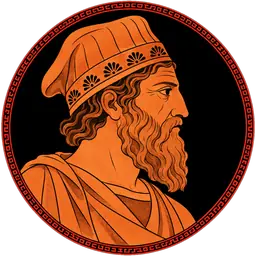
Histiaeus
As tyrant of Miletus, he persuaded the Ionians guarding Darius's bridge over the Ister (the Danube) to break only a bowshot's length of it, for show, arguing that each of them ruled his city only because of Darius; when Darius reached the river, Histiaeus repaired it.1 Darius later took him to Susa and kept him there.2 From Susa he sent his son-in-law Aristagoras a slave with a message marked on his shaved head, telling him to revolt.3 Later, foraging on the mainland, he was taken alive by the Persian Harpagus, who with Artaphernes impaled him at Sardis.4
Events
Ties
- father-in-law of Aristagoras Herodotus 5.30.2
- Artaphernes the elder executed Histiaeus Herodotus 6.30.1
- Darius I detained Histiaeus Herodotus 5.106.1
What the sources say
“Since Histiaeus desired to give word to Aristagoras that he should revolt and had no other safe way of doing so because the roads were guarded, he shaved and branded the head of his most trustworthy slave. He waited till the hair had grown again, and as soon as it was grown, he sent the man to Miletus with no other message except that when he came to Miletus he must bid Aristagoras shave his hair and examine his head. The writing branded on it signified revolt, as I have already said.”
ὁ γὰρ Ἱστιαῖος βουλόμενος τῷ Ἀρισταγόρῃ σημῆναι ἀποστῆναι ἄλλως μὲν οὐδαμῶς εἶχε ἀσφαλέως σημῆναι ὥστε φυλασσομενέων τῶν ὁδῶν, ὁ δὲ τῶν δούλων τὸν πιστότατον ἀποξυρήσας τὴν κεφαλὴν ἔστιξε καὶ ἀνέμεινε ἀναφῦναι τὰς τρίχας, ὡς δὲ ἀνέφυσαν τάχιστα, ἀπέπεμπε ἐς Μίλητον ἐντειλάμενος αὐτῷ ἄλλο μὲν οὐδέν, ἐπεὰν δὲ ἀπίκηται ἐς Μίλητον, κελεύειν Ἀρισταγόρην ξυρήσαντά μιν τὰς τρίχας κατιδέσθαι ἐς τὴν κεφαλήν. τὰ δὲ στίγματα ἐσήμαινε, ὡς καὶ πρότερόν μοι εἴρηται, ἀπόστασιν.
Herodotus 5.35.3 · tr. A. D. Godley
“Now if he had been taken prisoner and brought to king Darius, he would have suffered no harm (to my thinking) and the king would have forgiven his guilt; but as it was, when Histiaeus was brought to Sardis, both because of what he had done, and for fear that he might escape and again win power at the court, Artaphrenes, governor of Sardis, and Harpagus, who had captured him, impaled his body on the spot, and sent his head embalmed to king Darius at Susa.”
εἰ μέν νυν, ὡς ἐζωγρήθη, ἄχθη ἀγόμενος παρὰ βασιλέα Δαρεῖον, ὁ δὲ οὔτʼ ἂν ἔπαθε κακὸν οὐδὲν δοκέειν ἐμοί, ἀπῆκέ τʼ ἂν αὐτῷ τὴν αἰτίην· νῦν δέ μιν αὐτῶν τε τούτων εἵνεκα καὶ ἵνα μὴ διαφυγὼν αὖτις μέγας παρὰ βασιλέι γένηται, Ἀρταφρένης τε ὁ Σαρδίων ὕπαρχος καὶ ὁ λαβὼν Ἅρπαγος, ὡς ἀπίκετο ἀγόμενος ἐς Σάρδις, τὸ μὲν αὐτοῦ σῶμα αὐτοῦ ταύτῃ ἀνεσταύρωσαν, τὴν δὲ κεφαλὴν ταριχεύσαντες ἀνήνεικαν παρὰ βασιλέα Δαρεῖον ἐς Σοῦσα.
Herodotus 6.30.1 · tr. A. D. Godley
“This Histiaeus did because he greatly disliked his detention at Susa and fully expected to be sent away to the coast in the case that there should be a revolt. If, however, Miletus remained at peace, he calculated that he would never return there.”
ταῦτα δὲ ὁ Ἱστιαῖος ἐποίεε συμφορὴν ποιεύμενος μεγάλην τὴν ἑωυτοῦ κατοχὴν τὴν ἐν Σούσοισι· ἀποστάσιος ὦν γινομένης πολλὰς εἶχε ἐλπίδας μετήσεσθαι ἐπὶ θάλασσαν, μὴ δὲ νεώτερόν τι ποιεύσης τῆς Μιλήτου οὐδαμὰ ἐς αὐτὴν ἥξειν ἔτι ἐλογίζετο.
Herodotus 5.35.4 · tr. A. D. Godley
First named
The earliest text in the library that names Histiaeus, written about 430 BC (a modern estimate of when it was written):
“But Histiaeus of Miletus advised the opposite. He said, “It is owing to Darius that each of us is sovereign of his city; if Darius' power is overthrown, we shall no longer be able to rule, I in Miletus or any of you elsewhere; for all the cities will choose democracy rather than despotism.”
Ἱστιαίου δὲ τοῦ Μιλησίου ἐναντίη ταύτῃ, λέγοντος ὡς νῦν μὲν διὰ Δαρεῖον ἕκαστος αὐτῶν τυραννεύει πόλιος· τῆς Δαρείου δὲ δυνάμιος καταιρεθείσης οὔτε αὐτὸς Μιλησίων οἷος τε ἔσεσθαι ἄρχειν οὔτε ἄλλον οὐδένα οὐδαμῶν· βουλήσεσθαι γὰρ ἑκάστην τῶν πολίων δημοκρατέεσθαι μᾶλλον ἢ τυραννεύεσθαι.
Herodotus 4.137.2 · tr. A. D. Godley
Found by searching every text in the library for these spellings and reading the earliest hits to rule out namesakes: Ἱστιαῖος, Histiaeus. Texts lost, or not in the library, may name Histiaeus earlier.
The passages behind each sentence
- Herodotus 4.137.2 (tr. A. D. Godley); Herodotus 4.139.1 (tr. A. D. Godley); Herodotus 4.141 (tr. A. D. Godley) ↩
- Herodotus 5.25.1 (tr. A. D. Godley); Herodotus 5.35.4 (tr. A. D. Godley) ↩
- Herodotus 5.35.2 (tr. A. D. Godley); Herodotus 5.35.3 (tr. A. D. Godley); Herodotus 5.30.2 (tr. A. D. Godley) ↩
- Herodotus 6.28.2 (tr. A. D. Godley); Herodotus 6.30.1 (tr. A. D. Godley) ↩
Cite this page
MLA “Histiaeus.” Atlas of Ancient History, Skirnir Studios, 2026, history.skirnirstudios.com/people/histiaeus/.
APA Skirnir Studios. (2026). Histiaeus. Atlas of Ancient History. https://history.skirnirstudios.com/people/histiaeus/
Chicago “Histiaeus.” Atlas of Ancient History. Skirnir Studios, 2026. https://history.skirnirstudios.com/people/histiaeus/.
The atlas was written by AI from the ancient sources. Where you can, cite the ancient passage itself by its reference (Herodotus 7.228, Livy 22.7.3) and name the translation you read.