Atlas of Ancient History › People › The Persian Wars
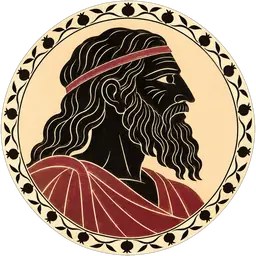
Cleomenes I
Son of Anaxandrides and half-brother of Leonidas.1 He led the Spartan army that besieged the tyrant family of Athens, the Pisistratids, until they agreed to leave Attica.2 When Aristagoras of Miletus begged Sparta to free the Ionians, he sent him away on learning that the Persian king lived three months' journey from the sea.3 He had his fellow king Demaratus deposed, getting the Pythia, through the Delphian Cobon, to declare that Demaratus was not Ariston's son.4 When Aristagoras offered him ever larger bribes, his daughter Gorgo, eight or nine years old, warned him that the stranger would corrupt him.5 He went mad and died slashing himself with a dagger.6
Events
Ties
- ally of Isagoras Herodotus 5.70.1
- drove out Cleisthenes Herodotus 5.72.1
- father of Gorgo Herodotus 5.51.1
- half-brother of Leonidas Herodotus 5.41.3
- deposed Demaratus Herodotus 6.61.1
- Aristagoras asked help of Cleomenes I Herodotus 5.49.1
What the sources say
“Then Aristagoras began to promise Cleomenes from ten talents upwards, if he would grant his request. When Cleomenes refused, Aristagoras offered him ever more and more. When he finally promised fifty talents the child cried out, “Father, the stranger will corrupt you, unless you leave him and go away.”
ἐνθαῦτα δὴ ὁ Ἀρισταγόρης ἄρχετο ἐκ δέκα ταλάντων ὑπισχνεόμενος, ἤν οἱ ἐπιτελέσῃ τῶν ἐδέετο. ἀνανεύοντος δὲ τοῦ Κλεομένεος προέβαινε τοῖσι χρήμασι ὑπερβάλλων ὁ Ἀρισταγόρης, ἐς οὗ πεντήκοντά τε τάλαντα ὑπεδέδεκτο καὶ τὸ παιδίον ηὐδάξατο πάτερ, διαφθερέει σε ὁ ξεῖνος, ἢν μὴ ἀποστὰς ἴῃς.
Herodotus 5.51.2 · tr. A. D. Godley
First named
The earliest text in the library that names Cleomenes I, written about 430 BC (a modern estimate of when it was written):
“Maeandrius sailed to Lacedaemon, escaping from Samos; and after he arrived there and brought up the possessions with which he had left his country, it became his habit to make a display of silver and gold drinking cups; while his servants were cleaning these, he would converse with the king of Sparta, Cleomenes son of Anaxandrides, and would bring him to his house. As Cleomenes marvelled greatly at the cups whenever he saw them, Maeandrius would tell him to take as many as he liked.”
Μαιάνδριος δὲ ἀποδρὰς ἐκ τῆς Σάμου ἐκπλέει ἐς Λακεδαίμονα· ἀπικόμενος δὲ ἐς αὐτὴν καὶ ἀνενεικάμενος τὰ ἔχων ἐξεχώρησε, ἐποίεε τοιάδε· ὅκως ποτήρια ἀργύρεά τε καὶ χρύσεα προθεῖτο, οἱ μὲν θεράποντες αὐτοῦ ἐξέσμων αὐτά, ὃ δʼ ἂν τὸν χρόνον τοῦτον τῷ Κλεομένεϊ τῷ Ἀναξανδρίδεω ἐν λόγοισι ἐών, βασιλεύοντι Σπάρτης, προῆγέ μιν ἐς τὰ οἰκία· ὅκως δὲ ἴδοιτο Κλεομένης τὰ ποτήρια, ἀπεθώμαζέ τε καὶ ἐξεπλήσσετο· ὁ δὲ ἂν ἐκέλευε αὐτὸν ἀποφέρεσθαι αὐτῶν ὅσα βούλοιτο.
Herodotus 3.148.1 · tr. A. D. Godley
Found by searching every text in the library for these spellings and reading the earliest hits to rule out namesakes: Κλεομένης, Cleomenes. Texts lost, or not in the library, may name Cleomenes I earlier.
The passages behind each sentence
- Herodotus 5.39.1 (tr. A. D. Godley); Herodotus 5.41.1 (tr. A. D. Godley); Herodotus 5.41.3 (tr. A. D. Godley) ↩
- Herodotus 5.64.1 (tr. A. D. Godley); Herodotus 5.64.2 (tr. A. D. Godley); Herodotus 5.65 (tr. A. D. Godley) ↩
- Herodotus 5.49.1 (tr. A. D. Godley); Herodotus 5.49.3 (tr. A. D. Godley); Herodotus 5.50 (tr. A. D. Godley) ↩
- Herodotus 6.61.1 (tr. A. D. Godley); Herodotus 6.66 (tr. A. D. Godley); Herodotus 6.67.1 (tr. A. D. Godley) ↩
- Herodotus 5.51.1 (tr. A. D. Godley); Herodotus 5.51.2 (tr. A. D. Godley) ↩
- Herodotus 6.75.1 (tr. A. D. Godley); Herodotus 6.75.2 (tr. A. D. Godley); Herodotus 6.75.3 (tr. A. D. Godley) ↩
Cite this page
MLA “Cleomenes I.” Atlas of Ancient History, Skirnir Studios, 2026, history.skirnirstudios.com/people/cleomenes/.
APA Skirnir Studios. (2026). Cleomenes I. Atlas of Ancient History. https://history.skirnirstudios.com/people/cleomenes/
Chicago “Cleomenes I.” Atlas of Ancient History. Skirnir Studios, 2026. https://history.skirnirstudios.com/people/cleomenes/.
The atlas was written by AI from the ancient sources. Where you can, cite the ancient passage itself by its reference (Herodotus 7.228, Livy 22.7.3) and name the translation you read.