Atlas of Ancient History › People › The Persian Wars
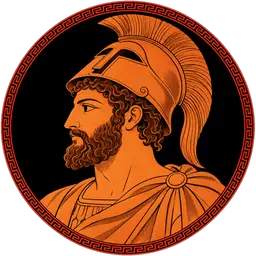
Themistocles
Themistocles son of Neocles argued that the oracle's 'wooden wall' meant the fleet, and the Athenians took his advice to prepare to fight at sea.1 Earlier he had persuaded the Athenians to spend the silver from the mines at Laurium on two hundred ships for their war with Aegina, instead of sharing it out.2 At Salamis he persuaded Eurybiades to keep the fleet there and fight in the strait instead of falling back to the Isthmus.3 When the Peloponnesians outvoted him, he secretly sent his servant Sicinnus to tell the Persian commanders that the Greeks were planning to flee and should not be allowed to escape.4 Later he was ostracised, and in the end he travelled inland and wrote to the Persian king, who was, Thucydides says, Xerxes' son Artaxerxes, newly on the throne.5 Plutarch knew writers who said it was Xerxes himself, though he thought Thucydides fitted the dates better.6 Thucydides says he died of disease, though some said poison, and that his monument stood at Magnesia, which the king had given him to rule.7
Open Themistocles in the atlas
Events
Ties
- master of Sicinnus Herodotus 8.75.1
- rival of Aristides Herodotus 8.79
- persuaded Eurybiades Herodotus 8.63.1
- Adeimantus quarrelled with Themistocles Herodotus 8.59.1
- took refuge with Artaxerxes I Thucydides 1.137.3
What the sources say
“Now there was a certain Athenian, by name and title Themistocles son of Neocles, who had lately risen to be among their chief men. He claimed that the readers of oracles had incorrectly interpreted the whole of the oracle and reasoned that if the verse really pertained to the Athenians, it would have been formulated in less mild language, calling Salamis “cruel” rather than “divine ” seeing that its inhabitants were to perish.”
ἦν δὲ τῶν τις Ἀθηναίων ἀνὴρ ἐς πρώτους νεωστὶ παριών, τῷ οὔνομα μὲν ἦν Θεμιστοκλέης, παῖς δὲ Νεοκλέος ἐκαλέετο. οὗτος ὡνὴρ οὐκ ἔφη πᾶν ὀρθῶς τοὺς χρησμολόγους συμβάλλεσθαι, λέγων τοιάδε· εἰ ἐς Ἀθηναίους εἶχε τὸ ἔπος εἰρημένον ἐόντως, οὐκ ἂν οὕτω μιν δοκέειν ἠπίως χρησθῆναι, ἀλλὰ ὧδε ὦ σχετλίη Σαλαμίς ἀντὶ τοῦ ὦ θείη Σαλαμίς, εἴ πέρ γε ἔμελλον οἱ οἰκήτορες ἀμφʼ αὐτῇ τελευτήσειν·
Herodotus 7.143.1 · tr. A. D. Godley
“When the Peloponnesians were outvoting him, Themistocles secretly left the assembly, and sent a man by boat to the Median fleet after ordering him what to say. His name was Sicinnus, and he was Themistocles' servant and his sons' attendant. Later Themistocles enrolled him as a Thespian, when the Thespians were adopting citizens, and made him wealthy with money.”
ἐνθαῦτα Θεμιστοκλέης ὡς ἑσσοῦτο τῇ γνώμῃ ὑπὸ τῶν Πελοποννησίων, λαθὼν ἐξέρχεται ἐκ τοῦ συνεδρίου, ἐξελθὼν δὲ πέμπει ἐς τὸ στρατόπεδον τὸ Μήδων ἄνδρα πλοίῳ ἐντειλάμενος τὰ λέγειν χρεόν, τῷ οὔνομα μὲν ἦν Σίκιννος, οἰκέτης δὲ καὶ παιδαγωγὸς ἦν τῶν Θεμιστοκλέος παίδων· τὸν δὴ ὕστερον τούτων τῶν πρηγμάτων Θεμιστοκλέης Θεσπιέα τε ἐποίησε, ὡς ἐπεδέκοντο οἱ Θεσπιέες πολιήτας, καὶ χρήμασι ὄλβιον.
Herodotus 8.75.1 · tr. A. D. Godley
“The advice of Themistocles had prevailed on a previous occasion. The revenues from the mines at Laurium had brought great wealth into the Athenians' treasury, and when each man was to receive ten drachmae for his share, Themistocles persuaded the Athenians to make no such division but to use the money to build two hundred ships for the war, that is, for the war with Aegina.”
ἑτέρη τε Θεμιστοκλέι γνώμη ἔμπροσθε ταύτης ἐς καιρὸν ἠρίστευσε, ὅτε Ἀθηναίοισι γενομένων χρημάτων μεγάλων ἐν τῷ κοινῷ, τὰ ἐκ τῶν μετάλλων σφι προσῆλθε τῶν ἀπὸ Λαυρείου, ἔμελλον λάξεσθαι ὀρχηδὸν ἕκαστος δέκα δραχμάς· τότε Θεμιστοκλέης ἀνέγνωσε Ἀθηναίους τῆς διαιρέσιος ταύτης παυσαμένους νέας τούτων τῶν χρημάτων ποιήσασθαι διηκοσίας ἐς τὸν πόλεμον, τὸν πρὸς Αἰγινήτας λέγων.
Herodotus 7.144.1 · tr. A. D. Godley
“Now Thucydides and Charon of Lampsacus relate that Xerxes was dead, and that it was his son Artaxerxes with whom Themistocles had his interview; but Ephorus and Dinon and Clitarchus and Heracleides and yet more besides have it that it was Xerxes to whom he came. With the chronological data Thucydides seems to me more in accord, although these are by no means securely established.”
Θουκυδίδης μὲν οὖν καὶ Χάρων ὁ Λαμψακηνὸς ἱστοροῦσι τεθνηκότος Ξέρξου πρὸς τὸν υἱὸν αὐτοῦ τῷ Θεμιστοκλεῖ γενέσθαι τὴν ἔντευξιν· Ἔφορος δὲ καὶ Δείνων καὶ Κλείταρχος καὶ Ἡρακλείδης, ἔτι δʼ ἄλλοι πλείονες, πρὸς αὐτὸν ἀφικέσθαι τὸν Ξέρξην. τοῖς δὲ χρονικοῖς δοκεῖ μᾶλλον ὁ Θουκυδίδης συμφέρεσθαι, καίπερ οὐδʼ αὐτοῖς ἀτρέμα συνταττομένοις.
Plutarch, Themistocles 27.1 · tr. Bernadotte Perrin
First named
The earliest text in the library that names Themistocles, written about 430 BC (a modern estimate of when it was written):
“Now there was a certain Athenian, by name and title Themistocles son of Neocles, who had lately risen to be among their chief men. He claimed that the readers of oracles had incorrectly interpreted the whole of the oracle and reasoned that if the verse really pertained to the Athenians, it would have been formulated in less mild language, calling Salamis “cruel” rather than “divine ” seeing that its inhabitants were to perish.”
ἦν δὲ τῶν τις Ἀθηναίων ἀνὴρ ἐς πρώτους νεωστὶ παριών, τῷ οὔνομα μὲν ἦν Θεμιστοκλέης, παῖς δὲ Νεοκλέος ἐκαλέετο. οὗτος ὡνὴρ οὐκ ἔφη πᾶν ὀρθῶς τοὺς χρησμολόγους συμβάλλεσθαι, λέγων τοιάδε· εἰ ἐς Ἀθηναίους εἶχε τὸ ἔπος εἰρημένον ἐόντως, οὐκ ἂν οὕτω μιν δοκέειν ἠπίως χρησθῆναι, ἀλλὰ ὧδε ὦ σχετλίη Σαλαμίς ἀντὶ τοῦ ὦ θείη Σαλαμίς, εἴ πέρ γε ἔμελλον οἱ οἰκήτορες ἀμφʼ αὐτῇ τελευτήσειν·
Herodotus 7.143.1 · tr. A. D. Godley
Found by searching every text in the library for these spellings and reading the earliest hits to rule out namesakes: Θεμιστοκλέης, Θεμιστοκλῆς, Themistocles. Texts lost, or not in the library, may name Themistocles earlier.
The passages behind each sentence
- Herodotus 7.143.1 (tr. A. D. Godley); Herodotus 7.143.2 (tr. A. D. Godley); Herodotus 7.143.3 (tr. A. D. Godley) ↩
- Herodotus 7.144.1 (tr. A. D. Godley) ↩
- Herodotus 8.60A (tr. A. D. Godley); Herodotus 8.60B (tr. A. D. Godley); Herodotus 8.63 (tr. A. D. Godley) ↩
- Herodotus 8.75.1 (tr. A. D. Godley); Herodotus 8.75.2 (tr. A. D. Godley) ↩
- Thucydides 1.135 (tr. Richard Crawley); Thucydides 1.137.3 (tr. Richard Crawley) ↩
- Plutarch, Themistocles 27.1 (tr. Bernadotte Perrin) ↩
- Thucydides 1.138.4 (tr. Richard Crawley); Thucydides 1.138.5 (tr. Richard Crawley) ↩
Cite this page
MLA “Themistocles.” Atlas of Ancient History, Skirnir Studios, 2026, history.skirnirstudios.com/people/themistocles/.
APA Skirnir Studios. (2026). Themistocles. Atlas of Ancient History. https://history.skirnirstudios.com/people/themistocles/
Chicago “Themistocles.” Atlas of Ancient History. Skirnir Studios, 2026. https://history.skirnirstudios.com/people/themistocles/.
The atlas was written by AI from the ancient sources. Where you can, cite the ancient passage itself by its reference (Herodotus 7.228, Livy 22.7.3) and name the translation you read.