Atlas of Ancient History › People › The late Republic
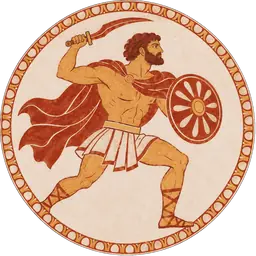
Spartacus
Spartacus was a Thracian who had once served as a soldier with the Romans, then been taken prisoner and sold to a gladiator school at Capua.1 He persuaded about seventy gladiators to fight for their freedom, broke out, and took refuge on Mount Vesuvius, where runaway slaves and free country people joined him.2 Plutarch calls him a man of great courage and strength, and in intelligence and gentleness superior to his fortune and more Greek than Thracian.3 Crassus, sent against him as praetor, hemmed him in; in the last battle Spartacus killed his own horse, saying he would have the enemy's horses if he won and need none if he lost, and fought on, wounded in the thigh, until he was cut down.4 Cicero, who had seen the war, used his name as a byword for a public enemy, comparing Clodius and later Antony to Spartacus.5
Events
Ties
- Marcus Licinius Crassus defeated Spartacus Appian, Civil Wars 1.14.120
What the sources say
“elected three leaders. The first of these was Spartacus, a Thracian of Nomadic stock, possessed not only of great courage and strength, but also in sagacity and culture superior to his fortune, and more Hellenic than Thracian”
ἡγεμόνας εἵλοντο τρεῖς, ὧν πρῶτος ἦν Σπάρτακος, ἀνὴρ Θρᾷξ τοῦ Νομαδικοῦ γένους, οὐ μόνον φρόνημα μέγα καὶ ῥώμην ἔχων, ἀλλὰ καὶ συνέσει καὶ πρᾳότητι τῆς τύχης ἀμείνων καὶ τοῦ γένους Ἑλληνικώτερος
Plutarch, Crassus 8.2 · tr. Bernadotte Perrin
“Spartacus saw the necessity that was upon him, and drew up his whole army in order of battle. In the first place, when his horse was brought to him, he drew his sword, and saying that if he won the day he would have many fine horses of the enemy’s, but if he lost it He did not want any, he slew his horse. Then pushing his way towards Crassus himself through many flying weapons and wounded men, he did not indeed reach him, but slew two centurions who fell upon him together”
ὁρῶν τὴν ἀνάγκην ὁ Σπάρτακος ἅπαν παρέταξε τὸ στράτευμα. καὶ πρῶτον μὲν τοῦ ἵππου προσαχθέντος αὐτῷ σπασάμενος τὸ ξίφος καὶ εἰπών ὅτι νικῶν μὲν ἔχοι πολλοὺς ἵππους καὶ καλοὺς τῶν πολεμίων, ἡττώμενος δὲ οὐ δεῖται, κατέσφαξε τὸν ἵππον· ἔπειτα πρὸς Κράσσον αὐτὸν ὠθούμενος διὰ πολλῶν ὅπλων καὶ τραυμάτων ἐκείνου μὲν οὐκ ἔτυχεν, ἑκατοντάρχας δὲ δύο συμπεσόντας ἀνεῖλε
Plutarch, Crassus 11.6 · tr. Bernadotte Perrin
“Spartacus was wounded in the thigh with a spear and sank upon his knee, holding his shield in front of him and contending in this way against his assailants until he and the great mass of those with him were surrounded and slain”
τιτρώσκεται ἐς τὸν μηρὸν ὁ Σπάρτακος δορατίῳ καὶ συγκάμψας τὸ γόνυ καὶ προβαλὼν τὴν ἀσπίδα πρὸς τοὺς ἐπιόντας ἀπεμάχετο, μέχρι καὶ αὐτὸς καὶ πολὺ πλῆθος ἀμφʼ αὐτὸν κυκλωθέντες ἔπεσον
Appian, Civil Wars 1.14.120 · tr. Horace White
First named
The earliest text in the library that names Spartacus, written about 56 BC (a modern estimate of when it was written):
“when he would rather celebrate the games after the fashion of Athenio or Spartacus, than like Caius or Appius Claudius”
cum Athenionis aut Spartaci exemplo ludos facere maluerit quam C. aut Appi Claudiorum
Cicero, On the Responses of the Haruspices 26 · tr. Charles Duke Yonge
Found by searching every text in the library for these spellings and reading the earliest hits to rule out namesakes: Σπάρτακος, Spartacus. Texts lost, or not in the library, may name Spartacus earlier.
The passages behind each sentence
- Appian, Civil Wars 1.14.116 (tr. Horace White) ↩
- Appian, Civil Wars 1.14.116 (tr. Horace White); Plutarch, Crassus 8.2 (tr. Bernadotte Perrin) ↩
- Plutarch, Crassus 8.2 (tr. Bernadotte Perrin) ↩
- Plutarch, Crassus 11.6 (tr. Bernadotte Perrin); Appian, Civil Wars 1.14.120 (tr. Horace White); Plutarch, Crassus 11.7 (tr. Bernadotte Perrin) ↩
- Cicero, On the Responses of the Haruspices 26 (tr. Charles Duke Yonge); Cicero, Philippics 4.15 (tr. Charles Duke Yonge) ↩
Cite this page
MLA “Spartacus.” Atlas of Ancient History, Skirnir Studios, 2026, history.skirnirstudios.com/people/spartacus/.
APA Skirnir Studios. (2026). Spartacus. Atlas of Ancient History. https://history.skirnirstudios.com/people/spartacus/
Chicago “Spartacus.” Atlas of Ancient History. Skirnir Studios, 2026. https://history.skirnirstudios.com/people/spartacus/.
The atlas was written by AI from the ancient sources. Where you can, cite the ancient passage itself by its reference (Herodotus 7.228, Livy 22.7.3) and name the translation you read.