Atlas of Ancient History › People › The late Republic
Sertorius
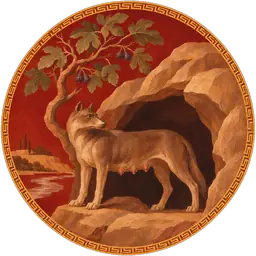
Quintus Sertorius came of a family of some standing among the Sabines, and was brought up by his widowed mother.1 He lost an eye in battle and was proud of it: other men had to lay aside their decorations, he said, but the marks of his bravery stayed with him.2 Chosen governor of Spain while fighting for Carbo against Sulla, he drove out Sulla's governors, held off Metellus, raised armies of Italians and Celtiberians, and made a council of three hundred that he called the Roman senate.3 Plutarch says he kept a tame white doe and told the Spaniards that it brought him news from the gods.4 After eight years of war against Metellus and Pompey, he grew suspicious and cruel, and his officer Perpenna killed him at a banquet; Cicero tells how Pompey spared the Sertorian soldiers who fled to him after Perpenna was put to death.5
Events
Ties
- routed Pompey Plutarch, Sertorius 19.4
What the sources say
“The most warlike of generals, and those who achieved most by a mixture of craft and ability, have been one-eyed men,—Philip, Antigonus, Hannibal, and the subject of this Life, Sertorius”
καὶ τῶν στρατηγῶν οἱ πολεμικώτατοι καὶ πλεῖστα δόλῳ κατεργασάμενοι μετὰ δεινότητος ἑτερόφθαλμοι γεγόνασι, Φίλιππος, Ἀντίγονος, Ἀννίβας καὶ περὶ οὗ τόδε τὸ σύγγραμμα Σερτώριος
Plutarch, Sertorius 1.4 · tr. Bernadotte Perrin
“There remained of the Sullan troubles the war with Sertorius, which had been going on for eight years, and was not an easy war to the Romans since it was waged not merely against Spaniards, but against other Romans and Sertorius. He had been chosen governor of Spain while he was coöperating with Carbo against Sulla; and after taking the city of Suessa during the armistice he fled and assumed his praetorship. He had an army from Italy itself and he raised another from the Celtiberians, and drove out of Spain the former praetors, who, in order to favor Sulla, refused to surrender the government to him. He had also fought nobly against Metellus, who had been sent against him by Sulla. Having acquired a reputation for bravery he enrolled a council of 300 members from the friends who were with him, and called it the Roman Senate in derision of the real one”
λοιπὸν δʼ ἐστὶ τῶν Συλλείων ἔργων τὸ Σερτωρίου, γενόμενον μὲν ὀκτάετες, οὐκ εὐμαρὲς δὲ οὐδαμὰ Ῥωμαίοις, ἅτε μὴ πρὸς Ἴβηρας αὐτούς, ἀλλὰ καὶ τόδε ἐπʼ ἀλλήλους καὶ πρὸς Σερτώριον, ὃς ᾕρητο μὲν Ἰβηρίας ἄρχειν, Κάρβωνι δʼ ἐπὶ Σύλλᾳ συμμαχῶν Σύεσσαν πόλιν ἐν σπονδαῖς κατέλαβε καὶ φεύγων ἐπὶ τὴν στρατηγίαν ᾤχετο. καὶ στρατὸν ἔχων ἔκ τε Ἰταλίας αὐτῆς καί τινα ἄλλον ἐκ Κελτιβήρων ἀγείρας τούς τε πρὸ ἑαυτοῦ στρατηγούς, οὐ παραδιδόντας οἱ τὴν ἀρχὴν ἐς χάριν Σύλλα, τῆς Ἰβηρίας ἐξέβαλε καὶ πρὸς Μέτελλον ἐπιπεμφθέντα ὑπὸ Σύλλα ἀπεμάχετο γενναίως. περιώνυμος δὲ ὢν ἐπὶ τόλμῃ, βουλὴν κατέλεξεν ἐκ τῶν συνόντων οἱ φίλων τριακοσίους καὶ τήνδε ἔλεγεν εἶναι τὴν Ῥωμαίων βουλὴν
Appian, Civil Wars 1.13.108 · tr. Horace White
“After Perperna was slain, many of the number of Sertorius's soldiers fled to Cnaeus Pompeius, that most illustrious and gallant man. Was there one of them whom he did not preserve safe and unhurt with the greatest kindness”
ad Cn. Pompeium, clarissimum virum et fortissimum, permulti occiso Perperna ex illo Sertoriano numero militum confugerunt. quem non ille summo cum studio salvum incolumemque servavit
Cicero, Against Verres 2.5.153 · tr. Charles Duke Yonge
First named
The earliest text in the library that names Sertorius, written about 70 BC (a modern estimate of when it was written):
“prove that those men have been with Sertorius, and that, when flying from Dianium, they were driven to Sicily”
ostendito illos cum Sertorio fuisse, ab Dianio fugientis ad Siciliam esse delatos
Cicero, Against Verres 2.5.154 · tr. Charles Duke Yonge
Found by searching every text in the library for these spellings and reading the earliest hits to rule out namesakes: Σερτώριος, Κόιντος Σερτώριος, Sertorius, Q. Sertorius, Quintus Sertorius, Sertorianus. Texts lost, or not in the library, may name Sertorius earlier.
The passages behind each sentence
- Plutarch, Sertorius 2.1 (tr. Bernadotte Perrin) ↩
- Plutarch, Sertorius 4.2 (tr. Bernadotte Perrin) ↩
- Appian, Civil Wars 1.13.108 (tr. Horace White) ↩
- Plutarch, Sertorius 11.4 (tr. Bernadotte Perrin) ↩
- Appian, Civil Wars 1.13.113 (tr. Horace White); Plutarch, Sertorius 26.3 (tr. Bernadotte Perrin); Cicero, Against Verres 2.5.153 (tr. Charles Duke Yonge) ↩
Cite this page
MLA “Sertorius.” Atlas of Ancient History, Skirnir Studios, 2026, history.skirnirstudios.com/people/sertorius/.
APA Skirnir Studios. (2026). Sertorius. Atlas of Ancient History. https://history.skirnirstudios.com/people/sertorius/
Chicago “Sertorius.” Atlas of Ancient History. Skirnir Studios, 2026. https://history.skirnirstudios.com/people/sertorius/.
The atlas was written by AI from the ancient sources. Where you can, cite the ancient passage itself by its reference (Herodotus 7.228, Livy 22.7.3) and name the translation you read.