Atlas of Ancient History › People › The late Republic
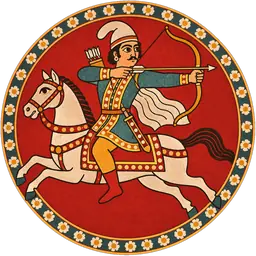
Orodes II
Orodes, king of the Parthians, owed his throne to Surena, who had restored him when he was driven out.1 When Crassus invaded, Orodes divided his forces, himself ravaging Armenia to punish its king Artavasdes, while he sent Surena against the Romans.2 Reconciled with Artavasdes, he married his son Pacorus to Artavasdes' sister; Crassus' head was brought to their banquet while an actor was singing the Bacchae of Euripides.3 In 51 BC his son Pacorus crossed the Euphrates with almost the whole Parthian army, as Cicero reported from his province.4 Later, jealous of Surena's fame, he had him killed; after losing Pacorus in battle with the Romans he fell ill, and his son Phraates poisoned and then strangled him.5
Events
Ties
- put to death Surena Plutarch, Crassus 33.5
- received the head of Marcus Licinius Crassus Plutarch, Crassus 33.2
What the sources say
“the Parthians have crossed the Euphrates under Pacorus, son of the Parthian king Orodes, with nearly all his forces”
Parthi Euphraten transierunt duce Pacoro, Orodis regis Parthorum filio, cum cunctis fere copiis
Cicero, Letters to Atticus 5.18.1 · tr. Evelyn Shuckburgh
“For Hyrodes was well acquainted both with the Greek language and literature, and Artavasdes actually composed tragedies, and wrote orations and histories, some of which are preserved. Now when the head of Crassus was brought to the king’s door, the tables had been removed, and a tragic actor, Jason by name, of Tralles, was singing that part of the Bacchae of Euripides where Agave is about to appear. While he was receiving his applause, Sillaces stood at the door of the banqueting-hall, and after a low obeisance, cast the head of Crassus into the centre of the company”
ἦν γὰρ οὔτε φωνῆς οὔτε γραμμάτων Ὑρώδης Ἑλληνικῶν ἄπειρος, ὁ δʼ Ἀρταοθάσδης καὶ τραγῳδίας ἐποίει καὶ λόγους ἔγραφε καὶ ἱστορίας, ὧν ἔνιαι διασῴζονται, τῆς δὲ κεφαλῆς τοῦ Κράσσου κομισθείσης ἐπὶ θύρας ἀπηρμέναι μὲν ἦσαν αἱ τράπεζαι, τραγῳδιῶν δὲ ὑποκριτὴς Ἰάσων ὄνομα Τραλλιανὸς ᾖδεν Εὐριπίδου Βακχῶν τὰ περὶ τὴν Ἀγαύην. εὐδοκιμοῦντος δʼ αὐτοῦ Σιλλάκης ἐπιστὰς τῷ ἀνδρῶνι καὶ προσκυνήσας προὔβαλεν εἰς μέσον τοῦ Κράσσου τὴν κεφαλήν
Plutarch, Crassus 33.2 · tr. Bernadotte Perrin
“and after Hyrodes had lost his son Pacorus, who was defeated in battle by the Romans, and had fallen into a disease which resulted in dropsy, His son Phraates plotted against his life and gave him aconite. And when the disease absorbed the poison so that it was thrown off with it and the patient thereby relieved, Phraates took the shortest path and strangled his father”
Ὑρώδῃ δὲ ἀποβαλόντι Πάκορον ὑπὸ Ῥωμαίων μάχῃ κρατηθέντα, καὶ νοσήσαντι νόσον εἰς ὓδρωπα τραπεῖσαν, Φραάτης ὁ υἱὸς ἐπιβουλεύων ἀκόνιτον ἔδωκεν. ἀναδεξαμένης δὲ τῆς νόσου τὸ φάρμακον εἰς ἑαυτὴν, ὥστε συνεκκριθῆναι, καὶ τοῦ σώματος κουφισθέντος, ἐπὶ τὴν ταχίστην τῶν ὁδῶν ἐλθὼν ὁ Φραάτης ἀπέπνιξεν αὐτόν
Plutarch, Crassus 33.5 · tr. Bernadotte Perrin
First named
The earliest text in the library that names Orodes II, written about 51 BC (a modern estimate of when it was written):
“the Parthians have crossed the Euphrates under Pacorus, son of the Parthian king Orodes, with nearly all his forces”
Parthi Euphraten transierunt duce Pacoro, Orodis regis Parthorum filio, cum cunctis fere copiis
Cicero, Letters to Atticus 5.18.1 · tr. Evelyn Shuckburgh
Found by searching every text in the library for these spellings and reading the earliest hits to rule out namesakes: Orodes, Orodis, Orodi, Ὑρώδης, Hyrodes, Ὀρώδης. Texts lost, or not in the library, may name Orodes II earlier.
The passages behind each sentence
- Plutarch, Crassus 21.7 (tr. Bernadotte Perrin); Cicero, Letters to Atticus 5.18.1 (tr. Evelyn Shuckburgh) ↩
- Plutarch, Crassus 21.5 (tr. Bernadotte Perrin) ↩
- Plutarch, Crassus 33.1 (tr. Bernadotte Perrin); Plutarch, Crassus 33.2 (tr. Bernadotte Perrin) ↩
- Cicero, Letters to Atticus 5.18.1 (tr. Evelyn Shuckburgh) ↩
- Plutarch, Crassus 33.5 (tr. Bernadotte Perrin); Plutarch, Crassus 33.5 (tr. Bernadotte Perrin) ↩
Cite this page
MLA “Orodes II.” Atlas of Ancient History, Skirnir Studios, 2026, history.skirnirstudios.com/people/orodes/.
APA Skirnir Studios. (2026). Orodes II. Atlas of Ancient History. https://history.skirnirstudios.com/people/orodes/
Chicago “Orodes II.” Atlas of Ancient History. Skirnir Studios, 2026. https://history.skirnirstudios.com/people/orodes/.
The atlas was written by AI from the ancient sources. Where you can, cite the ancient passage itself by its reference (Herodotus 7.228, Livy 22.7.3) and name the translation you read.