Atlas of Ancient History › People › The Hellenistic world
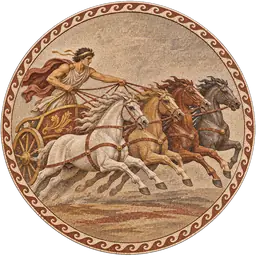
Hieron II
Hiero was elected commander by the Syracusan army while still quite young, and Polybius says he won power by his own abilities, without killing or banishing any citizen.1 Theocritus, writing to him, pictured him arming among the Syracusans against the Carthaginians, the equal of the old heroes.2 After he crushed the Mamertines, all the allies hailed him as king.3 When the Roman consuls came to Sicily he made peace and alliance with Rome, and for the rest of his life supplied the Romans and courted the good opinion of the Greeks.4 His kinsman and friend Archimedes moved a loaded ship for him with a system of pulleys, Plutarch says.5 Polybius gives him a reign of fifty-four years and a life of more than ninety; Pseudo-Lucian says he lived to ninety-two and ruled seventy; Livy tells his death and the succession of his grandson Hieronymus.6
Events
Ties
- kinsman and friend of Archimedes Plutarch, Marcellus 14.7
- Archimedes built engines paid for by Hieron II Polybius 8.7.2
What the sources say
“Already now the Phoenicians who dwell under the setting sun, at the far tip of Libya, shudder; already the Syracusans take up their spears by the middle, their arms weighed down with shields of willow; and among them Hiero, the equal of the heroes of old, girds himself, and horsehair plumes shade his helmet.”
ἤδη νῦν Φοίνικες ὑπʼ ἠελίῳ δύνοντι οἰκεῦντες Λιβύας ἄκρον σφυρὸν ἐρρίγασιν. ἤδη βαστάζουσι Συρακόσιοι μέσα δοῦρα ἀχθόμενοι σακέεσσι βραχίονας ἰτεΐνοισιν· ἐν δʼ αὐτοῖς Ἱέρων προτέροις ἴσος ἡρώεσσι ζώννυται, ἵππειαι δὲ κόρυν σκεπάουσιν ἔθειραι
Theocritus, Idylls 16 · AI translation (Claude)
“For, in the first place, Hiero gained the sovereignty of Syracuse and her allies by his own unaided abilities without inheriting wealth, or reputation, or any other advantage of fortune. And, in the second place, was established king of Syracuse”
Ἱέρων μὲν γὰρ πρῶτον μὲν διʼ αὑτοῦ κατεκτήσατο τὴν Συρακοσίων καὶ τῶν συμμάχων ἀρχήν, οὐ πλοῦτον, οὐ δόξαν, οὐχ ἕτερον οὐδὲν ἐκ τῆς τύχης ἕτοιμον παραλαβών. καὶ μὴν οὐκ ἀποκτείνας, οὐ φυγαδεύσας, οὐ λυπήσας οὐδένα τῶν πολιτῶν, διʼ αὑτοῦ βασιλεὺς κατέστη τῶν Συρακοσίων
Polybius 7.8 · tr. Evelyn S. Shuckburgh
“while King Hiero, having thus placed himself under the protection of the Romans, never failed to supply their needs in times of difficulty; and for the rest of his life reigned securely in Syracuse, devoting his energies to gaining the gratitude and good opinion of the Greeks”
ὁ δὲ βασιλεὺς Ἱέρων ὑποστείλας ἑαυτὸν ὑπὸ τὴν Ῥωμαίων σκέπην καὶ χορηγῶν ἀεὶ τούτοις εἰς τὰ κατεπείγοντα τῶν πραγμάτων ἀδεῶς ἐβασίλευε τῶν Συρακοσίων τὸν μετὰ ταῦτα χρόνον, φιλοστεφανῶν καὶ φιλοδοξῶν εἰς τοὺς Ἕλληνας
Polybius 1.16.10 · tr. Evelyn S. Shuckburgh
“Don’t I know you, Menaechmus, the son of your father Moschus, who are said to have been born in Sicily, at Syracuse, where King Agathocles reigned, and after him Pintia, the third Liparo, who at his death left the kingdom to Hiero—which Hiero is now king”
Non ego te novi Menaechmum, Moscho prognatum patre, qui Syracusis perhibere natus esse in Sicilia, ubi rex Agathocles regnator fuit et iterum Phintia, tertium Liparo, qui in morte regnum Hieroni tradidit, nunc Hiero est
Plautus, Menaechmi 2.3 · tr. Henry Thomas Riley
First named
The earliest text in the library that names Hieron II, written about 275 BC (a modern estimate of when it was written):
“Already now the Phoenicians who dwell under the setting sun, at the far tip of Libya, shudder; already the Syracusans take up their spears by the middle, their arms weighed down with shields of willow; and among them Hiero, the equal of the heroes of old, girds himself, and horsehair plumes shade his helmet.”
ἤδη νῦν Φοίνικες ὑπʼ ἠελίῳ δύνοντι οἰκεῦντες Λιβύας ἄκρον σφυρὸν ἐρρίγασιν. ἤδη βαστάζουσι Συρακόσιοι μέσα δοῦρα ἀχθόμενοι σακέεσσι βραχίονας ἰτεΐνοισιν· ἐν δʼ αὐτοῖς Ἱέρων προτέροις ἴσος ἡρώεσσι ζώννυται, ἵππειαι δὲ κόρυν σκεπάουσιν ἔθειραι
Theocritus, Idylls 16 · AI translation (Claude)
Found by searching every text in the library for these spellings and reading the earliest hits to rule out namesakes: Ἱέρων, Hiero, Hieron. Texts lost, or not in the library, may name Hieron II earlier.
The passages behind each sentence
- Polybius 1.8.3 (tr. Evelyn S. Shuckburgh); Polybius 7.8 (tr. Evelyn S. Shuckburgh) ↩
- Theocritus, Idylls 16 (AI translation (Claude)) ↩
- Polybius 1.9.8 (tr. Evelyn S. Shuckburgh) ↩
- Polybius 1.16.10 (tr. Evelyn S. Shuckburgh) ↩
- Plutarch, Marcellus 14.7 (tr. Bernadotte Perrin); Plutarch, Marcellus 14.8 (tr. Bernadotte Perrin) ↩
- Polybius 7.8 (tr. Evelyn S. Shuckburgh); Lucian (attributed), Long Lives 10 (tr. Austin Morris Harmon); Livy 24.4 (tr. Rev. Canon Roberts) ↩
Cite this page
MLA “Hieron II.” Atlas of Ancient History, Skirnir Studios, 2026, history.skirnirstudios.com/people/hieron-ii/.
APA Skirnir Studios. (2026). Hieron II. Atlas of Ancient History. https://history.skirnirstudios.com/people/hieron-ii/
Chicago “Hieron II.” Atlas of Ancient History. Skirnir Studios, 2026. https://history.skirnirstudios.com/people/hieron-ii/.
The atlas was written by AI from the ancient sources. Where you can, cite the ancient passage itself by its reference (Herodotus 7.228, Livy 22.7.3) and name the translation you read.