Atlas of Ancient History › People › Archaic Greece and Persia
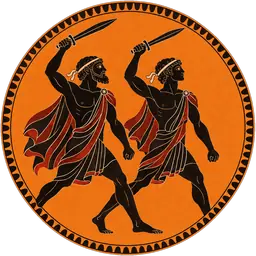
Harmodius
Harmodius was a young Athenian of the Gephyraean clan, loved by Aristogeiton.1 Thucydides says that when he rejected Hipparchus' advances, Hipparchus insulted him by turning his sister away from a festival procession; Aristotle's Constitution of the Athenians blames the younger brother Thessalus instead.2 At the Panathenaic festival he and Aristogeiton, fearing they had been betrayed, struck down Hipparchus instead of Hippias, and Harmodius was killed on the spot by the guards.3 Athens honoured the pair with bronze statues, which Xerxes carried off, and an Athenian drinking song praised them for killing the tyrant and giving Athens equal laws.4 Thucydides wrote to correct the popular belief that they had killed the ruling tyrant, and Herodotus judged that the Alcmaeonids did far more to free Athens, since the tyranny grew harsher for four more years.5
Events
Ties
- killed Hipparchus Thucydides 6.57.3
- Aristogeiton lover of Harmodius Thucydides 6.54.2
What the sources say
“and eager if possible to be revenged first upon the man who had wronged them and for whom they had undertaken all this risk, they rushed, as they were, within the gates, and meeting with Hipparchus by the Leocorium recklessly fell upon him at once, infuriated, Aristogiton by love, and Harmodius by insult, and smote him and slew him.”
τὸν λυπήσαντα οὖν σφᾶς καὶ δι’ ὅνπερ πάντα ἐκινδύνευον ἐβούλοντο πρότερον, εἰ δύναιντο, προτιμωρήσασθαι, καὶ ὥσπερ εἶχον ὥρμησαν ἔσω τῶν πυλῶν, καὶ περιέτυχον τῷ Ἱππάρχῳ παρὰ τὸ Λεωκόρειον καλούμενον, καὶ εὐθὺς ἀπερισκέπτως προσπεσόντες καὶ ὡς ἂν μάλιστα δι’ ὀργῆς ὁ μὲν ἐρωτικῆς, ὁ δὲ ὑβρισμένος, ἔτυπτον καὶ ἀποκτείνουσιν αὐτόν.
Thucydides 6.57.3 · tr. Richard Crawley
“I'll wreathe my sword in myrtle bough, The sword that laid the tyrant low, When patriots, burning to be free, To Athens gave equality”
ἐν μύρτου κλαδὶ τὸ ξίφος φορήσω, ὥσπερ Ἁρμόδιος καὶ Ἀριστογείτων, ὅτε τὸν τύραννον κτανέτην ἰσονόμους τ’ ᾽ Ἀθήνας ἐποιησάτην
Athenaeus 15.50 · tr. Charles Duke Yonge
An Athenian drinking song, preserved by Athenaeus; the translation is in verse and free.
“Hard by stand statues of Harmodius and Aristogiton, who killed Hipparchus. The reason of this act and the method of its execution have been related by others; of the figures some were made by Critius, the old ones being the work of Antenor. When Xerxes took Athens after the Athenians had abandoned the city he took away these statues also among the spoils”
οὐ πόρρω δὲ ἑστᾶσιν Ἁρμόδιος καὶ Ἀριστογείτων οἱ κτείναντες Ἵππαρχον· αἰτία δὲ ἥτις ἐγένετο καὶ τὸ ἔργον ὅντινα τρόπον ἔπραξαν, ἑτέροις ἐστὶν εἰρημένα. τῶν δὲ ἀνδριάντων οἱ μέν εἰσι Κριτίου τέχνη, τοὺς δὲ ἀρχαίους ἐποίησεν Ἀντήνωρ· Ξέρξου δέ, ὡς εἷλεν Ἀθήνας ἐκλιπόντων τὸ ἄστυ Ἀθηναίων, ἀπαγαγομένου καὶ τούτους ἅτε λάφυρα
Pausanias 1.8.5 · tr. W.H.S. Jones
First named
The earliest text in the library that names Harmodius, written about 500 BC (a modern estimate of when it was written):
“I'll wreathe my sword in myrtle bough, The sword that laid the tyrant low, When patriots, burning to be free, To Athens gave equality … Harmodius, hail! though reft of breath, Thou ne'er shalt feel the stroke of death, The happy heroes' isles shall be The bright abode allotted thee … I'll wreathe the sword in myrtle bough, The sword that laid Hipparchus low, When at Minerva's adverse fane He knelt, and never rose again”
ἐν μύρτου κλαδὶ τὸ ξίφος φορήσω, ὥσπερ Ἁρμόδιος καὶ Ἀριστογείτων, ὅτε τὸν τύραννον κτανέτην ἰσονόμους τ’ ᾽ Ἀθήνας ἐποιησάτην. φίλταθ’ Ἁρμόδι’ , οὒ τί που τέθνηκας νήσοις δ’ ἐν μακάρων σέ φασιν εἶναι, ἵνα περ ποδώκης Ἀχιλεύς, Τυδείδην τέ φασι τὸν ἐσθλὸν Διομήδεα. ἐν μύρτου κλαδὶ τὸ ξίφος φορήσω, ὥσπερ Ἁρμόδιος καὶ Ἀριστογείτων, ὅτ’ Ἀθηναίης ἐν θυσίαις ἄνδρα τύραννον Ἵππαρχον ἐκαινέτην
Athenaeus 15.50 · tr. Charles Duke Yonge
Three Athenian drinking songs. Quoted by Athenaeus, Deipnosophists, about AD 200. The Greek names Harmodius, Aristogeiton and Hipparchus; the old verse translation is free and leaves out Aristogeiton's name.
Found by searching every text in the library for these spellings and reading the earliest hits to rule out namesakes: Ἁρμόδιος, Harmodius. Texts lost, or not in the library, may name Harmodius earlier.
The passages behind each sentence
- Herodotus 5.55.1 (tr. A. D. Godley); Thucydides 6.54.2 (tr. Richard Crawley) ↩
- Thucydides 6.54.3 (tr. Richard Crawley); Thucydides 6.56.1 (tr. Richard Crawley); Aristotle, Constitution of the Athenians 18.2 (AI translation (Claude)) ↩
- Thucydides 6.57.2 (tr. Richard Crawley); Thucydides 6.57.3 (tr. Richard Crawley); Thucydides 6.57.4 (tr. Richard Crawley) ↩
- Pausanias 1.8.5 (tr. W.H.S. Jones); Athenaeus 15.50 (tr. Charles Duke Yonge) ↩
- Thucydides 1.20.2 (tr. Richard Crawley); Herodotus 6.123.2 (tr. A. D. Godley); Herodotus 5.55.1 (tr. A. D. Godley) ↩
Cite this page
MLA “Harmodius.” Atlas of Ancient History, Skirnir Studios, 2026, history.skirnirstudios.com/people/harmodius/.
APA Skirnir Studios. (2026). Harmodius. Atlas of Ancient History. https://history.skirnirstudios.com/people/harmodius/
Chicago “Harmodius.” Atlas of Ancient History. Skirnir Studios, 2026. https://history.skirnirstudios.com/people/harmodius/.
The atlas was written by AI from the ancient sources. Where you can, cite the ancient passage itself by its reference (Herodotus 7.228, Livy 22.7.3) and name the translation you read.