Atlas of Ancient History › People › The early Empire
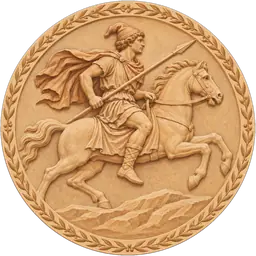
Decebalus
Decebalus was king of the Dacians beyond the Danube; the Suda, a Byzantine lexicon, describes him as skilled both in planning war and in waging it, knowing when to attack and when to withdraw, a master of ambush, and so for a long time an opponent worthy of the Romans.1 Pliny, governing Bithynia, reported to Trajan a slave named Callidromus, who said he had been captured in Moesia by Susagus and sent by Decebalus as a gift to Pacorus, king of Parthia, whom he served for many years before he escaped.2 Zonaras, a twelfth-century Byzantine chronicler, says that when Trajan came near his royal seat, Decebalus agreed to hand over his arms, engines and engineers, fell to the ground before the emperor, and sent envoys to beg the senate for peace.3 When Decebalus broke the treaty, Zonaras goes on, he tried to have Trajan killed by pretended deserters; Trajan bridged the Danube and beat the Dacians with difficulty, Decebalus killed himself in despair, and a companion betrayed the treasure he had buried under a river.4 Eutropius, writing in the fourth century, says Trajan overthrew Decebalus, the Dacians' leader, and made a province beyond the Danube.5
Events
Ties
- Trajan defeated Decebalus Zonaras, Epitome of Histories 11.21.3
What the sources say
“Gaius Plinius to the Emperor Trajan. … Appuleius, my lord, a soldier at the post at Nicomedia, wrote to me that a man named Callidromus, when he was being held by the bakers Maximus and Dionysius, to whom he had hired out his labour, fled to your statue and, when he was brought before the magistrates, declared that he had once been the slave of Laberius Maximus, was captured by Susagus in Moesia, and was sent by Decebalus as a gift to Pacorus, king of Parthia; that he was in his service for many years, then ran away, and so came to Nicomedia.”
C. Plinius Traiano Imperatori … Appuleius, domine, miles qui est in statione Nicomedensi, scripsit mihi quendam nomine Callidromum, cum detineretur a Maximo et Dionysio pistoribus, quibus operas suas locaverat, confugisse ad tuam statuam perductumque ad magistratus indicasse, servisse aliquando Laberio Maximo, captumque a Susago in Moesia et a Decibalo muneri missum Pacoro Parthiae regi, pluribusque annis in ministerio eius fuisse, deinde fugisse, atque ita in Nicomediam pervenisse
Pliny the Younger, Letters 10.74 · AI translation (Claude)
“When it was reported to him that Decebalus was again making trouble and not keeping to the treaty, he marched against him once more. And Decebalus, beaten in strength, planned to get the better of him by a trick: knowing that Trajan was easy to approach and received anyone who wished to talk with him, he sent pretended deserters so that, if they could, they might kill him. … The emperor bridged the Danube, a work that can neither be admired nor described as it deserves, crossed the river by this bridge, and mastered the Dacians, with difficulty and danger, but mastered them. And Decebalus, in despair, took his own life. From then on the Dacian people and their land became subject to the Romans. … But one of Decebalus' companions, who knew where the treasure was, showed it to them.”
Ὡς δὲ ἀπηγγέλλετο αὐτῷ ὁ Δεκέβαλος αὖθις νεωτερίζων καὶ ταῖς συνθήκαις οὐκ ἐμμένων, αὐτὸς καὶ πάλιν πρὸς ἐκεῖνον ἐστράτευσε. καὶ ὁ Δεκέβαλος ἡττώμενος ἰσχύι; δόλῳ αὐτοῦ περιγενέσθαι διεμελέτησε. καὶ εἰδὼς εὐπρόσιτον ὄντα Τραιανὸν καὶ τὸν βουλόμενον εἰς ὁμιλίαν δεχόμενον, ψευδαυτομόλους ἀπέστειλεν, ἴν’, εἰ δυνηθεῖεν, αὐτὸν διαχρήσαιντο … γεφυρώσας δὲ τὸν Ἴστρον ὁ αὐτοκράτωρ, καὶ ἔργον τοῦτο διαπραξάμενος μήτε θαυμασθῆναι ἀξίως μήτ’ ἐξηγηθῆναι δυνάμενον, διὰ τῆς γεφύρας τε ταύτης τὸν ποταμὸν περαιωθείς, μόλις μὲν καὶ κινδυνωδῶς ἐκράτησε τῶν Δακῶν, ἐκράτησε δ’ οὖν. καὶ ὁ Δεκέβαλος ἀπογνοὺς διεχειρίσατο ἑαυτόν. κἀντεῦθεν τὸ ἔθνος τὸ τῶν Δακῶν καὶ ἡ χώρα σφῶν Ῥωμαίοις ὑπήκοος γέγονε … εἰς δέ τις ἑταῖρος τοῦ Δεκεβάλου συνειδὼς τὰ τεθησαυρισμένα ὑπέδειξεν αὐτά
Zonaras, Epitome of Histories 11.21.3 · AI translation (Claude)
“Decebalus, the king of the Dacians, was clever at understanding warfare and clever at carrying it out too: well-aimed in attack and timely in retreat, a craftsman of ambush, a worker in battle; and he knew how to use a victory well and how to manage a defeat well. For this reason he was for a long time an opponent worthy of the Romans.”
ὅτι Δεκέβαλοϲ, ὁ τῶν Δακῶν βαϲιλεύϲ, δεινὸϲ μὲν ἦν ϲυνεῖναι τὰ πολέμια, δεινὸϲ δὲ καὶ πρᾶξαι, καὶ ἐπελθεῖν εὔϲτοχοϲ, ἀναχωρῆϲαι καίριοϲ, ἐνέδραϲ τεχνίτηϲ, μάχηϲ ἐργάτηϲ· καὶ καλῶϲ μὲν νίκῃ χρήϲαϲθαι, καλῶϲ δὲ ἡττον διαθέϲθαι ἠπίϲτατο· ἀφ᾿ οὗ δὴ καὶ ἀνταγωνιϲτὴϲ ἀξιόμαχοϲ ἐπὶ πολὺ τοῖϲ Ῥωμαίοιϲ ἐγένετο
Suda 2.Δ.344 · AI translation (Claude)
First named
The earliest text in the library that names Decebalus, written about AD 111 (a modern estimate of when it was written):
“Gaius Plinius to the Emperor Trajan. … Appuleius, my lord, a soldier at the post at Nicomedia, wrote to me that a man named Callidromus, when he was being held by the bakers Maximus and Dionysius, to whom he had hired out his labour, fled to your statue and, when he was brought before the magistrates, declared that he had once been the slave of Laberius Maximus, was captured by Susagus in Moesia, and was sent by Decebalus as a gift to Pacorus, king of Parthia; that he was in his service for many years, then ran away, and so came to Nicomedia.”
C. Plinius Traiano Imperatori … Appuleius, domine, miles qui est in statione Nicomedensi, scripsit mihi quendam nomine Callidromum, cum detineretur a Maximo et Dionysio pistoribus, quibus operas suas locaverat, confugisse ad tuam statuam perductumque ad magistratus indicasse, servisse aliquando Laberio Maximo, captumque a Susago in Moesia et a Decibalo muneri missum Pacoro Parthiae regi, pluribusque annis in ministerio eius fuisse, deinde fugisse, atque ita in Nicomediam pervenisse
Pliny the Younger, Letters 10.74 · AI translation (Claude)
Found by searching every text in the library for these spellings and reading the earliest hits to rule out namesakes: Decebalus, Decebali, Decebalo, Decebalum, Decibalus, Decibalo, Decibali, Δεκέβαλος, Δεκεβάλου, Δεκεβάλῳ, Δεκέβαλον, Δεκέβαλοϲ, Δεκίβαλλον. Texts lost, or not in the library, may name Decebalus earlier.
The passages behind each sentence
Cite this page
MLA “Decebalus.” Atlas of Ancient History, Skirnir Studios, 2026, history.skirnirstudios.com/people/decebalus/.
APA Skirnir Studios. (2026). Decebalus. Atlas of Ancient History. https://history.skirnirstudios.com/people/decebalus/
Chicago “Decebalus.” Atlas of Ancient History. Skirnir Studios, 2026. https://history.skirnirstudios.com/people/decebalus/.
The atlas was written by AI from the ancient sources. Where you can, cite the ancient passage itself by its reference (Herodotus 7.228, Livy 22.7.3) and name the translation you read.