Atlas of Ancient History › People › The Athenian age
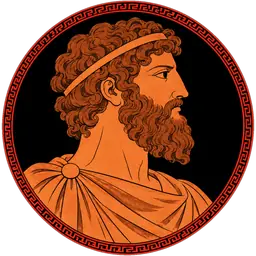
Cimon
Cimon was the son of Miltiades and of Hegesipyle, daughter of the Thracian king Olorus, and Herodotus says it was Cimon who paid the fifty talents his father was fined.1 As general he took Eion on the Strymon from the Persians, and at the river Eurymedon he won a battle on land and another at sea on the same day.2 He was very rich and open-handed: he took the fences down from his fields so that anyone could take the fruit, and fed poor men of his deme at his house every day.3 He admired Sparta and led an Athenian force to help the Spartans besiege the helots on Ithome, but the Spartans sent the Athenians home, and the angry Athenians ostracised him.4 After the defeat at Tanagra they recalled him, on a decree proposed by Pericles.5 He led two hundred ships to Cyprus and died while besieging Citium, of sickness as most said, though some said of a wound.6
Events
Ties
- Miltiades father of Cimon Herodotus 6.136.3
- Pericles prosecuted Cimon Aristotle, Constitution of the Athenians 27.1
- Pericles recalled Cimon Plutarch, Cimon 17.6
- Ephialtes the reformer rival of Cimon Aristotle, Constitution of the Athenians 28.2
- drove from Byzantium Pausanias Plutarch, Cimon 6.5
- kinsman of Thucydides Plutarch, Cimon 4.1
- Thucydides son of Melesias related by marriage to Cimon Plutarch, Pericles 11.1
- Myronides envoy with Cimon Plutarch, Aristides 10.8
What the sources say
“Next we come to the actions by land and by sea at the river Eurymedon in Pamphylia, between the Athenians with their allies, and the Medes, when the Athenians won both battles on the same day under the conduct of Cimon, son of Miltiades”
ἐγένετο δὲ μετὰ ταῦτα καὶ ἡ ἐπ’ Εὐρυμέδοντι ποταμῷ ἐν Παμφυλίᾳ πεζομαχία καὶ ναυμαχία Ἀθηναίων καὶ τῶν ξυμμάχων πρὸς Μήδους, καὶ ἐνίκων τῇ αὐτῇ ἡμέρᾳ ἀμφότερα Ἀθηναῖοι Κίμωνος τοῦ Μιλτιάδου στρατηγοῦντος
Thucydides 1.100.1 · tr. Richard Crawley
“Miltiades later died of gangrene and rot in his thigh, and the fifty talents were paid by his son Cimon”
Μιλτιάδης μὲν μετὰ ταῦτα σφακελίσαντός τε τοῦ μηροῦ καὶ σαπέντος τελευτᾷ, τὰ δὲ πεντήκοντα τάλαντα ἐξέτισε ὁ παῖς αὐτοῦ Κίμων
Herodotus 6.136.3 · tr. A. D. Godley
“And since he was already wealthy, Cimon lavished the revenues from his campaign, which he was thought to have won with honor from the enemy, to his still greater honor, on his fellow-citizens. He took away the fences from his fields, that strangers and needy citizens might have it in their power to take fearlessly of the fruits of the land; and every day he gave a dinner at his house—simple, it is true, but sufficient for many, to which any poor man who wished came in, and so received a maintenance which cost him no effort and left him free to devote himself solely to public affairs”
ἤδη δʼ εὐπορῶν ὁ Κίμων ἐφόδια τῆς στρατηγίας ἃ καλῶς ἀπὸ τῶν πολεμίων ἔδοξεν ὠφελῆσθαι κάλλιον ἀνήλισκεν εἰς τοὺς πολίτας. τῶν τε γὰρ ἀγρῶν τοὺς φραγμοὺς ἀφεῖλεν, ἵνα καὶ τοῖς ξένοις καὶ τῶν πολιτῶν τοῖς δεομένοις ἀδεῶς ὑπάρχῃ λαμβάνειν τῆς ὀπώρας, καὶ δεῖπνον οἴκοι παρʼ αὐτῷ λιτὸν μέν, ἀρκοῦν δὲ πολλοῖς, ἐποιεῖτο καθʼ ἡμέραν, ἐφʼ ὃ τῶν πενήτων ὁ βουλόμενος εἰσῄει καὶ διατροφὴν εἶχεν ἀπράγμονα, μόνοις τοῖς δημοσίοις σχολάζων
Plutarch, Cimon 10.1 · tr. Bernadotte Perrin
“He died while besieging Citium, of sickness, as most say. But some say it was of a wound which he got while fighting the Barbarians. As he was dying he bade those about him to sail away at once and to conceal his death. And so it came to pass that neither the enemy nor the allies understood what had happened, and the force was brought back in safety under the command of Cimon”
ἀπέθανε δὲ πολιορκῶν Κίτιον, ὡς οἱ πλεῖστοι λέγουσι, νοσήσας· ἔνιοι δέ φασιν ἐκ τραύματος, ὃ πρὸς τοὺς βαρβάρους ἀγωνιζόμενος ἔσχε. τελευτῶν δὲ τοὺς περὶ αὐτὸν ἐκέλευσεν εὐθὺς ἀποπλεῖν ἀποκρυψαμένους τὸν θάνατον αὐτοῦ· καὶ συνέβη μήτε τῶν πολεμίων μήτε τῶν συμμάχων αἰσθομένων ἀσφαλῶς αὐτοὺς ἀνακομισθῆναι στρατηγουμένους ὑπὸ Κίμωνος
Plutarch, Cimon 19.1 · tr. Bernadotte Perrin
First named
The earliest text in the library that names Cimon, written about 430 BC (a modern estimate of when it was written):
“Miltiades later died of gangrene and rot in his thigh, and the fifty talents were paid by his son Cimon”
Μιλτιάδης μὲν μετὰ ταῦτα σφακελίσαντός τε τοῦ μηροῦ καὶ σαπέντος τελευτᾷ, τὰ δὲ πεντήκοντα τάλαντα ἐξέτισε ὁ παῖς αὐτοῦ Κίμων
Herodotus 6.136.3 · tr. A. D. Godley
Found by searching every text in the library for these spellings and reading the earliest hits to rule out namesakes: Κίμων, Cimon. Texts lost, or not in the library, may name Cimon earlier.
The passages behind each sentence
- Plutarch, Cimon 4.1 (tr. Bernadotte Perrin); Herodotus 6.136.3 (tr. A. D. Godley) ↩
- Thucydides 1.98.1 (tr. Richard Crawley); Thucydides 1.100.1 (tr. Richard Crawley) ↩
- Aristotle, Constitution of the Athenians 27.3 (AI translation (Claude)); Plutarch, Cimon 10.1 (tr. Bernadotte Perrin) ↩
- Plutarch, Cimon 16.3 (tr. Bernadotte Perrin); Thucydides 1.102.1 (tr. Richard Crawley); Plutarch, Cimon 17.2 (tr. Bernadotte Perrin) ↩
- Plutarch, Cimon 17.6 (tr. Bernadotte Perrin) ↩
- Thucydides 1.112.2 (tr. Richard Crawley); Thucydides 1.112.4 (tr. Richard Crawley); Plutarch, Cimon 19.1 (tr. Bernadotte Perrin) ↩
Cite this page
MLA “Cimon.” Atlas of Ancient History, Skirnir Studios, 2026, history.skirnirstudios.com/people/cimon/.
APA Skirnir Studios. (2026). Cimon. Atlas of Ancient History. https://history.skirnirstudios.com/people/cimon/
Chicago “Cimon.” Atlas of Ancient History. Skirnir Studios, 2026. https://history.skirnirstudios.com/people/cimon/.
The atlas was written by AI from the ancient sources. Where you can, cite the ancient passage itself by its reference (Herodotus 7.228, Livy 22.7.3) and name the translation you read.