Atlas of Ancient History › People › The Hellenistic world
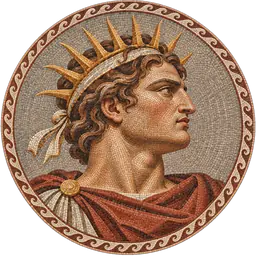
Antiochus IV
Antiochus, son of Antiochus III, had been a hostage at Rome, and became king in year 137 of the Seleucid era, the 'kingdom of the Greeks'.1 Polybius says men called him Epimanes, 'the Madman', instead of Epiphanes, for his habit of slipping out of the palace to wander the city, drink with strangers and canvass for Roman offices in the market.2 He invaded Egypt, but outside Alexandria the Roman envoy Popillius drew a circle round him with a stick and made him answer the senate's order to leave before he stepped out of it; he left.3 1 Maccabees says that on his return from Egypt he entered the Temple at Jerusalem and took the golden altar and lampstand, and that two years later an 'abomination of desolation' was set up on the altar.4 He died in Persis after failing to plunder a temple in Elymais, in year 149 of the Seleucid era; Polybius says some thought he went mad from signs of divine anger.5
Open Antiochus IV in the atlas
Events
Ties
- Popillius Laenas turned back from Egypt Antiochus IV Polybius 29.27
- Antiochus III father of Antiochus IV 1 Maccabees 1.10.1
- Judas Maccabeus rose against Antiochus IV Josephus, Jewish Antiquities 12.316
What the sources say
“ANTIOCHUS EPIPHANES, nicknamed from his actions Epimanes (the Madman), would sometimes steal from the court, avoiding his attendants, and appear roaming wildly about in any chance part of the city with one or two companions”
Ἀντίοχος ὁ Ἐπιφανὴς μὲν κληθείς, Ἐπιμανὴς δʼ ἐκ τῶν πράξεων ὀνομασθείς περὶ οὗ φησι Πολύβιος τάδε, ὡς ἀποδιδράσκων ἐκ τῆς αὐλῆς ἐνίοτε τοὺς θεραπεύοντας, οὗ τύχοι τῆς πόλεως, ἀλύων ἐφαίνετο δεύτερος καὶ τρίτος
Polybius 26.1 · tr. Evelyn S. Shuckburgh
“When Antiochus had advanced to attack Ptolemy in order to possess himself of Pelusium, he was met by the Roman commander Gaius Popilius Laenas. Upon the king greeting him from some distance, and holding out his right hand to him, Popilius answered by holding out the tablets which contained the decree of the Senate, and bade Antiochus read that first: not thinking it right, I suppose, to give the usual sign of friendship until he knew the mind of the recipient, whether he were to be regarded as a friend or foe. On the king, after reading the despatch, saying that he desired to consult with his friends on the situation, Popilius did a thing which was looked upon as exceedingly overbearing and insolent. Happening to have a vine stick in his hand, he drew a circle round Antiochus with it, and ordered him to give his answer to the letter before he stepped out of that circumference. The king was taken aback by this haughty proceeding. After a brief interval of embarrassed silence, he replied that he would do whatever the Romans demanded”
ὅτι τοῦ Ἀντιόχου πρὸς Πτολεμαῖον ἕνεκεν τοῦ Πηλούσιον κατασχεῖν ἀφικομένου, ὁ Ποπίλιος ὁ τῶν Ῥωμαίων στρατηγός, τοῦ βασιλέως πόρρωθεν ἀσπαζομένου διὰ τῆς φωνῆς καὶ τὴν δεξιὰν προτείνοντος, πρόχειρον ἔχων τὸ δελτάριον, ἐν ᾧ τὸ τῆς συγκλήτου δόγμα κατετέτακτο, προύτεινεν αὐτῷ καὶ τοῦτʼ ἐκέλευσε πρῶτον ἀναγνῶναι τὸν Ἀντίοχον, ὡς μὲν ἐμοὶ δοκεῖ, μὴ πρότερον ἀξιώσας τὸ τῆς φιλίας σύνθημα ποιεῖν πρὶν ἢ τὴν προαίρεσιν ἐπιγνῶναι τοῦ δεξιουμένου, πότερα φίλιος ἢ πολέμιός ἐστιν. ἐπεὶ δʼ ὁ βασιλεὺς ἀναγνοὺς ἔφη βούλεσθαι μεταδοῦναι τοῖς φίλοις ὑπὲρ τῶν προσπεπτωκότων, ἀκούσας ὁ Ποπίλιος ἐποίησε πρᾶγμα βαρὺ μὲν δοκοῦν εἶναι καὶ τελέως ὑπερήφανον· ἔχων γὰρ πρόχειρον ἀμπελίνην βακτηρίαν περιέγραφε τῷ κλήματι τὸν Ἀντίοχον ἐν τούτῳ τε τῷ γύρῳ τὴν ἀπόφασιν ἐκέλευσε δοῦναι περὶ τῶν γεγραμμένων· ὁ δὲ βασιλεὺς ξενισθεὶς τὸ γινόμενον καὶ τὴν ὑπεροχήν, βραχὺν χρόνον ἐναπορήσας ἔφη ποιήσειν πᾶν τὸ παρακαλούμενον ὑπὸ Ῥωμαίων
Polybius 29.27 · tr. Evelyn S. Shuckburgh
“And there came out of them a sinful root, Antiochus Epiphanes, son of King Antiochus, who had been a hostage in Rome; and he became king in the hundred and thirty-seventh year of the kingdom of the Greeks.”
Καὶ ἐξῆλθεν ἐξ αὐτῶν ῥίζα ἁμαρτωλὸς Ἀντίοχος Ἐπιφανής, υἱὸς Ἀντιόχου τοῦ βασιλέως, ὃς ἦν ὅμηρα ἐν τῆ Ῥώμῃ. καὶ ἐθασίλευσεν ἔτει ἑκατοστῷ καὶ ἑβδόμῳ καὶ τριακοστῷ βασιλείας Ἑλλήνων
1 Maccabees 1.10.1 · AI translation (Claude)
“Uruk, the 10th day of Ayyaru (II), year 1 hundred 47, Antiochus was king.”
[UNUG]{ki} {iti}GU₄ U₄ 10-KAM MU 1 ME 47-KAM {m}an-ti-ʾi-i-ku-su ; LUGAL
Uruk tablet colophon (BagM Beih. 02, 089) r 8 · tr. the GKAB Project (Philippe Clancier, Eleanor Robson and others) - CC BY-SA 3.0
First named
The earliest text in the library that names Antiochus IV, written about 165 BC (a modern estimate of when it was written):
“Uruk, the 10th day of Ayyaru (II), year 1 hundred 47, Antiochus was king.”
[UNUG]{ki} {iti}GU₄ U₄ 10-KAM MU 1 ME 47-KAM {m}an-ti-ʾi-i-ku-su ; LUGAL
Uruk tablet colophon (BagM Beih. 02, 089) r 8 · tr. the GKAB Project (Philippe Clancier, Eleanor Robson and others) - CC BY-SA 3.0
Found by searching every text in the library for these spellings and reading the earliest hits to rule out namesakes: Ἀντίοχος ὁ Ἐπιφανής, Ἐπιφανής, Antiochus Epiphanes, Epiphanes, Antiochus. Texts lost, or not in the library, may name Antiochus IV earlier.
The passages behind each sentence
- 1 Maccabees 1.10.1 (AI translation (Claude)) ↩
- Polybius 26.1 (tr. Evelyn S. Shuckburgh) ↩
- Polybius 29.27 (tr. Evelyn S. Shuckburgh) ↩
- 1 Maccabees 1.20.1 (AI translation (Claude)); 1 Maccabees 1.21.1 (AI translation (Claude)); 1 Maccabees 1.54.1 (AI translation (Claude)) ↩
- Polybius 31.9 (tr. Evelyn S. Shuckburgh); 1 Maccabees 6.16.1 (AI translation (Claude)) ↩
Cite this page
MLA “Antiochus IV.” Atlas of Ancient History, Skirnir Studios, 2026, history.skirnirstudios.com/people/antiochus-iv/.
APA Skirnir Studios. (2026). Antiochus IV. Atlas of Ancient History. https://history.skirnirstudios.com/people/antiochus-iv/
Chicago “Antiochus IV.” Atlas of Ancient History. Skirnir Studios, 2026. https://history.skirnirstudios.com/people/antiochus-iv/.
The atlas was written by AI from the ancient sources. Where you can, cite the ancient passage itself by its reference (Herodotus 7.228, Livy 22.7.3) and name the translation you read.