Atlas of Ancient History › People › Archaic Greece and Persia
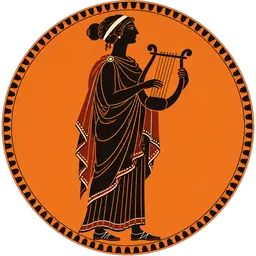
Sappho
Sappho was a poet of Mytilene on Lesbos; Herodotus names her brother Charaxus, son of Scamandronymus, who bought the freedom of the courtesan Rhodopis in Egypt.1 When Charaxus came home, Herodotus says, Sappho attacked him bitterly in one of her poems.2 Strabo says she flourished at the same time as Pittacus and Alcaeus, and that in all recorded time he knew of no woman who could rival her even slightly as a poet.3 Aristotle quotes her answer in verse to Alcaeus and one of her sayings, that death is an evil, since otherwise the gods would die, and he reports that the Mytilenaeans honoured her though she was a woman.4 A later story, which Strabo quotes from the comic poet Menander, had her leap from the cliff of Leucas for love of Phaon; Strabo adds that more learned writers gave the first leap to Cephalus.5
Ties
- exchanged verses with Alcaeus Aristotle, Rhetoric 1.9.20
What the sources say
“And along with these flourished also Sappho, a marvellous woman; for in all the time of which we have record I do not know of the appearance of any woman who could rival Sappho, even in a slight degree, in the matter of poetry”
συνήκμασε δὲ τούτοις καὶ ἡ Σαπφώ, θαυμαστόν τι χρῆμα· οὐ γὰρ ἴσμεν ἐν τῷ τοσούτῳ χρόνῳ τῷ μνημονευομένῳ φανεῖσάν τινα γυναῖκα ἐνάμιλλον οὐδὲ κατὰ μικρὸν ἐκείνῃ ποιήσεως χάριν
Strabo 13.2.3 · tr. Horace Leonard Jones
“when Alcaeus said: I would fain say something, but shame holds me back, Sappho rejoined: Hadst thou desired what was good or noble, and had not thy tongue stirred up some evil to utter it, shame would not have filled thine eyes; but thou would'st have spoken of what is right”
ὥσπερ καὶ Σαπφὼ πεποίηκεν, εἰπόντος τοῦ Ἀλκαίου θέλω τι εἰπῆν, ἀλλά με κωλύει αἰδώς,αἱ δʼ ἦχες ἐσθλῶν ἵμερον ἢ καλῶν καὶ μή τι εἰπῆν γλῶσσʼ ἐκύκα κακόν αἰδώς κέν σε οὐκ εἶχεν ὄμματʼ,ἀλλʼ ἔλεγες περὶ τῶ δικαίω
Aristotle, Rhetoric 1.9.20 · tr. John Henry Freese
Lines of Alcaeus and Sappho, as quoted by Aristotle.
“Kharaxus, after giving Rhodopis her freedom, returned to Mytilene. He is bitterly attacked by Sappho in one of her poems. This is enough about Rhodopis.”
Χάραξος δὲ ὡς λυσάμενος Ῥοδῶπιν ἀπενόστησε ἐς Μυτιλήνην, ἐν μέλεϊ Σαπφὼ πολλὰ κατεκερτόμησέ μιν.
Herodotus 2.135.6 · tr. A. D. Godley
First named
The earliest text in the library that names Sappho, written about 590 BC (a modern estimate of when it was written):
“I shall give examples of this style too, choosing Sappho among the poets and Isocrates among the orators. I shall begin with the lyric poet. … And you, blessed one, smiling with your immortal face, asked what I had suffered this time, and why I was calling again, and what I most wanted to happen for my mad heart: 'Whom am I to persuade this time to bring to your love? Who wrongs you, Psappho?'”
θήσω δὲ καὶ ταύτης παραδείγματα τῆς ἁρμονίας, ποιητῶν μὲν προχειρισάμενος Σαπφώ, ῥητόρων δὲ Ἰσοκράτην. ἄρξομαι δὲ ἀπὸ τῆς μελοποιοῦ … τὺ δʼ, ὦ μάκαιρα, μειδιάσαισʼ ἀθανάτω προσώπω ἤρεʼ, ὄττι δἦν τὸ πέπονθα κὤττι δηὖτε κάλημι, κὤττʼ ἔμω μάλιστα θέλω γενέσθαι μαινόλᾳ θύμω· τίνα δηὖτε πείθω μαῖσʼ ἄγην ἐς σὰν φιλότατα; τίς σʼ, ὦ Ψάπφʼ, ἀδικήει
Dionysius of Halicarnassus, On Literary Composition 23.3 · AI translation (Claude)
Sappho's own words, from her hymn to Aphrodite, in which the goddess speaks to her by name. Quoted by Dionysius of Halicarnassus, On Literary Composition, about 20 BC.
Found by searching every text in the library for these spellings and reading the earliest hits to rule out namesakes: Σαπφώ, Ψάπφω, Sappho. Texts lost, or not in the library, may name Sappho earlier.
The passages behind each sentence
- Herodotus 2.135.1 (tr. A. D. Godley); Strabo 13.2.3 (tr. Horace Leonard Jones) ↩
- Herodotus 2.135.6 (tr. A. D. Godley) ↩
- Strabo 13.2.3 (tr. Horace Leonard Jones) ↩
- Aristotle, Rhetoric 1.9.20 (tr. John Henry Freese); Aristotle, Rhetoric 2.23.12 (tr. John Henry Freese); Aristotle, Rhetoric 2.23.11 (tr. John Henry Freese) ↩
- Strabo 10.2.9 (tr. Horace Leonard Jones); Strabo 10.2.9 (tr. Horace Leonard Jones) ↩
Cite this page
MLA “Sappho.” Atlas of Ancient History, Skirnir Studios, 2026, history.skirnirstudios.com/people/sappho/.
APA Skirnir Studios. (2026). Sappho. Atlas of Ancient History. https://history.skirnirstudios.com/people/sappho/
Chicago “Sappho.” Atlas of Ancient History. Skirnir Studios, 2026. https://history.skirnirstudios.com/people/sappho/.
The atlas was written by AI from the ancient sources. Where you can, cite the ancient passage itself by its reference (Herodotus 7.228, Livy 22.7.3) and name the translation you read.