Atlas of Ancient History › People › Rome and Carthage
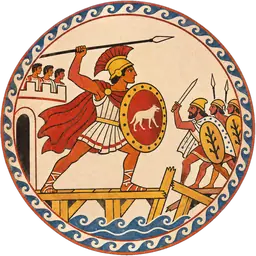
Horatius Cocles
In Roman tradition, when Porsenna's army took the Janiculum by surprise and the Romans fled, Horatius Cocles, on guard at the wooden bridge, stood alone at its far end and held off the enemy while it was cut down behind him.1 Livy says that when the bridge fell he prayed to Father Tiber, leapt in fully armed, and swam back to his own side under a rain of missiles, a deed, he admits, more famous than credible.2 Polybius, the earliest writer to tell the story, says instead that Cocles threw himself into the river in his armour and gave up his life on purpose, valuing his country's safety and his own fame above the years left to him.3 Rome set up his statue in the Comitium and gave him as much land as he could plough round in a day.4
Open Horatius Cocles in the atlas
Events
Ties
- held the bridge against Lars Porsenna Cicero, Paradoxa 1.12
What the sources say
“The enemy would have forced their way over the Sublician bridge had it not been for one man, Horatius Cocles. The good fortune of Rome provided him as her bulwark on that memorable day”
pons sublicius iter paene hostibus dedit, ni unus uir fuisset, Horatius Cocles; id munimentum illo die fortuna urbis Romanae habuit
Livy 2.10.2 · tr. Rev. Canon Roberts
“Then Cocles said, “Tiberinus, holy father, I pray thee to receive into thy propitious stream these arms and this thy warrior.” So, fully armed, he leaped into the Tiber, and though many missiles fell over him he swam across in safety to his friends: an act of daring more famous than credible with posterity”
tum Cocles 'Tiberine pater' inquit, 'te sancte precor, haec arma et hunc militem propitio flumine accipias.' ita sic armatus in Tiberim desiluit multisque superincidentibus telis incolumis ad suos tranauit, rem ausus plus famae habituram ad posteros quam fidei
Livy 2.10.11 · tr. Rev. Canon Roberts
“The story goes that Horatius Cocles, while fighting with two enemies at the head of the bridge over the Tiber, which is the entrance to the city on the north, seeing a large body of men advancing to support his enemies, and fearing that they would force their way into the city, turned round, and shouted to those behind him to hasten back to the other side and break down the bridge. They obeyed him: and whilst they were breaking the bridge, he remained at his post receiving numerous wounds, and checked the progress of the enemy: his opponents being panic stricken, not so much by his strength as by the audacity with which he held his ground. When the bridge had been broken down, the attack of the enemy was stopped; and Cocles then threw himself into the river with his armour on and deliberately sacrificed his life”
Κόκλην γὰρ λέγεται τὸν Ὡράτιον ἐπικληθέντα, διαγωνιζόμενον πρὸς δύο τῶν ὑπεναντίων ἐπὶ τῷ καταντικρὺ τῆς γεφύρας πέρατι τῆς ἐπὶ τοῦ Τιβέριδος, ἣ κεῖται πρὸ τῆς πόλεως, ἐπεὶ πλῆθος ἐπιφερόμενον εἶδε τῶν βοηθούντων τοῖς πολεμίοις, δείσαντα μὴ βιασάμενοι παραπέσωσιν εἰς τὴν πόλιν, βοᾶν ἐπιστραφέντα τοῖς κατόπιν ὡς τάχος ἀναχωρήσαντας διασπᾶν τὴν γέφυραν. τῶν δὲ πειθαρχησάντων, ἕως μὲν οὗτοι διέσπων, ὑπέμενε τραυμάτων πλῆθος ἀναδεχόμενος καὶ διακατέσχε τὴν ἐπιφορὰν τῶν ἐχθρῶν, οὐχ οὕτως τὴν δύναμιν ὡς τὴν ὑπόστασιν αὐτοῦ καὶ τόλμαν καταπεπληγμένων τῶν ὑπεναντίων· διασπασθείσης δὲ τῆς γεφύρας, οἱ μὲν πολέμιοι τῆς ὁρμῆς ἐκωλύθησαν, ὁ δὲ Κόκλης ῥίψας ἑαυτὸν εἰς τὸν ποταμὸν ἐν τοῖς ὅπλοις κατὰ προαίρεσιν μετήλλαξε τὸν βίον
Polybius 6.55 · tr. Evelyn S. Shuckburgh
Shuckburgh adds that the bridge 'is the entrance to the city on the north'; the Greek says only that it lies before the city (ἣ κεῖται πρὸ τῆς πόλεως).
First named
The earliest text in the library that names Horatius Cocles, written about 150 BC (a modern estimate of when it was written):
“The story goes that Horatius Cocles, while fighting with two enemies at the head of the bridge over the Tiber, which is the entrance to the city on the north, seeing a large body of men advancing to support his enemies, and fearing that they would force their way into the city, turned round, and shouted to those behind him to hasten back to the other side and break down the bridge. They obeyed him: and whilst they were breaking the bridge, he remained at his post receiving numerous wounds, and checked the progress of the enemy: his opponents being panic stricken, not so much by his strength as by the audacity with which he held his ground. When the bridge had been broken down, the attack of the enemy was stopped; and Cocles then threw himself into the river with his armour on and deliberately sacrificed his life”
Κόκλην γὰρ λέγεται τὸν Ὡράτιον ἐπικληθέντα, διαγωνιζόμενον πρὸς δύο τῶν ὑπεναντίων ἐπὶ τῷ καταντικρὺ τῆς γεφύρας πέρατι τῆς ἐπὶ τοῦ Τιβέριδος, ἣ κεῖται πρὸ τῆς πόλεως, ἐπεὶ πλῆθος ἐπιφερόμενον εἶδε τῶν βοηθούντων τοῖς πολεμίοις, δείσαντα μὴ βιασάμενοι παραπέσωσιν εἰς τὴν πόλιν, βοᾶν ἐπιστραφέντα τοῖς κατόπιν ὡς τάχος ἀναχωρήσαντας διασπᾶν τὴν γέφυραν. τῶν δὲ πειθαρχησάντων, ἕως μὲν οὗτοι διέσπων, ὑπέμενε τραυμάτων πλῆθος ἀναδεχόμενος καὶ διακατέσχε τὴν ἐπιφορὰν τῶν ἐχθρῶν, οὐχ οὕτως τὴν δύναμιν ὡς τὴν ὑπόστασιν αὐτοῦ καὶ τόλμαν καταπεπληγμένων τῶν ὑπεναντίων· διασπασθείσης δὲ τῆς γεφύρας, οἱ μὲν πολέμιοι τῆς ὁρμῆς ἐκωλύθησαν, ὁ δὲ Κόκλης ῥίψας ἑαυτὸν εἰς τὸν ποταμὸν ἐν τοῖς ὅπλοις κατὰ προαίρεσιν μετήλλαξε τὸν βίον
Polybius 6.55 · tr. Evelyn S. Shuckburgh
Shuckburgh adds that the bridge 'is the entrance to the city on the north'; the Greek says only that it lies before the city (ἣ κεῖται πρὸ τῆς πόλεως).
Found by searching every text in the library for these spellings and reading the earliest hits to rule out namesakes: Horatius Cocles, Horatius, Cocles, Ὁράτιος Κόκλης, Κόκλης. Texts lost, or not in the library, may name Horatius Cocles earlier.
The passages behind each sentence
Cite this page
MLA “Horatius Cocles.” Atlas of Ancient History, Skirnir Studios, 2026, history.skirnirstudios.com/people/horatius-cocles/.
APA Skirnir Studios. (2026). Horatius Cocles. Atlas of Ancient History. https://history.skirnirstudios.com/people/horatius-cocles/
Chicago “Horatius Cocles.” Atlas of Ancient History. Skirnir Studios, 2026. https://history.skirnirstudios.com/people/horatius-cocles/.
The atlas was written by AI from the ancient sources. Where you can, cite the ancient passage itself by its reference (Herodotus 7.228, Livy 22.7.3) and name the translation you read.