Atlas of Ancient History › People › The Persian Wars
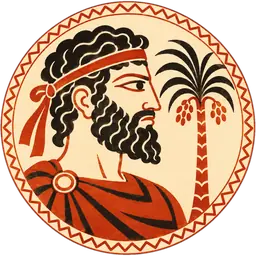
Hamilcar
Son of Hanno, he was, in Herodotus's words, king of the Carthaginians, Carthaginian on his father's side and Syracusan on his mother's.1 He led the great army that Terillus brought in after Theron drove him out of Himera, and Gelon and Theron defeated it in Sicily, near Himera.2 Herodotus heard that he vanished in the battle: Gelon searched everywhere and never found him, dead or alive.3 The Carthaginians said that he stayed in camp sacrificing all through the battle, and when he saw his army routed he threw himself into the fire.4 Diodorus says Gelon sent horsemen who rode into the Carthaginian naval camp posing as allies from Selinus and killed him at the sacrifice.5
Events
Ties
- Gelon defeated Hamilcar Herodotus 7.166.1
What the sources say
“They add this tale too—that Gelon and Theron won a victory over Amilcas the Carchedonian in Sicily on the same day that the Greeks defeated the Persian at Salamis. This Amilcas was, on his father's side, a Carchedonian, and a Syracusan on his mother's and had been made king of Carchedon for his virtue. When the armies met and he was defeated in the battle, it is said that he vanished from sight, for Gelon looked for him everywhere but was not able to find him anywhere on earth, dead or alive.”
πρὸς δὲ καὶ τάδε λέγουσι, ὡς συνέβη τῆς αὐτῆς ἡμέρης ἔν τε τῇ Σικελίῃ Γέλωνα καὶ Θήρωνα νικᾶν Ἀμίλκαν τὸν Καρχηδόνιον καὶ ἐν Σαλαμῖνι τοὺς Ἕλληνας τὸν Πέρσην. τὸν δὲ Ἀμίλκαν Καρχηδόνιον ἐόντα πρὸς πατρός, μητρόθεν δὲ Συρηκόσιον, βασιλεύσαντά τε κατʼ ἀνδραγαθίην Καρχηδονίων, ὡς ἡ συμβολή τε ἐγίνετο καὶ ὡς ἑσσοῦτο τῇ μάχῃ, ἀφανισθῆναι πυνθάνομαι· οὔτε γὰρ ζῶντα οὔτε ἀποθανόντα φανῆναι οὐδαμοῦ γῆς· τὸ πᾶν γὰρ ἐπεξελθεῖν διζήμενον Γέλωνα.
Herodotus 7.166.1 · tr. A. D. Godley
First named
The earliest text in the library that names Hamilcar, written about 430 BC (a modern estimate of when it was written):
“There is, however, another story told by the Sicilians: even though he was to be under Lacedaemonian authority, Gelon would still have aided the Greeks had it not been for Terillus son of Crinippus, the tyrant of Himera. This man, who had been expelled from Himera by Theron son of Aenesidemus, sovereign ruler of Acragas, at this very time brought against Gelon three hundred thousand Phoenicians, Libyans, Iberians, Ligyes, Elisyci, Sardinians, and Cyrnians, led by Amilcas son of Annon, the king of the Carchedonians. Terillus had induced him to do this partly through the prerogative of personal friendship, but mainly through the efforts of Anaxilaus son of Cretines, tyrant of Rhegium. He had handed over his own children as hostages to Amilcas, and brought him into Sicily to the help of his father-in-law; for Anaxilaus had as his wife Terillus' daughter Cydippe. Accordingly Gelon sent the money to Delphi, because he could not aid the Greeks.”
λέγεται δὲ καὶ τάδε ὑπὸ τῶν ἐν τῇ Σικελίῃ οἰκημένων, ὡς ὅμως καὶ μέλλων ἄρχεσθαι ὑπὸ Λακεδαιμονίων ὁ Γέλων ἐβοήθησε ἂν τοῖσι Ἕλλησι, εἰ μὴ ὑπὸ Θήρωνος τοῦ Αἰνησιδήμου Ἀκραγαντίνων μουνάρχου ἐξελασθεὶς ἐξ Ἱμέρης Τήριλλος ὁ Κρινίππου τύραννος ἐὼν Ἱμέρης ἐπῆγε ὑπʼ αὐτὸν τὸν χρόνον τοῦτον Φοινίκων καὶ Λιβύων καὶ Ἰβήρων καὶ Λιγύων καὶ Ἐλισύκων καὶ Σαρδονίων καὶ Κυρνίων τριήκοντα μυριάδας καὶ στρατηγὸν αὐτῶν Ἀμίλκαν τὸν Ἄννωνος, Καρχηδονίων ἐόντα βασιλέα, κατὰ ξεινίην τε τὴν ἑωυτοῦ ὁ Τήριλλος ἀναγνώσας καὶ μάλιστα διὰ τὴν Ἀναξίλεω τοῦ Κρητίνεω προθυμίην, ὃς Ῥηγίου ἐὼν τύραννος τὰ ἑωυτοῦ τέκνα δοὺς ὁμήρους Ἀμίλκᾳ ἐπῆγε ἐπὶ τὴν Σικελίην τιμωρέων τῷ πενθερῷ· Τηρίλλου γὰρ εἶχε θυγατέρα Ἀναξίλεως, τῇ οὔνομα ἦν Κυδίππη. οὕτω δὴ οὐκ οἷόν τε γενόμενον βοηθέειν τὸν Γέλωνα τοῖσι Ἕλλησι ἀποπέμπειν ἐς Δελφοὺς τὰ χρήματα.
Herodotus 7.165.1 · tr. A. D. Godley
Found by searching every text in the library for these spellings and reading the earliest hits to rule out namesakes: Ἀμίλκας, Ἀμίλκων, Hamilcar, Amilcas. Texts lost, or not in the library, may name Hamilcar earlier.
The passages behind each sentence
- Herodotus 7.165 (tr. A. D. Godley); Herodotus 7.166 (tr. A. D. Godley) ↩
- Herodotus 7.165 (tr. A. D. Godley); Herodotus 7.166 (tr. A. D. Godley); Diodorus 11.21.1 (AI translation (Claude)) ↩
- Herodotus 7.166 (tr. A. D. Godley) ↩
- Herodotus 7.167.1 (tr. A. D. Godley) ↩
- Diodorus 11.21.5 (AI translation (Claude)); Diodorus 11.22.1 (AI translation (Claude)) ↩
Cite this page
MLA “Hamilcar.” Atlas of Ancient History, Skirnir Studios, 2026, history.skirnirstudios.com/people/hamilcar/.
APA Skirnir Studios. (2026). Hamilcar. Atlas of Ancient History. https://history.skirnirstudios.com/people/hamilcar/
Chicago “Hamilcar.” Atlas of Ancient History. Skirnir Studios, 2026. https://history.skirnirstudios.com/people/hamilcar/.
The atlas was written by AI from the ancient sources. Where you can, cite the ancient passage itself by its reference (Herodotus 7.228, Livy 22.7.3) and name the translation you read.