Atlas of Ancient History › People › Rome and Carthage
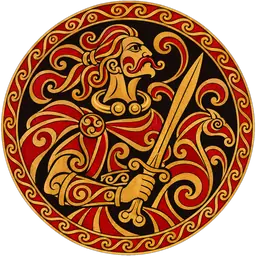
Brennus
In Roman tradition Brennus was the chief of the Gauls who routed the Romans and took Rome; Plutarch has him tell the Romans, before Clusium, that the Gauls' right lay in their arms.1 When hunger forced terms on the Romans holding the Capitol, he agreed with the tribune Quintus Sulpicius on a ransom of a thousand pounds of gold.2 When the Romans protested at false weights, the Gaul threw his sword into the scale with the words 'Woe to the vanquished!', which, Plutarch says, became a proverb.3 In Livy's story Camillus arrived before the gold was paid and defeated the Gauls; Polybius says only that they made terms and went home to meet an invasion of their land by the Veneti.4
Events
Ties
- Camillus drove out the Gauls of Brennus Plutarch, Camillus 29
What the sources say
“A conference took place between Q. Sulpicius, the consular tribune, and Brennus, the Gaulish chieftain, and an agreement was arrived at by which 1000 lbs. of gold was fixed as the ransom”
inde inter Q. Sulpicium tribunum militum et Brennum regulum Gallorum conloquio transacta res est, et mille pondo auri pretium populi gentibus mox imperaturi factum
Livy 5.48 · tr. Rev. Canon Roberts
“but Brennus, with a mocking laugh, stripped off his sword, and added it, belt and all, to the weights. When Sulpicius asked, What means this?What else, said Brennus, but woe to the vanquished? and the phrase passed at once into a proverb”
ὁ δὲ Βρέννος οἷον ἐφυβρίζων καὶ καταγελῶν ἀποδυσάμενος τὴν μάχαιραν ἅμα καὶ τὸν ζωστῆρα προσέθηκε τοῖς σταθμοῖς. πυνθανομένου δὲ τοῦ Σουλπικίου, τί τοῦτο ;τί γὰρ ἄλλο, εἶπεν, ἢ τοῖς νενικημένοις ὀδύνη ; τοῦτο μὲν οὖν ἤδη παροιμιώδης λόγος γέγονε
Plutarch, Camillus 28 · tr. Bernadotte Perrin
“Brennus, the king of the Gauls, burst into a laugh and said: The Clusians wrong us in that, being able to till only a small parcel of earth, they yet are bent on holding a large one, and will not share it with us, who are strangers, many in number and poor”
γελάσας ὁ βασιλεὺς τῶν Γαλατῶν Βρέννος, ἀδικοῦσιν ἡμᾶς, ἔφη, Κλουσῖνοι γῆν καὶ χώραν ὀλίγην μὲν γεωργεῖν δυνάμενοι, πολλὴν δὲ κατέχειν ἀξιοῦντες καὶ μὴ μεταδιδόντες ἡμῖν ξένοις οὖσι καὶ πολλοῖς καὶ πένησι
Plutarch, Camillus 17 · tr. Bernadotte Perrin
First named
The earliest text in the library that names Brennus, written about 26 BC (a modern estimate of when it was written):
“For Brennus, the chieftain of the Gauls, being chiefly apprehensive of some design being intended in the small number. of the enemy”
nam Brennus regulus Gallorum in paucitate hostium artem maxime timens
Livy 5.38 · tr. D. Spillan, A.M., M.D.
Found by searching every text in the library for these spellings and reading the earliest hits to rule out namesakes: Brennus, Βρέννος. Texts lost, or not in the library, may name Brennus earlier.
The passages behind each sentence
Cite this page
MLA “Brennus.” Atlas of Ancient History, Skirnir Studios, 2026, history.skirnirstudios.com/people/brennus-gaul/.
APA Skirnir Studios. (2026). Brennus. Atlas of Ancient History. https://history.skirnirstudios.com/people/brennus-gaul/
Chicago “Brennus.” Atlas of Ancient History. Skirnir Studios, 2026. https://history.skirnirstudios.com/people/brennus-gaul/.
The atlas was written by AI from the ancient sources. Where you can, cite the ancient passage itself by its reference (Herodotus 7.228, Livy 22.7.3) and name the translation you read.