Atlas of Ancient History › People › The Athenian age
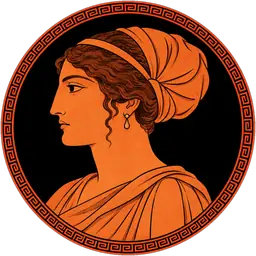
Aspasia
Aspasia was a woman of Miletus, daughter of Axiochus, as Plutarch says all agreed.1 Pericles parted from his wife and took Aspasia, whom he loved exceedingly; the comic poets mocked her, and Cratinus called her a shameless concubine.2 In the Acharnians Aristophanes joked that the war began when the Megarians stole two of Aspasia's girls in revenge.3 Plutarch reports the belief that Pericles made war on Samos to please her.4 She was prosecuted for impiety by the comic poet Hermippus, and Pericles won her acquittal by weeping and pleading with the jurors.5 In Plato's Menexenus Socrates calls her his teacher of rhetoric, who had trained many good speakers and Pericles above all.6
Ties
- partner of Pericles Plutarch, Pericles 24.5
- thought to be the mother of Pericles the younger Plutarch, Pericles 24
What the sources say
“For his own wife was near of kin to him, and had been wedded first to Hipponicus, to whom she bore Callias, surnamed the Rich; she bore also, as the wife of Pericles, Xanthippus and Paralus. Afterwards, since their married life was not agreeable, he legally bestowed her upon another man, with her own consent, and himself took Aspasia, and loved her exceedingly”
ἦν μὲν γὰρ αὐτῷ γυνὴ προσήκουσα μὲν κατὰ γένος, συνῳκηκυῖα δʼ Ἱππονίκῳ πρότερον, ἐξ οὗ Καλλίαν ἔτεκε τὸν πλούσιον· ἔτεκε δὲ καὶ παρὰ τῷ Περικλεῖ Ξάνθιππον καὶ Πάραλον. εἶτα τῆς συμβιώσεως οὐκ οὔσης αὐτοῖς ἀρεστῆς, ἐκείνην μὲν ἑτέρῳ Βουλομένην συνεξέδωκεν, αὐτὸς δὲ τὴν Ἀσπασίαν λαβὼν ἔστερξε διαφερόντως
Plutarch, Pericles 24.5 · tr. Bernadotte Perrin
“About this time also Aspasia was put on trial for impiety, Hermippus the comic poet being her prosecutor, who alleged further against her that she received free-born women into a place of assignation for Pericles”
περὶ δὲ τοῦτον τὸν χρόνον Ἀσπασία δίκην ἔφευγεν ἀσεβείας, Ἑρμίππου τοῦ κωμῳδοποιοῦ διώκοντος καὶ προσκατηγοροῦντος ὡς Περικλεῖ γυναῖκας ἐλευθέρας εἰς τὸ αὐτὸ φοιτώσας ὑποδέχοιτο
Plutarch, Pericles 32.1 · tr. Bernadotte Perrin
“stole two of Aspasia's whores in return;”
ἀντεξέκλεψαν Ἀσπασίας πόρνα δύο·
Aristophanes, Acharnians 527 · AI translation (Claude)
“for she who is my instructor is by no means weak in the art of rhetoric; on the contrary, she has turned out many fine orators, and amongst them one who surpassed all other Greeks, Pericles, the son of Xanthippus … Who is she? But you mean Aspasia”
ᾧ τυγχάνει διδάσκαλος οὖσα οὐ πάνυ φαύλη περὶ ῥητορικῆς, ἀλλʼ ἥπερ καὶ ἄλλους πολλοὺς καὶ ἀγαθοὺς πεποίηκε ῥήτορας, ἕνα δὲ καὶ διαφέροντα τῶν Ἑλλήνων, Περικλέα τὸν Ξανθίππου … τίς αὕτη; ἢ δῆλον ὅτι Ἀσπασίαν λέγεις
Plato, Menexenus 235 · tr. Robert Gregg Bury
First named
The earliest text in the library that names Aspasia, written about 425 BC (a modern estimate of when it was written):
“stole two of Aspasia's whores in return;”
ἀντεξέκλεψαν Ἀσπασίας πόρνα δύο·
Aristophanes, Acharnians 527 · AI translation (Claude)
Found by searching every text in the library for these spellings and reading the earliest hits to rule out namesakes: Ἀσπασία, Aspasia. Texts lost, or not in the library, may name Aspasia earlier.
The passages behind each sentence
- Plutarch, Pericles 24.2 (tr. Bernadotte Perrin) ↩
- Plutarch, Pericles 24.5 (tr. Bernadotte Perrin); Plutarch, Pericles 24.6 (tr. Bernadotte Perrin) ↩
- Aristophanes, Acharnians 526–528 (AI translation (Claude)) ↩
- Plutarch, Pericles 24.1 (tr. Bernadotte Perrin) ↩
- Plutarch, Pericles 32.1 (tr. Bernadotte Perrin); Plutarch, Pericles 32.3 (tr. Bernadotte Perrin) ↩
- Plato, Menexenus 235 (tr. Robert Gregg Bury) ↩
Cite this page
MLA “Aspasia.” Atlas of Ancient History, Skirnir Studios, 2026, history.skirnirstudios.com/people/aspasia/.
APA Skirnir Studios. (2026). Aspasia. Atlas of Ancient History. https://history.skirnirstudios.com/people/aspasia/
Chicago “Aspasia.” Atlas of Ancient History. Skirnir Studios, 2026. https://history.skirnirstudios.com/people/aspasia/.
The atlas was written by AI from the ancient sources. Where you can, cite the ancient passage itself by its reference (Herodotus 7.228, Livy 22.7.3) and name the translation you read.